BOM Group
Innovative double screen system
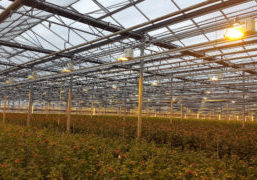
The ISO++ double screen system from Bom Group is unique in the horticultural industry. It is an innovative double screen system which lets more light through and saves more energy.
The two parts of this patented double screen can be operated individually despite being just 6 cm apart. The two fabrics are attached to the upper beam of the greenhouse trellis girder, keeping the lower beam free from attachments so it can be used for other mechanical installations such as crop wires or a third screen.
Minimum light loss
Because the two screens are so close to each other, when they are both closed a cushion of stationary air forms between the two screens, saving energy and producing an insulating effect. The proximity of the two screens also helps minimise light loss.
www.bomgroup.nl
Stand number: 08.108
Related



Bom Group introduces Winterlight Greenhouse concept: 10% more light
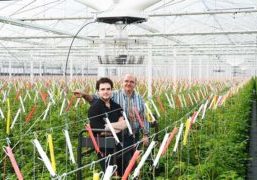
BOM Group will present a completely new greenhouse concept at the Greentech: the Winterlight Greenhouse. This concept, in combination with a new type of screen system by Svensson and light-diffusing glass, yields 10% more light.
The Winterlight Greenhouse, with all its installations, systems and products is currently built on the site of Wageningen UR Greenhouse Horticulture in Bleiswijk and will measure 500 m2. This coming winter the greenhouse concept will be tested with a new cultivation method for a cucumber crop, focusing on the winter period. Crop trials are conducted with the cucumber variety Hi-Jack. This variety is especially suitable for winter cultivation because of its leaf shape and direction.
Reflection factor
The newly designed greenhouse structure is fully powder coated in white with an increased reflection factor of 90%. The greenhouse is glazed with SmartGlass, a new type of diffuse glass, sized 300 x 167 cm. Even if the glass is wet or condensed, the light transmittance does not decrease. The integrated Iso++ screen system is installed in a W-shape for optimal light transmission in closed position and is equipped with a new high transparent screen fabric of Ludvig Svensson with an even better light transmission. The new greenhouse concept is also equipped with an Air in Control climate system (overpressure air).
Consortium
The Winterlight Greenhouse was developed in collaboration with Wageningen UR, Svensson, Bayer Crop Science and Glascom Horticulture. The project has been made possible by the program Kas als Energiebron, the innovation and action program of LTO Glaskracht and the Ministry of Economic Affairs.
BOM Group will present the new greenhouse concept at the GreenTech, hall 8, stand 108.
Related


BOM Group is building 18 hectares of greenhouses for 4Evergreen
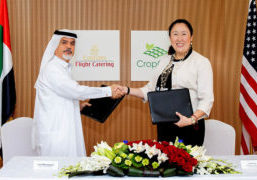
Dutch bell pepper producer 4Evergreen is considerably expanding its acreage in the Zeeland Smidsschorrepolder. The company of the brothers Grootscholte has asked the BOM Group to add 18 hectares of greenhouses to the existing 10 hectares of 4Evergreen in the same polder.
BOM Group is responsible for building the greenhouses and provides them with the newest technologies. One of these technologies is the double screen installation with the slip-in system from Peter Dekker Installaties. The expansion in the Zeeland-Flemish polder brings the total acreage of greenhouses of this pepper grower to 80 hectares. This makes 4Evergreen one of the largest producers of bell peppers in Europe. In addition, the company owns another several dozens of hectares in the Smisschorrepolder that can be built on in the future.
Residual heat and CO2
The reason that 4Evergreen has chosen to expand in the Smidsschorrepolder, near Westdorpe, is mainly because of the availability of residual heat and CO2, which is generated by the fertiliser plant Yara. The supply of these energy flows initially gave the horticultural area an energetic start. However, these developments were interrupted by the crisis, until the area started to revive again a couple of years ago.
Tomato grower Van Adrichem Nurseries established itself in the polder with 9 hectares of greenhouses, and the possibility to expand another 20 hectares. The Belgian United Vegetable Growers (VGT) is also building a company in the Autrichepolder with a total acreage of 30 hectares, which means that the polders in and around Westdorpe, except for some parcels, are nearly sold out.
Source/photo: BOM Group.
Related
‘More than anything else, we simply want to remain the best.’
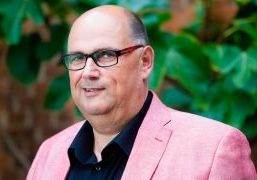
In the course of the past 50 years, the BOM Group has developed from an innovative greenhouse builder, heating systems installer and screening specialist into a leading international supplier of turnkey projects. At the beginning of 2016 the company moved from Naaldwijk to a bright, modern building in Hoek van Holland: a location that provides numerous logistics benefits to the BOM Group’s international clientèle. In this interview, BOM’s director Martin van Zeijl looks back at and forward to the many developments of which he has been a part.
The innovation and continual improvement of products and systems is the common thread running through the history of the BOM Group. Its founder, Piet Bom, may no longer own the company, but his innovative spirit can still be felt, even on the new premises on Kulkweg - or even all the more so. Van Zeijl: ‘We took over the company from him in 2001, and he stepped down entirely in 2004. He is almost 80 now, but he still contributes his ideas to the company. A born inventor, he is still busy inventing new things, although these are no longer for us but for his golf club. He invented a golf cart with solar panels so that it could be powered electrically, for example, and a collapsible golf cart that can be taken along on an airplane. He can speak of his inventions with enormous enthusiasm.’
‘The transition from steel to aluminium made a great impact on us, and one that received worldwide acclaim. But the list is even longer.'
Piet Bom was the main contributor of innovative ideas for the BOM Group. ‘The transition from steel to aluminium made a great impact on us, and one that received worldwide acclaim. But the list is even longer. We created a timeline on our website that displays the most important innovations. These include our roll-up façade screens, our low ridge concept, our APS screen and the SunergyKas 2.0, a new generation of semi-closed greenhouses. Piet was a genuine Gyro Gearloose. Fortunately, we are able to take over that role thanks to our outstanding R&D department, who are always on top of the latest developments,’ says Van Zeijl.
Success factors
Piet Bom’s smartest innovations were a determining factor for the development of the company in the past century. Now that innovative concepts are following on one another at an ever-accelerating pace, technical innovations alone are not sufficient. ‘We have an incredibly tight organisation. Our permanent team is composed of 30 people. Our heating and screening systems are developed in-house. Although boilers and other systems are made elsewhere, we do have a heating systems department that handles all the engineering aspects, as well as purchasing, planning, and so on. We work with permanent partners for water and electrical engineering. This enables us to deliver a turn-key project working in collaboration with no more than three or four other companies. As a result, lines are short and agreements are strict, but there is also more flexibility. Besides that, we prefer to engage local partners wherever possible. That’s one of the areas we excel in: organising our network of partners. I consider that one of our key success factors.’
‘Nowadays, almost 100% of what we produce is exported. This has had an enormous impact on our organisation.'
When Van Zeijl started his career with the BOM Group in 1999, its clientèle was composed primarily of Dutch and Belgian growers. The 2008 economic crisis resulted in an important turnaround. ‘Nowadays, almost 100% of what we produce is exported. This has had an enormous impact on our organisation. Last year we were active in eleven different countries, with Germany, the USA and Canada as our principle markets. In addition to this, we also completed several projects in Japan and China. Sales are doing well in Poland and Russia too, even if the market is receding slightly.’
Water-saving greenhouses
What are some of the technological developments that Van Zeijl is anticipating for the future? ‘We are expecting a great deal from the ‘water-saving greenhouse’ concept. We built the largest testing centre in the Middle East in Riyad (ed.: Saudi Arabia), for example. Minister Kamp was present at the opening. The complex measures 8,500 m2 and contains fifteen different sections, of which four are high-tech (closed greenhouse equipped with all imaginable facilities), seven are mid-tech (with a variety of covering, screening cloth and/or pad&fan systems) and two are low-tech (plastic greenhouses). The people working there now use 10,000 litres of water per square metre to harvest 30 kilos of tomatoes. Every tomato grown here costs 330 litres of water. And that in a country where water is becoming continually scarcer.’
‘We think that our closed greenhouses will enable us to achieve water savings of 90%.'
Van Zeijl believes that a water-saving greenhouse can drastically reduce the amount of water per kilo needed for production purposes. ‘We think that our closed greenhouses will enable us to achieve water savings of 90%. According to Wageningen University, the production in a greenhouse like that could be increased to 114 kilos per square metre. However, if they manage to get 90 kilos I will still be delighted. They will then be able to quickly pay back their investment on that high-tech greenhouse. The outside temperature there is 45 to 46 degrees; cooling via a pad&fan system costs a lot more energy in Saudi Arabia than in the Netherlands. They pump water up from the substrate, remove the salt and pump the brine back into the ground. As a result, the ground water there is becoming increasingly salty. This means having to drill increasingly deeper wells. At some point you will have reached the limit. The amount of energy needed is also continually increasing.’
Zero emission and zero residue
Are we working towards achieving zero-emission and zero-residue greenhouses? ‘You could never reduce emissions to zero, and the same applies to residue. However, almost zero is feasible. We work with over-pressure (we call these our Air in Control greenhouses), for example, which keeps all unwanted elements outside. Whatever does enter the greenhouse is filtered first. This way all pollutants are kept out of the greenhouse. We have sold several of these already. This greenhouse is comparable to the Ultra-Clima and Maxi Air greenhouses, which are equipped with air handling units mounted into the façade, and are combined in some cases with a pad&fan system, inside air recirculation, CO2 dosage and so on. We have noticed that this is a growing market, but it only works in specific areas. Systems like these simply aren’t as useful when in wet weather conditions. You have to be able to pump dry air into your greenhouse for it to work.’
'Greenhouses are becoming increasingly energy-efficient, but growers are also growing more efficiently.'
Can greenhouses become even more efficient? ‘With 40 cubic metres it’s too expensive, but we are working on 20 cubic metres per square metre. Greenhouses are becoming increasingly energy-efficient, but growers are also growing more efficiently. Greenhouses require more technology and expertise than ever before.’
Vertical farming
Vertical farming? ‘I consider that to be a niche product. Economies of scale cannot be achieved, and your costs prices will soar. If you build a greenhouse on top of an existing building, construction prices will be much higher than when you are building on a plot of land. We built a high-tech greenhouse for a customer in Canada who will be growing organic produce for Wholefoods. By means of an experiment, the greenhouse will be built adjacent to one of the stores. If the project is a success, Wholefoods will probably want to build more greenhouses next to their stores. I think that this concept will be more successful than the idea of closed-off cultivation systems with multiple-tier cultivation, LED lighting, robots, and so on.’
'I believe that most a supermarket shoppers consider prices look at prices first.'
How big does Van Zeijl think the market share is for produce grown in a closed system? ‘I expect it to be about 10% of all buyers. These will be among the more affluent segment and prepared to pay 20% more for their food. I believe that most a supermarket shoppers consider prices look at prices first. However, it could be very interesting for hipsters who want to use their smartphone to see how their head of lettuce or fresh fish are coming along.’
No-nonsense
Where do you expect to be five years from now? ‘We will still be in Hoek van Holland, with a fantastic team of enthusiastic people. We operate worldwide as a leading player in our segment. However, we keep telling each other: we don’t have to be the biggest, but we do aim to be the best. Of course, we’ll never scream this from the rooftops! We favour a no-nonsense approach. We walk our talk. It’s easy to become the biggest, but staying the best is no easy task. We are present at trade fairs and exhibitions, but don’t advertise in magazines to tell people how good we are. We prefer to leave that to our satisfied customers.’
BOM will be officially celebrating its 50th anniversary on 31 March 2016. The event will only be celebrated within the company itself. Anniversary festivities will probably be organised for all customers of the BOM Group during or after Greentech.