flowers
Jungle Talks webinars about horticulture in Mexico now online
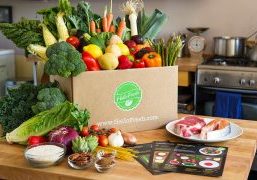
Last week, the major Latin American horticultural fair was organized in Irapuato, Mexico. In the week that Donald Trump was elected as the 45th President of the USA, Mexico discussed its horticultural future. Surprisingly, the Mexicans were far from shocked. ‘’Whatever president they choose, they will need (affordable) food. It will be business as usual’’, was the most frequently heard comment.
The three Jungle Talks webinars that were organized in the same week pointed in a similar direction. Vegetable production for exports has only started around the year 2000 and has made great progress ever since. It is expected by specialists from ENZA Seeds, Hortimax and Plantanova – Horticonnect that saturation of the (export) market still is far away. Competition from other Latin American countries is not expected to hamper Mexico’s position and in the meantime, Mexico’s competitiveness over North American producers is expected to increase further.
'The sleeping giant'
Production of flowers and potted plants is likely to improve as the sector gets better organized and agrologistics improve according to Akiko and Xochipilli. Besides these expected developments in the local market, exports will increase. When ‘the sleeping giant’ wakes up is hard to predict. But due to the geographical position of Mexico combined with increasing problems in countries like Ethiopia, Ecuador and Colombia (security, politics, increasing cost levels, scarcity of labour), investments in export oriented ornamental production are expected to take place.
Agro Parks
Agro Parks in Mexico have started in 2006 with the establishment of the Agro Park Queretaro. Lessons have been learned in the past 10 years and it has become clear that Agro Parks can create many additional advantages. Joint access to water, energy, labour but also market and infrastructure will reduce costs and will attract more foreign investment. Security is hardly an issue anymore when you establish your facilities in an Agro Park. Freshmex, Wageningen University and United Farms were quite clear on that. ‘’If you intend to invest in Mexican horticulture (and why wouldn’t you), do it in an Agro Park’’.
The Jungle Talks about horticulture in Mexico have supplied tons of information about vegetable production, ornamental production and agro parks in a country that grows with an average rate of 1.200–1.500 hectares of medium/high-tech greenhouses per year. Each session is available on www.jungletalks.com.
Source: Jungle Talks. Photo: Irapuato Trade Fair.
Related





‘The ornamental plant niche has grown very quickly.’
JEM-id is based in Honselersdijk and develops websites and software. Ninety-five per cent of its clients are active in the fresh produce and ornamental plants sectors. Account manager Martijn van Andel has experienced the rapid growth in online sales achieved in the past few years by the ornamental plants sector, while according to him the the fresh produce sector lagged notably behind.
Van Andel explains that the diversity of the products in the ornamental plants sector is much greater than that of the fresh produce sector. Apart from this, consumers want to see fresh food products before buying them. ‘Even if you’re speaking about the same product, there are notable differences. No two moth orchids (Phalaenopsis) are alike. The number of branches will be different, as well as the quality, the packaging, and many other aspects. You really buy a specific article. This is why people are looking for ways to clearly and efficiently present the diversity of their products. Good photographs, taken at the growers’ place of business, are very important in this.’
This is different in the fresh produce sector, and the differences are less obvious. ‘If you order a five-kilogram box of red sweet peppers, diversity will be very limited. Everyone knows what you mean and nobody actually needs to look at the products before buying them. In this respect, ordering fresh produce is easier than ordering ornamental plants.’
FloraXchange
JEM-id developed the FloraXchange online communication platform especially for the potted plant sector. This platform provides support to growers in advertising their offering of potted plants. There are currently 1,059 growers affiliated with FloraXchange who present their products on the website. JEM-id makes this information available to more than 300 buyers, who in turn forward this information to their own customers. ‘It is quite revolutionary in the market. I venture to claim that this initiative has given the entire sector a boost. It provides in a demand; we have obtained a lot of positive response.’
According to the ICT specialist, trade companies really wanting to boost their sales have to make sure that their internal automation and logistics processes are in order. This means that a lot of their old systems will need to be replaced. Of course, not everyone is equally enthusiastic about this. ‘If you are a leading exporter of fresh produce or ornamental plants and you have to replace your internet systems, this will cost you a lot of money. This will, of course, have a huge impact, while the success ratio can be called quite exciting in terms of feasibility. There are many companies who keep putting this off. However, you have to embrace change rather than avoid it; at this point you have no other choice. You have to change with the times. This is the only way to survive in a world where the only constant is change.’
Purchase moment
According to Van Andel, there are still plenty of opportunities in the consumer market, both in the ornamental plants sector and the fresh produce sector. Logistics plays an important part in that respect. ‘Although there are special boxes available these days for shipping plants, shipping shoes is still a lot easier. Besides this, plants are impulse products. You don’t decide to buy a plant when you’re sitting on the couch in the evening with your laptop; you decide to buy one when you’re at the garden centre or the supermarket.’
However, the ICT specialist is surprised that the trend of buying groceries online is lagging so far behind. At the same time, he offers some plausible explanations for this. ‘Ordering a packet of macaroni, a jar of pasta sauce or a carton of yoghurt online is easy. But it’s different when you’re buying fruit or vegetables. If you regularly buy produce at a supermarket, you know that the freshest mushrooms aren’t the ones stalled out in front, and that the quality of green beans is variable from day to day. This is preventing a lot of consumers from buying these products online.’
One of the aspects that should be taken into consideration is customer perceptions at the moment of sale. ‘Buying a computer online is a lot more fun than buying one at a shop. Mediamarkt may have the lowest prices, but when you buy a computer there you will be helped by an eighteen-year-old in an ill-fitting jacket. On the other hand, when you buy a computer via Coolblue, you are not being pestered by anybody trying to sell you a more expensive product, you can consult hundreds of user reviews and your computer will be delivered to your home the next morning. It’s clear who will be winning this race.’
Text: Tuinbouwteksten.nl/Ank van Lier. Photo: JEM-id.
Would you like to know the key conclusions and read about appealing examples in e-commerce? Download the complete dossier New Retail (8 pages, pdf).
If you want to download this content you need a subscription, or log in when you already have a subscription.