fungus
Mycosphaerella
The fungus Mycosphaerella, also known as Didymella bryoniae, can cause serious problems, particularly in cucumber cultivation. It can infect leaves, stems, flowers and fruits. The fruits can be affected on the inside (internal fruit rot) and the outside (external fruit rot).
Generally speaking, the first infections in crops grown under glass are caused by ascospores (sexual spores) which enter the greenhouse mainly via the air. For infection to take place, there needs to be high relative humidity (RH >85%). Internal fruit rot is caused by the fungus penetrating the fruit via the flower. Stems, older leaves and the outside of fruits become infected via damage (wounds). The risk of infection can be somewhat reduced by aiming for lower RH in the greenhouse.
It is thought that mildew-tolerant varieties are slightly more susceptible to Mycosphaerella, perhaps because growers of these varieties use fewer mildew products which also help to control this fungus, such as Collis, Rocket and Fungaflor.
Tekst: BASF.
Images: BASF and Wageningen University & Research.
Penicillium
Penicillium chrysogenum is a beneficial fungus whose Latin name means “painter’s brush”, after the shape of the branched hyphae bearing rows of black/grey spores. The white hyphae grow first, after which the black/grey spores turn the whole organism grey. Penicillin, an antibiotic made by this fungus, is named after it.
The Penicillium genus consists of many species. They all have a similar structure but with different specific shapes and properties. In horticulture, the fungus can be harmful but it can also simply be present without causing any harm. When conditions in the greenhouse are right – high humidity and warm temperatures – the fungus thrives and spores float in the greenhouse air. The tendency to use less energy and fewer crop protection products in all crops is causing the concentration of fungal spores to rise, which in turn increases the risk of infection.
The fungus can be controlled by avoiding constantly high humidity and condensation on the fruit or crop, avoiding damaged and cracked fruits, and reducing the infection pressure in the greenhouse by clearing up residues of leaves, crop and soil.
Text and images: Groen Agro Control.



Rhizoctonia
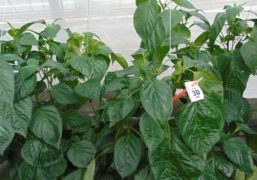
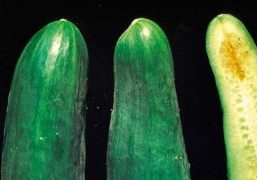
Rhizoctonia solani is a soil fungus with a wide host range and worldwide distribution. Its host plants include virtually all vegetables, flowers, shrubs and trees. It can cause serious damage to the plant by attacking the roots, stems, bulbs, base and other parts of the plant in and above the ground. The most common symptoms are root rot and stem rot. The fungus can also cause sunken patches on fruits.
The effect of the fungus is also known as ‘damping off’ as it causes the stem to die off at ground level. Very young plant material can even die off before or immediately after the seedling emerges from the ground. The fungus is mainly found in soil-grown crops such as radish, lettuce, bean, chrysanthemum and summer flowers, but it also occurs in pot and bedding plants.
Rhizoctonia does not produce asexual spores. The pathogen overwinters as mycelium or sclerotia. Strands of mycelium can then appear in favourable conditions. The fungus spreads via water, tools carrying soil particles, and other contaminated materials. The optimum temperature for infection is between 15 and 18ºC.
Text: Andrea Disco. Image: Wageningen University & Research.
Constant arms race between plant and fungi
Fungi parasitize plants because they can’t assimilate themselves. They have developed numerous methods of penetrating the plant. In turn, plants have developed a complete arsenal of defences. The latter offers growers some encouragement.
If you want to read this content you need a subscription, or log in when you already have a subscription.