
Hoogendoorn
Potential for greenhouses to make sustainable leap in the tropics
Thanks to a united effort, an educational greenhouse project has been set up in the east African country of Rwanda. Its aim is to allow businesses, knowledge centres and governments to learn about greenhouse design, cultivation and marketing. It is a process of trial and error yet necessary now that the demand for quality products from Africa is clearly growing.
The interest in greenhouse production is growing worldwide. It is a way to make a big leap in sustainable production as greenhouse cultivation requires significantly less water, fertilisers and crop protection substances per hectare or per kilo of product than open field cultivation. In addition, a crop grown under glass or plastic is protected from extreme weather conditions so the growing conditions and product quality are safeguarded.
Hardly any history
This is true in both rich and poor countries. In a country in which agriculture and horticulture has undergone limited development it is a challenge to achieve a greenhouse design that is suitable for the local conditions as well as create an effective cultivation and marketing structure. Under the so-called Smart Adaptive Sustainable Horticulture, or Smart Horticulture for short, Dutch companies are working with local partners in Africa. In South Africa this involves mid- to high-tech greenhouses and in Rwanda low-tech greenhouses.
“This is the most suitable for Rwanda. There is some covered cultivation, set up from out of Kenya, but there is hardly any history of greenhouse horticulture and no supporting industry,” says Anne Elings, of Wageningen University & Research. He is involved in the project as trainer and researcher. “The level of knowledge is also very low. This is typical of many countries that are just beginning with greenhouse horticulture. The technology itself is not the most difficult; a greenhouse can be designed for all conditions. The challenge is to get the crop growing and in particular to maintain it. This requires training in skills and competences in order to apply the technology effectively and efficiently."
Good lesson
The horticultural company Rwanda Best Company, owned by Jean-Claude Ruzibiza, carries some of the risk. The specially designed greenhouse has been constructed on his property, 50 km north of the capital Kigali. Smart is meant to improve the food supply through covered cultivation, but it is also a learning project.
“Such a pilot is an investment for Dutch businesses as it costs money, even with a subsidy, but in the long run it should pay off. They see clear opportunities. The industry looks beyond this country; they learn from the greenhouse design and what it entails for other African countries," says Elings.
Weak link
Ruzibiza’s plastic greenhouse is equipped with ridge ventilation and insect mesh. The greenhouse climate is not actively regulated, but because the greenhouse is situated at a relatively cool, high altitude that it not a problem. The crop – currently high wire tomatoes, and soon sweet peppers as well – are in pots filled with rice hulls.
“We decided on substrate production instead of soil cultivation because large parts of Africa are contaminated with bacterial wilt. Cultivating in pots requires a technological step with many consequences; watering and fertilisation are more accurate,” he says. Each pot is supplied via drip irrigation. The irrigation is computer controlled; that is possible because the power supply in Rwanda is relatively stable. Crop protection, managed by Koppert Biological Systems, is still completely chemical because there is currently a ban on the import of natural predators. This will change soon, opening up more possibilities.
“The grower is very well supported and that is also necessary,” says Elings. “You see here in practice how difficult it is when people have to come from very far away. In a tropical country the disease pressure is extreme and therefore it is essential to comply with hygiene regulations. The advice is simple: always disinfect boots, wear a protective coat and enter the greenhouse through a lock. But people are the weak link in the system.”
Local crop advisor
The greenhouse was completed in the summer of 2015. The first tomato crop had to be broken off early due to teething problems in the nutrient supply and crop protection straregy. A lot was learned. The grower took the professional decision to start the second crop with a clean slate. The current crop, planted in March, is so far going very well. “Designing a suitable greenhouse for the local circumstances is actually the easiest step. This is still the case. Explaining cultivation measures such as pruning and plant balance is difficult when there is little basic knowledge. The funding runs out after 12 months and the support will have to be phased out. It would be nice if an experienced Dutch grower in such a country, was available to give advice every week. That would make a big difference. But when more greenhouses are built perhaps the growers can help each other out,” he says.
The knowledge transfer takes place at eight similar horticultural nurseries in the region. A local crop advisor has also been hired who supervisors the grower and follows the training himself. In this way the knowledge transfer stays in the region.
Stable supply
The driving force behind the development of greenhouse horticulture is the demand for fresh and reliable vegetables. As well as the very many poor people in Rwanda there is also a growing middle class that is prepared to pay for good quality products. In addition, there are hotels, restaurants and, for example airlines, with a clear demand. “It is currently a process of trial and error. But in the longer term, such developments are necessary to meet the needs of the consumers. The middle class wants products that look good and that are grown with few chemicals. The latter is becoming increasingly important. And if you want to spray less, you certainly need greenhouses," says the researcher.
Apart from the production certainty, preserving the quality in the sales chain also needs a boost. Traditional open field tomatoes are often already overripe at the time they are sold. To differentiate from this Rwanda Best needs to handle the fruit as little as possible and put it directly into the right containers. “But the boxes cost money and may not be returned. Cooling also costs money. A stable supply of good quality produce is currently the primary focus before considering other matters such as sales under a brand name,” he says.
Market demand
LEI Wageningen University & Research has therefore also conducted a chain analysis in order to clarify the current situation and to identify bottlenecks. The researchers have made recommendations that will reduce the post-harvest losses (up to 40%).
The project clearly arouses interest in Rwanda. “The result is a big increase in interest in greenhouses. This is an interesting aspect for participating horticultural suppliers. In many African countries local and international companies are supplying greenhouses in which a lot can be improved. Market demand therefore exists. There must be opportunities for a good Dutch product that is accompanied by support and knowledge transfer, especially as governments increasingly encourage covered cultivation due to water shortages. Many teething problems have to be overcome, but if the Netherlands positions itself well, there are opportunities."
Partners working together
Within the project Smart Horticulture Rwanda, business, knowledge centres and governments are working together. Dutch companies are united in Holland Horti International. The companies participating in Rwanda are Bosman Van Zaal, Hoogendoorn, Rijk Zwaan and Koppert. The knowledge centres are Wageningen University & Research, LEI Wageningen University & Research, TNO and BoP Innovation Centre. The local consultant Green Pathways is also involved. The project is financed by businesses and the program FDOV (Facility for sustainable entrepreneurship and food security) of the Dutch Ministry of Foreign Affairs.
Summary
Dutch companies and knowledge centres are involved in the greenhouse project Smart Horticulture Rwanda. It stimulates interest in greenhouse cultivation and serves as a learning project. Greenhouse cultivation can improve the food supply in Africa and meet the growing demand for quality products.
Text: Tijs Kierkels. Images: Wageningen University & Research and Wilma Slegers.
Much to gain with improved control over lighting installations
Assimilation lighting has a big impact on the greenhouse climate and - when the electricity is generated on site - on the efficiency of the energy generator. Optimising the control of the lighting installation leads to a gain in both areas. Two growers and their suppliers explain how they achieved it.
If you want to read this content you need a subscription, or log in when you already have a subscription.
Experts try to revitalise China’s failing high tech greenhouses
China’s increasing awareness of food safety and food security is driving development of more modern and efficient cultivation systems. Over the last 15 years many new ‘high-tech’ greenhouses have been constructed, often with help from local subsidies. However, in many cases they are not adequately equipped and growers still lack technical expertise to make them work. With a growing trend to hire in expert advice some of these nurseries are becoming productive.
The majority of China’s horticultural crops are still produced using traditional, somewhat primitive methods but there is a growing desire to master high tech systems. An increasing shortage of resources such as clean water and energy cries out for more efficient production and at the same time consumers are demanding for safe, quality products.
In response, government and local authorities have subsidised many new greenhouses to improve land utilization, create better environmental conditions and reduce the need for chemical substances. However, the potential of many high tech projects has been wasted due to lack of knowledge: Splinter new glasshouses have been left desolate after a failed crop. Now there’s a trend to revitalise some of these greenhouses using foreign-based expertise.
Solar still common
The most common greenhouse in China in still the traditional solar greenhouse, a half plastic tunnel fixed to a single wall. Each solar house covers around 1 mu (0.667 ha) and usually several are built close to each other in an agricultural zone. These solar greenhouses are mostly found in the north of the country where the temperature can drop to -15ºC and even to -40ºC in the winter and rise to 35-40ºC in the summer. Despite the extreme cold, plants survive because the temperature inside remains relatively warm (10ºC), even without heating.
Sometimes growers store heat in the soil wall during the day and release it at night. But these greenhouses are not productive during the peak of the summer when the temperature becomes too high.
Some air vents are present in the roof but air circulation is poor and the climate is difficult to control. Plants are usually grown in soil and crop protection products are used regularly which results in reasonable yields but at extra cost.
Not profitable
In southern China, where it is much warmer, growers tend to construct plastic tunnels that require little investment. Again, no climate control is possible so in winter they are far too cold and they are very vulnerable to storm damage. “We do see an increase in solar greenhouses, and to some extent tunnels, but it’s the high tech greenhouses which are really growing,” says greenhouse consultant, Lifeng Peng, of Delphy China. This is an international organization for horticultural advice, training and research based in the Netherlands.
“More local greenhouse constructors are becoming established and the advantages are better environmental control, high and efficient utilization of land and less pests and diseases. However, the main problem is the operation. Growers may achieve a slightly higher yield than in a solar greenhouse but it is still a third to a half of that in a greenhouse in the Netherlands which cannot compensate the investment.”
Another problem is that the new high tech greenhouses are scattered over the entire country. If they were concentrated in one place growers could jointly establish an infrastructure and share resources, such as gas pipes or water purification units, and colleagues could more easily exchange knowledge.
Appearance is deceiving
Made from glass or polycarbonate, these new greenhouses appear similar to typical Dutch greenhouse. However, it’s a different story inside. Some have very little equipment or they have systems which growers don’t know how to use. “Some growers have installed locally produced irrigation systems but these did not always work too well. Others simply don’t have the knowledge to use the equipment to make the greenhouse productive. That’s where we are trying to help,” says Peng.
She admits it’s very difficult to change the mindset of the people running the greenhouses but has recorded a success at the Blue Horizon nursery in Shandong province, north east China. The nursery was established early 2013 by a big private group which has diverse interests including hotels.
Reconstruction design
It built six separate polycarbonate greenhouses each of 2500 m2 although actual growing space is 1500 m2, the rest is taken up by concrete paths and heating pipes. Four of the houses are growing dragon fruits, seedlings and pot plants but two had been virtually abandoned after the debut crop of strawberries failed.
In October 2015 Delphy was invited to do a reconstruction design with the goal to produce cherry tomatoes and medium sized tomatoes. “When I arrived these houses looked very neglected and had in fact been empty for nearly three years. The first thing we did was change the black soil covering to a white one because it was very dark inside. We would have liked to replace the polycarbonate roof with a glass but that would be too heavy for this construction.”
Yield improved
The greenhouses were changed from soil cultivation to cocopeat slabs, a drip irrigation system was installed and Peng formulated a fertigation recipe. “We explained the costs and estimated pay back period. Then we installed a Hoogendoorn climate computer and connected everything we can control such as the window vents and the pad and fan cooling system.”
The seedlings, varieties Fortesa 74-112 (cherry tomato), Rijk Zwaan 882 (medium size) were planted 1 Jan 2016 and they haven’t used any chemical products yet. Production still doesn’t compare with Dutch houses but it is much better than solar greenhouses. If production continues as expected, they should be able to achieve 25 kg/m2 from January to early August. A normal yield in China is just under 9 kg/m2.
The greenhouses are 4.8 metres high but there is still no rail system for trollies. It’s almost impossible to work at the top of the plants, says Peng frustrated. Workers stand on a table and then move the table to work on the next plant. “However, we were able to convince them to use bumblebees for pollination, instead of vibrators, and this is going very well. The tomatoes have a good shape and flavour.”
Pick-you-own tourism
The harvest is mainly for the group’s own five star hotel and restaurant but they also offer pick-your-own for residents living in the nearby towns. In fact, it’s gaining a reputation as a tourist attraction and many people come and pick the tomatoes because they know it is safe product.
“People like the experience of visiting a greenhouse and they pay double the normal price for tomatoes. However, it is not ideal in terms of hygiene and it does pose a disease risk. I am trying to persuade the owners to harvest the tomatoes themselves and perhaps sell them in their eco-restaurant which is very nearby,” she says.
Further expansion
Blue Horizon has already asked the consultant to help design and advise on the operations of a new 6-10 hectare greenhouse they hope to build soon. The company’s four other greenhouses could also be reconstructed in future. “I’ve also just done a reconstruction design for a greenhouse in Changzhou.” It currently produces pot plants but it wants to switch to 5,000 m2 for tomatoes and 2,000 m2 for strawberries. “This investor is looking for benefits so we did a lot of calculations to show the potential profit. It is a trend and we are being asked more and more for this service,” says Peng.
Demo centre
In a similar way a demonstration centre at Chongming Island, Shanghai, is aiming to integrate technology and skills into Chinese horticulture.
The National Engineering Research Centre for Protected Agriculture (NERCPA) is a two hectare demonstration unit designed by Dutch greenhouse manufacturer, the Bom Group, and built by its Chinese partner, Dushi Green. Priva coordinated the state-of the-art project which includes underground storage for heating and cooling storage, irrigation and internal transport systems. It contains trial compartments of 1,000 m2 which is similar to the Delphy Improvement Centre in Bleiswijk. The aim of NERCPA is to verify the possibilities for new technology in the Chinese market as well as offer training.
When clients are considering investing in a greenhouse in China they tend to visit NERCPA first, says Peng, whose colleague Didi Qian, was involved in setting up the centre. “Often in China people build a greenhouse and then seek cultivation advise but often the greenhouse is not suitable for the crop they want to grow. Now they are starting to realize that they first need a clear idea about what they want to grow and then should build a special greenhouse for those crops.”
Summary
Many high tech greenhouses in China are failing to fulfil their potential due to lack of knowledge and technical expertise. Some of these nurseries are reinvesting and by accepting expert advice have significantly improved yield and efficiency.
Text: Helen Armstrong. Images: Blue Horizon
Hoogendoorn and Svensson win GreenTech Community Award
On Thursday 16 June Svensson and Hoogendoorn accepted the GreenTech Community Award 2016 for their mutual innovation 'Connected Screening'. The software module casted most public votes.
Hoogendoorn and Svensson introduced 'Connected Screening' during the GreenTech in Amsterdam. The software module calculates the effect of various screens on ventilation, humidity transfer, energy savings and transmission of light and outgoing long wave radiation based on the Svensson screen characteristics and position. With this accurate data growers can achieve more screening hours without risking high humidity levels below fully closed screens. This allows growers to achieve a homogeneous climate, higher crop yields and up to 20% extra energy savings. Data is presented at a glance via a custom-made visualization.
Next Generation Growing
Field research within the Next Generation Growing (NGG) shows that the highest crop yields are achieved under double layer energy screens and completely closed screens (without gaps). However, in practice this is often hard to realize due to a mismatch of screen characteristics or inefficient use of climate control. This leads to an unstable greenhouse climate. The consequence: an increase in pests and diseases that negatively affects crop quality and yields. Hoogendoorn Growth Management and Svensson respond to these needs with the new screening software Connected Screening, specifically developed for the iSii process computer.
In the weeks before the GreenTech the public had the opportunity to cast their vote for their favorite innovation (out of 73 entries). 'Connected Screening' received 46% of the votes, followed by Priva's deleafing robot (36% of the votes) and HortiMax Go! of Ridder HortiMax (9% of the votes).
Source: Hoogendoorn/Svensson. Photo: GreenTech.
Related



Growing vegetables in an urban environment
Apart from Vertical Farming, there are numerous hybrid cultivation initiatives taking place in and on buildings, also known as Urban Farming and Rooftop Farming. Even restaurants, supermarkets and offices are experimenting with growing fruit and vegetables in cities.
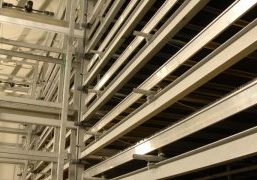
Vertical Farming is, of course, not suitable for crops that grow in an upwards direction, such as tomatoes and cucumbers. This problem was solved in Jackson (Wyoming) with the construction of an impressive building incorporating huge amounts of glass, designed by Larssen Ltd.: a very expensive building costing 3.7 million dollars, partly due to its earthquake-proof construction. Three stories of the building are dedicated to LED-illuminated Vertical Farming, with two stories reserved for herbs and leafy vegetables and the third for tomatoes. The 3,800 m2 surface area is sufficient for a production of 45,000 kg a year. The building is intended to bridge the awareness gap between horticulture and the city’s inhabitants and also provides space for education. The vegetables can be seen growing from behind a glass wall. The project received financial support through crowdfunding and the municipality is the owner of the building.
Restaurants and supermarkets
InFarm is directed at growing vegetables in big cities; in and by restaurants and the retail industry. ‘We are the new farmers and the city is our company.’ In his mind’s eye, the founder of InFarm is seeing supermarkets with multi-tier cultivation for leafy vegetables above the shelves. You simply can’t buy fresher food with fewer food miles than this! InFarm developed the Kräutergarten for the Berlin-based Metro wholesaler, just as Mirai did in Japan: a multi-tier LED-illuminated greenhouse in the supermarket. The crops grown consists primarily of herbs (basil in particular) and leafy vegetables grown on a shallow layer of water (hydroponics).
You simply can’t buy fresher food with fewer food miles than this!
InFarm also operates the UFcontainerfarm in Berlin: a container with a small greenhouse on top. Tilapia fish are bred in the container. The water from the fish is pumped up to the greenhouse, where it is used to water the plants after it has been purified. This concept is also used in London, where it is called a GrowUp Box.
Above and below ground
An outsider in Urban Farming is SkyGreens. This Singapore-based initiative grows vegetables on trays suspended in gutters. These gutters circulate vertically by means of two A-shaped pillars nine metres tall. The circulatory movement enables each plant to obtain the same amount of sunlight. The company has 1,000 of these vertical towers with 20 gutters each and produces 800 kg of vegetables a day, including Chinese cabbage, spinach and other leafy vegetables.
The London-based Farmdrop initiative produces herbs underground, in former bomb shelters.
Another outsider, but of an entirely different calibre, is the Pasona office building in Tokyo, where a myriad of plants and vegetables are grown on and in the building, which also features a dedicated Vertical Farming division. The vegetables grown here are intended for the company restaurant. In conference rooms, workspaces - in fact, all over the building - you will see tomatoes growing all the way up to the ceiling, or sweet peppers and eggplants, broccoli, lemons and even passion fruit. A total of 200 varieties of vegetables, fruit and even rice are grown here! The staff is free to pick whatever they want. The company employs a permanent staff of ten people to keep the vegetables in tip-top condition. Not everything is grown efficiently, but the project was never intended to achieve a high production rate; the concept was developed to engender awareness for food provision.
The London-based Farmdrop initiative produces herbs underground, in former bomb shelters: 30 metres below the surface. It took Farmdrop two years to conquer all the challenges of underground cultivation.
Rooftop greenhouse
Where Vertical Farming appears to be booming, there is less interest among the inhabitants of big cities for rooftop cultivation - in greenhouses, at any rate. Few people practice greenhouse horticulture on rooftops, but when it is, this is mainly in the USA.
According to GothamGreens, urban farming is all about re-establishing the connection between people and the food they eat, educating young people and nurturing the soul.
A firm called GothamGreens operates a series of rooftop greenhouses, in which leafy vegetables are grown in gutters, in New York and Chicago. The first 1400 m2 rooftop greenhouse was built in 2011, and the total surface area of GothamGreens has since risen to 16,000 m2 distributed across four sites. The biggest measures 7,000 m2 and is built on the roof of a bowling alley. According to GothamGreens, urban farming is all about re-establishing the connection between people and the food they eat, about educating young people and nurturing the soul. ‘Urban Farming will never become a primary source of food, but its impact is lasting.’ A head of lettuce grown here costs around $4 at Whole Foods, almost twice as much as conventional lettuce grown in the field and $1 more than organic lettuce.
Bright Farms also aimed to dedicate itself to rooftop cultivation, but it was forced to give up its plans due to the difficulties it encountered with permit applications and the costs, which were 20% higher in comparison to an 8.5 million dollar greenhouse built just outside of the city.
The Hague
The Swiss Urban Farms initiative in Basel built a 250 m2 rooftop greenhouse as a pilot in 2013. Three years later, in May 2016, the UF De Schilde rooftop greenhouse opened its doors in The Hague, the Netherlands. As opposed to the rooftop greenhouses in the USA, which are all on one or two-storey buildings, this greenhouse is situated on top of building six storeys tall. Greenhouse builder Van der Valk Kleijn designed an extra-sturdy greenhouse with double glazing incorporated into the walls and roof. The project’s financiers are SVn (Stimulation Fund for Public Housing) and private investors. The greenhouse collaborates with Rijk Zwaan, Koppert Biological Systems and Priva.
UF hopes to cater to 900 families who can order fresh fish and vegetables via a subscription, as well as to restaurants.
The 1,200 m2 greenhouse is the biggest rooftop greenhouse in Europe. The farm grows lettuce, micro-greens and tomatoes. The floor underneath the greenhouse is rented from the municipality of The Hague to farm fish, whose waste products are subsequently used as nutrients for the plants. Visitors can watch the cultivation process from behind a glass wall. UF hopes to cater to 900 families who can order fresh fish and vegetables via a subscription, as well as to restaurants: 500 tilapia fish a week and 50 tons of vegetables a year. UF expects the venture to be a success, mainly because consumers are enthusiastic about initiatives engaged in the local production of food.
Priva developed the necessary control technology for the project, which required an extraordinary degree of innovation taking into account all the regulations that apply to fish farming (e.g. temperature and oxygen content) and irrigation (including fertilising, temperature and electrical conductivity) for the various greenhouse sections in which lettuce, tomatoes and leafy vegetables are grown. On top of that, Priva also developed the systems for CO2 and climate control.
Canada
Lufa Farms in operates a 3,000 m2 rooftop greenhouse in Montreal (Canada) and one in Laval measuring 4,000 m2. Both were built by the Montoni Group and Kubo. The greenhouses are capable of withstanding large amounts of snow.
Verticrop combines a rooftop greenhouse with Vertical Farming, with cultivation on horizontally circulating plates in twelve tiers in a greenhouse on top of a parking garage in Vancouver (Canada). As the plates rotate slowly, all plants obtain the same amount of light and are watered and harvested at a particular point. However, the company has since gone bankrupt. The investment in both the rooftop greenhouse and a complete new cultivation system was probably too high. Additionally, crops grown using this system tend not to grow as profusely due to the limited amount of daylight they receive.
Horticulture 3.0?
An interesting point for consideration is the extent to which the higher costs of a rooftop greenhouse are balanced against the presumed higher quality, freshness and local distribution. Or will the multi-tier cultivation of fruit, vegetables and fish under fully controlled conditions pave the way for Horticulture 3.0, with its smaller CO2 footprint, retention of local employment and higher diversity in supply as its social driving forces? In the meantime, restaurants, supermarkets and offices are all experimenting with growing their own vegetables, and urban consumers have discovered the art of growing their own food as a meaningful and pleasurable pastime.
Locally grown, super-fresh and demonstrably sustainable could very well become the new standard of reference.
The consequences are, however, very limited for the Dutch horticulture industry, which has traditionally always focused on the export of primarily herbs and leafy vegetables to other European countries. This does not detract from the fact that the industry should consider expanding its focus area to feeding mega-cities rather than ‘shifting around’ products from one location to another, as the CEO of Hoogendoorn, Martin van Gogh, recently suggested during the Greenport Annual Event. Locally grown, super-fresh and demonstrably sustainable could very well become the new standard of reference.
Text: Tuinbouwteksten.nl/Theo Brakeboer. Photo: UrbanFarmers/Martijn Zegwaard.
Download the complete Vertical Farming files, including the pros and cons of vertical farming (16 pages, pdf).
If you want to download this content you need a subscription, or log in when you already have a subscription.
Related



Russian greenhouse project Agro-Invest captured on video
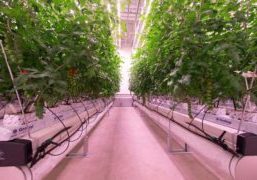
Agro-Invest is a turn-key greenhouse project in the Kaluga region, a special economic zone located 300 km from Moscow. The first 20 hectare of the in total 100 hectare greenhouse complex has been in practice for 18 months. Partners Dalsem and Hoogendoorn have captured this inspiring project on video.
The Agro-Invest project is a state of the art greenhouse with high-tech systems of Dutch origin. Among its features are a 40 MWe power plant for generation of heat, power and CO2, high light levels and intermediate plant lighting, irrigation water re-use, integrated propagation area with own seeding and germination facilities and a grading system suitable for all type of cucumbers and tomatoes.
Self-sufficient
The greenhouse comprises 10 ha for the production of tomatoes (four varieties: one beef tomato variety, one vine tomato variety and two varieties of cherry tomatoes), 8 hectares of cucumbers and a 2-hectare propagation area for young plants and seedlings, plus a packing area/irrigation room and an energy building. This greenhouse complex will make a tangible contribution to the region’s goal of becoming self-sufficient in the production of vegetables in the longer term. This is the first stage of a project that will ultimately comprise a total of 100 hectares of greenhouse on 238 hectares of land.
Source: Hoogendoorn Growth Management/Dalsem.
Related
Hoogendoorn introduces The Next Grower
The Next Grower is a new online tool developed by Hoogendoorn. This tool enables growers to configure and visualise the greenhouse irrigation, climate and energy controls they want, and have these assessed by an expert.
After entering information such as the greenhouse type, crop, substrate, surface area and location into the system, the grower will be asked how he would like the greenhouse’s climate, irrigation and energy demands to be controlled. Users of this user-friendly tool will then immediately receive an e-mail from Hoogendoorn with a visualization of the configuration, some useful pointers and (if desired) personal advice from a Hoogendoorn expert. The tool can be obtained free of charge.
Watch the video for an in-depth explanation or go directly to www.thenextgrower.com
Source/photo: Hoogendoorn Growth Management.