
HVC Alkmaar
HVC energy supplier launches trial for capturing Bio-CO2
HVC is currently installing a capture installation for Bio-CO2 in Alkmaar as a demo trial for the bio-energy power plant. The Bio-CO2 will be tested later this year by greenhouse growers in the far north of the province of Noord-Holland.
HVC is the first company in the Netherlands to capture CO2 from a bio-energy power plant and to convert this into liquid CO2 for horticulturists in the region. HVC captures the Bio-CO2 directly from flue gases, thus reducing its own CO2 emissions. Linked to a bio-energy power plant, the installation will prevent approximately 4 kilotons of CO2 from being emitted on annual basis. Thanks to the Bio-CO2 greenhouse growers in this region will no longer need to rely on the fossil fuel natural gas. There is a particular need for this in hot summer weather. A single ton of Bio-CO2 will enable you to save half a ton of CO2 derived from natural gas.
Increased sustainability
The construction of the CO2 demo trial installation is an intermediate step for building a larger capture installation as a regional source of Bio-CO2 and to attain the goals of the Noord-Holland Green Deal CO2 for greenhouse horticulture companies. The external supply of CO2 is a key precondition for enhancing the sustainability of the greenhouse horticulture industry. Robert Kielstra, Director of Energie Combinatie Wieringermeer (ECW) and representative of the greenhouse horticulture companies at Agriport: ‘Capturing CO2 is a prime example of the circular economy. Although this is just a trial installation, this step will mean a giant step forward in sustainability – particularly after a scale-up – because it contributes to reducing the use of natural gas in the greenhouse horticulture industry.’
Green heat
In addition to supplying Bio-CO2 to greenhouse growers, HVC’s bio-energy power plant will also provide 4,800 customers in Alkmaar, Heerhugowaard and Langedijk with heat. The ultimate goal is to provide 15,000 households and commercial enterprises with green, sustainable heat. The bio-energy power plant, which is fired by waste wood, is in fact nothing but a huge central heating boiler for the entire region. When waste wood is burned, steam escapes which is subsequently used to heat water. This water is then transported to households and businesses in the region via heat pipelines. The cooled-down water will return to HVC, where it is heated up again.
Source: HVC. Photos: HVC/ Marc Dorleijn.
Related



Household waste heats sweet peppers in the Alton greenhouse horticulture area
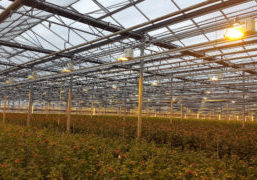
A household waste disposal company in Alkmaar (HVC Alkmaar) will be supplying the greenhouses of the NH Paprika sweet pepper farm in Heerhugowaard with residual heat. This sweet pepper farm is the very first business in the Alton greenhouse horticulture area to start using this sustainable energy at the end of this year. Both parties recently signed an agreement that will connect the farm to the heat network of the household waste disposal company.
With 11 hectares of sweet peppers and a consumption of 5 million m3 per year, NH Paprika is the largest consumer of natural gas in the Alton area, which is located in the Dutch province of Noord-Holland. As set out in the agreement, HVC Alkmaar will be investing in connecting its existing heat network with the Alton greenhouse horticulture area. By the end of this year, an 8.5 km connection will be made from the HVC Alkmaar heat network to the greenhouse site. This will enable the growers in the area around Heerhugowaard to use sustainable energy to heat their greenhouses in the years to follow: an important step towards realising their ambition to stop using fossil fuels for cultivation by 2030.
Green heat
According to Alderman Monique Stam the green heat supplied through the heat network will enhance sustainability throughout the entire municipality of Heerhugowaard. In addition to the greenhouses, other buildings such as private residences, offices and commercial properties will also be able to tap into the heat network in the following years. Last year, the Municipal Council expressed its commitment to connecting at least 2500 private residences to the heat network in the next decade to come. The heat network is part of a collaborative venture initiated by government bodies and the corporate community, who have joined forces to enhance the sustainability of the greenhouse horticulture industry in the Alton area, explains area coordinator Dave Vlaming of the Ontwikkelingsbedrijf NHN development corporation.
The future of the Alton greenhouse horticulture site
As an independent area coordinator, Ontwikkelingsbedrijf NHN has been engaged in making the Alton area future-proof for the past five years. This project is being carried out in collaboration with various entrepreneurs, the Province of North Holland, the Municipality of Heerhugowaard and Koggenland, the Rabobank, the Stivas foundation for improving agricultural structure, the Netherlands Enterprise Agency, the Dutch platform for greenhouse horticulturists LTO Glaskracht and Alkmaar HVC. “During the 2008 economic crisis the future of this greenhouse area was looking everything but rosy, but Alton is now starting to take on an exemplary function with regard to enhancing sustainability and promoting closed loop horticulture. The construction of the heat network is a tremendous breakthrough in future-proofing the Alton area. Thanks to the heat network, more businesses are expressing an interest in making investments here, and the area is also attracting entrepreneurs from outside. Several years ago Gootjes Allplant established itself in Alton, followed by Verver Export last year. Another four companies from outside have expressed an interest in relocating to Alton. Amigo Plant purchased a 10-hectare site here last year,” confirms Vlaming.
Alton is the oldest of three areas in the northern part of the province of Noord-Holland to boast a dense concentration of greenhouse horticulture enterprises. Together with Het Grootslag near Andijk and Enkhuizen, and Agriport A7 in Middenmeer (where greenhouse horticulture enterprises cover 60 hectares of greenhouses on average), these three locations are responsible for the large-scale production of horticulture products in the Netherlands.
Source: HVC. Photo: HVC/Marc Dorleijn.