
Jungle Talks
Jungle Talks webinars about horticulture in Mexico now online
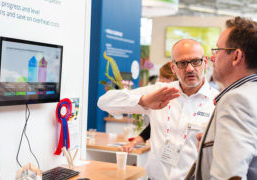
Last week, the major Latin American horticultural fair was organized in Irapuato, Mexico. In the week that Donald Trump was elected as the 45th President of the USA, Mexico discussed its horticultural future. Surprisingly, the Mexicans were far from shocked. ‘’Whatever president they choose, they will need (affordable) food. It will be business as usual’’, was the most frequently heard comment.
The three Jungle Talks webinars that were organized in the same week pointed in a similar direction. Vegetable production for exports has only started around the year 2000 and has made great progress ever since. It is expected by specialists from ENZA Seeds, Hortimax and Plantanova – Horticonnect that saturation of the (export) market still is far away. Competition from other Latin American countries is not expected to hamper Mexico’s position and in the meantime, Mexico’s competitiveness over North American producers is expected to increase further.
'The sleeping giant'
Production of flowers and potted plants is likely to improve as the sector gets better organized and agrologistics improve according to Akiko and Xochipilli. Besides these expected developments in the local market, exports will increase. When ‘the sleeping giant’ wakes up is hard to predict. But due to the geographical position of Mexico combined with increasing problems in countries like Ethiopia, Ecuador and Colombia (security, politics, increasing cost levels, scarcity of labour), investments in export oriented ornamental production are expected to take place.
Agro Parks
Agro Parks in Mexico have started in 2006 with the establishment of the Agro Park Queretaro. Lessons have been learned in the past 10 years and it has become clear that Agro Parks can create many additional advantages. Joint access to water, energy, labour but also market and infrastructure will reduce costs and will attract more foreign investment. Security is hardly an issue anymore when you establish your facilities in an Agro Park. Freshmex, Wageningen University and United Farms were quite clear on that. ‘’If you intend to invest in Mexican horticulture (and why wouldn’t you), do it in an Agro Park’’.
The Jungle Talks about horticulture in Mexico have supplied tons of information about vegetable production, ornamental production and agro parks in a country that grows with an average rate of 1.200–1.500 hectares of medium/high-tech greenhouses per year. Each session is available on www.jungletalks.com.
Source: Jungle Talks. Photo: Irapuato Trade Fair.
Related




Prize Contest Jungle Talks
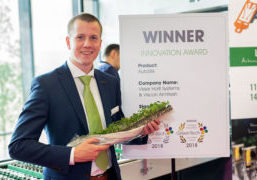
Jungle Talks is a new concept in the horticultural sector and intends to exchange and transfer knowledge between horticultural professionals and to make crossovers between horticulture and other sectors.
Being a new initiative in a new and still to be developed market, the organizer of Jungle Talks, Ideavelop S.A. from Costa Rica, has decided to open a contest to stimulate creativity and to help improve Jungle Talks on any possible level.
First prize: A Green Circle trip to Costa Rica for 2 persons (double room) in the low season (September – Mid November or April – Mid June). The Green Circle can be considered as the most creative way to explore Costa Rica in a timespan of two weeks. This statement is backed by NatGeo Traveller from The Netherlands by means of a cover story in their spring issue of May 2015. In case the winner of the first prize would prefer to travel in different months, the difference in costs for both The Green Circle as such as well as for both tickets, will be on the expense of the prize winner.
More info on the Green Circle can be found at www.the-green-circle.com or www.edventure.biz.
Please fill out the table below as complete as possible, either in English, Spanish or Dutch and send it to Ed Smit via ideas@ideavelop.biz before Sunday June 12, 2016:
- name
- surname
- cell phone number
- skype adress
- company or organisation
- website
- your idea or suggestion for Junge Talks (max. 500 words)
Related
Shaping the future: from agri- to nutri-culture
Prof. Dr. Ir. Tiny van Boekel, working in food quality and product design, Lars Charas, ‘gastronomic author’ and founder of Feeding Good and Peter Maes, corporate marketing director Koppert Biological Systems are our guests in this very special Jungle Talk on Tuesday 26 April, 19.30 Dutch time. The central theme is the relation between healthy plants, healthy food and healthy people.
After WW II the so-called ‘Green Revolution’ improved food production, both in quantity and in quality. Prices went down, production volumes increased and now a growing part of the world population has access to affordable food.
Dealing with the future challenge of having to feed 9 billion people in 2050 large scale production still dictates the daily life of most agri- and horticultural producers. Large scale and monoculture production, often combined with pesticides and synthetic fertilizers have exhausted soils in many places. Is this the way to continue or can we find alternatives?
Healthy plants, healthy food
A healthy soil is supplying elements to the plant, making it more vital and healthy and less vulnerable to pests and diseases. Healthy plants are providing solutions to prevent malnutrition. Can we try to combine natural solutions with modern technology for a sustainable future? Can we focus on healthy food instead of calories only? Can this be done in a sustainable way? What can we learn from nature?
Our guests invite you to join the discussion on sensible solutions for food production and food technology. Join our debate on Tuesday evening April 26 at 19.30 hrs.
You can register to participate in this Jungle Talk (free of charge) via this link. The only thing you need to do is to be online and make sure your internet connection is working properly. Please note this webinar will be conducted in English.
For more information, please visit www.jungletalks.com.
Related

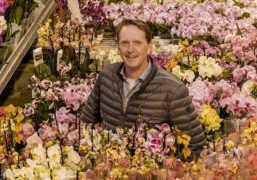
‘We are putting sustainability on the map in Central America’
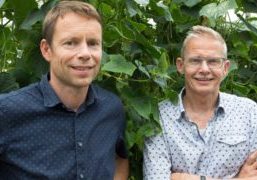
NethWork started at the beginning of 2012 as a cooperation between various Dutch horticultural suppliers wanting to contribute to innovation and the sustainable development of horticulture in Central America. The driving forces behind NethWork are Ed Smit and his wife Renée Snijders, who moved to Costa Rica in 2002 from the Dutch Westland area, as well as Jos Leeters, who lives in the Netherlands. Read this interview with Ed Smit about how three and a half years of NethWork contributed to the horticultural industry in Central America
How and why did you end up in Costa Rica thirteen years ago? And what have you been doing for the past few years?
‘I started out as a distributor for Koppert Biological Systems, because I wanted to try to reduce the use of chemical crop protection in Costa Rica. This proved to be a long and difficult path however and that is why I started in 2006 with Ideavelop, a consultancy firm that develops ideas, conducts market research and trade missions, and organises seminars and events for the horticulture industry. One of the projects we carried out in 2007 was an in-depth market study of the horticultural sector in Central America - in Panama, Costa Rica, Nicaragua, Guatemala, Honduras and El Salvador – an assignment of the Dutch government. Several interesting trade missions and various orders for Dutch companies were a spin-off of this project. In addition, we set up a travel agency for adventurous holidays in Costa Rica: Edventure. And last but not least, Renée, Jos Leeters and I took the initiative to start NethWork, the horticultural cluster that was officially established three and a half years ago.’
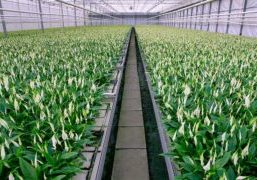
Central America is the world’s largest supplier of pot plants and a key producer of cuttings.
How did NethWork start?
‘Central America is composed of six different countries, each of which represents a relatively small horticultural market. Doing business is therefore no easy task for European horticultural suppliers; you keep reinventing the wheel. At the same time, opportunities abound in this part of the world. Central America is the world’s largest supplier of pot plants and a key producer of cuttings and therefore the region has high potential. The problem however, lies in lack of expertise and technology in order to successfully (and sustainably) cultivate new products such as cut flowers and greenhouse vegetables. This has prompted us to get together with a group of Dutch horticulture suppliers and to join forces in promoting the further development of the Central American market.’
How does NethWork differ from other international horticultural clusters?
‘Many aspects related to our approach are unique, such as ensuring that all the organisations in the cluster are completely complementary, eliminating competition between members. Everyone has the right to veto potential members if they compete with existing cluster activities. The acceptance criteria applied by other international horticultural clusters is generally more lenient.
‘We also attach considerable importance to marketing and communication; aspects that are generally overlooked in the horticultural industry. We entered into a partnership with Imagro, an agency for strategy and creation and we can now present ourselves via a modern corporate design and we are also active on social media. What we do, we want to do well and we also communicate this clearly within the cluster. This is another aspect in which NethWork distinguishes itself from other horticultural clusters. In addition, we are not a top-down organisation, but work bottom up. All our decisions must be supported by all our members.’
How is all of this funded?
‘When we officially launched NethWork at the beginning of 2012, our activities were in part made possible via the 2g@there programme of the Dutch government. This subsidy program facilitated the set-up of Dutch clusters in the exploration of new markets. This financial support came to an end in July 2015 and NethWork is now entirely self-supporting. This means that we count now more than ever on our members’ proactive approach and also had to raise the financial contribution of each member. As a result, several organisations cancelled their membership, but we now work with a cluster of nine, highly motivated enterprises.’
In the near future, it is expected that growers can demonstrate their compliance with all sorts of regulations on a 24/7 basis in order to obtain their “License to Be”.
What are NethWork’s core values?
“NethWork’s core values are transparency, innovation and sustainability; these are the common threads running through all of our activities and endorsed by all of our members and the basis of our slogan ‘Think Orange, Grow Green’. Of course, respect, trust and unanimity are important too. We apply a no-nonsense, bottom-up approach, which entirely reflects what Renée and I believe in as entrepreneurs. You could, in fact, consider NethWork an extension of our own vision and mission.’
Just how important is sustainable cultivation in the horticulture industry?
‘In the future, a horticultural company will have to put itself to the test every single day of the week, also in the field of sustainability. After all, the world is becoming more transparent and society is becoming more and more vigilant of what is going on in the horticultural sector. A onetime audit that will get you certified for an entire year will soon be a thing of the past. In the near future, it is expected that growers can demonstrate their compliance with all sorts of regulations on a 24/7 basis in order to obtain their “License to Be”. NethWork aims to help the horticultural industry to make these sustainable methods more comprehensible. ’
Can you elaborate on some of the activities developed by NethWork in the past few years?
‘The project that stands out most is Journey2Sustainability (J2S), a pilot project we opened in the spring of 2014 in Guatemala. This project helped Guatemalan company Palki – a renowned pot plant producer in Central America - to implement more sustainable practices. The aspects we improved included recirculation, composting, energy consumption, efficiency and the nursery’s personnel policy. With J2S we want to gain more insight into sustainable cultivation practices and, in doing so, inspire other growers in Central America and elsewhere in the world. Projects like this enable NethWork to present itself as a cluster that can help horticultural producers to switch to alternative cultivation practices that, in addition to being sustainable, are also profitable. The “P” of “Profit” always comes first, followed by “Planet” and “People”. This pilot is already bearing fruit: the project was nominated last spring for the “Green Entrepreneur of the Year Award” and “Guatemala’s most sustainable company”. In addition, virtually all NethWork members were able to provide products and services to this project, which also generated income and, therefore, profit.’
Nine members have decided to continue without additional government funding and this clearly shows that everyone recognises the added value of this cluster.
You also offer management training courses. What is the procedure behind this?
‘We select managers from Central American horticulture businesses who are then invited to participate in a three-week training programme organized by NethWork members in the Netherlands. During this programme, they get to know one another better, building trust both within the group and towards the NethWork members. This creates a good foundation for Central American horticulturists to place orders with NethWork members and has enabled us to make a name for ourselves in these countries’ horticulture industries. Until now, the training programmes were partly funded by government grants, but we are currently in the process of commercialising this project. The process is comparable to NethWork as a collective. The first step was taken with support from the Dutch government, but the objective is to become self-reliant as soon as possible.’
How has NethWork contributed to the participating organisations?
‘It is difficult to pinpoint what three years of NethWork has brought its members in terms of financial gain. As Ideavelop, we don’t have access to our fellow members’ order portfolios, but that’s not really necessary. Nine members have decided to continue without additional government funding and this clearly shows that everyone recognises the added value of this cluster. This also goes beyond simply generating orders in Central America. If one of us were, for instance, engaged in a project in China, this person would undoubtedly involve his NethWork mates. This is certainly a benefit, particularly on the short term.’
Our final goal is clear: we aim to show people what sustainability is all about but, even more than that, demonstrate what can be gained from sustainability.
What are NethWork’s goals for the future? What are your plans?
‘We aim, above all, to expand our activities in Latin America. We are considering to enter the Mexican market and look into opportunities in several other South American countries. Besides, we want to involve consumers more in Journey2Sustainability. The horticultural industry develops many wonderful and sustainable products, but we need to tell these stories to the final consumer as well. Therefore the roll-out of the philosophy behind Journey2Sustainability, vertically and throughout the entire chain, is a new challenge that we are wholeheartedly engaged in. Our final goal is clear: we aim to show people what sustainability is all about but, even more than that, demonstrate what can be gained from sustainability. It is a long process, we takes small steps and we rely on a bottom-up approach, with the full commitment of all the parties involved.’
NethWork's participating companies: Priva, Van der Knaap Substrates, Aweta, Modiform, Luiten Greenhouses, Van der Heide Foliekassen, JConnectA, Imagro and Ideavelop.
More information is available at www.nethwork.info and www.journey2sustainability.com.
Text: Tuinbouwteksten.nl/Ank van Lier.