
Koppert Biological Systems
Royal Award for the management of Koppert Biological Systems
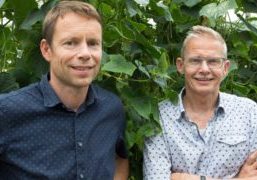
The management of Koppert Biological Systems received a Royal Award on 15 September. Paul Koppert and Henri Oosthoek received the award from mayor Pieter van de Stadt. It was the culmination of a week in which the family company celebrated its 50th anniversary.
Both men were appointed Officer of the Order of Oranje-Nassau. One of the reasons behind both Paul Koppert and Henri Oosthoek receiving the award was their tenacity in creating awareness of biological crop protection across the globe. As well as leading the family business, Koppert and Oosthoek make a significant contribution to people in need. For example, they were the founders of the Christian Childcare Programme Foundation in Uganda, which has been helping disadvantaged children follow basic and vocational education since the early 1980s.
Experience centre opened by the King of Holland
Koppert Biological Systems celebrated its 50th anniversary this week with all its ‘partners in nature’. The highlight was King Willem Alexander's visit on Thursday, 14 September, when he opened the Experience Centre. Paul Koppert and Henri Oosthoek gave the King a tour of their company, where he learned about the use of insects, mites and microbiological solutions produced by the company in international agriculture and horticulture.
Standard bearer for Dutch horticulture
Koppert is a standard bearer for Dutch horticulture. In 2012, it won the first DHL Export Trophy, which is awarded to a Dutch SME company for distinction in export and innovation. The jury called Koppert 'An example for many companies in the Netherlands'. In 2016, Koppert was proclaimed winner of ‘The New Champions’ by the Financieel Dagblad newspaper. The jury stated that it is a ‘Fantastic fast-growing company that is making a sustainable contribution to solving the global food problem thanks to biological crop protection, and has great potential to shake up the microbiology market’.
Biological pest control now commonplace
The company, which started in 1967 with a type of predatory mite (Spidex) to combat spider mites, is now a multinational with 25 branches in 27 countries. Currently marketing more than eighty natural enemies against pests and diseases in horticulture, Koppert is achieving revenue growth of 12.5% every year (€ 160 million in 2015, with € 6.5 million profit). The company is a global leader in greenhouse horticulture, marketing useful insects, microbiological products (since 1980) and bumblebees for pollination (since 1988). Biological pest control for crops grown under cover has become commonplace worldwide. About 90% of the area used to grow cucumbers, peppers and tomatoes is treated biologically and pollinated with bumblebees.
Expansion in other sectors
Koppert is now expanding its empire into other sectors, such as open-air cultivation and animal husbandry. In 2012, Koppert acquired Brazilian company Itaforte, a producer of microorganisms, giving it access to the market for large-scale open-air cultivation of crops such as soya, sugar cane, corn and wheat. The challenge now is to introduce new products that can increase plant health and yield, despite the narrow margins. One example is Panoramix, launched by Koppert in 2015, a seed coating that encourages seedlings of large arable crops. Microorganisms and amino acids must ensure that crops such as wheat and corn can absorb nutrients like nitrogen and phosphate. For the livestock market, Koppert introduced a predatory fly, a natural enemy of stable flies, which can be used with pigs, chickens and cows. Koppert also introduced a predatory mite to control blood lice in both livestock and laying hens.
The Global Market is Open
There are now thirty companies operating in and from the Netherlands, including Bayer Crop Science, Certis, Biobest, BASF and Syngenta, which are active with biological pest control, pollinators and microorganisms. Koppert is the market leader in this sector thanks to its fifty-year lead. In 2016, sales were € 182 million, with the company employing 1,213 FTEs. Net profit last year was € 12.3 million. Koppert has 25 branches in Europe, North America, South America, Northern and Southern Africa, Russia, China and India. The company employs 400 consultants who help customers introduce biological pest control, bumblebees and microorganisms. Until 2000, sales were largely dependent on vegetable crops, but now seed companies, fruit farmers, flower growers and arable farmers are also important customers. Another big market is up for grabs. According to Paul Koppert, "Our development as a company has only just started."
Text: Mario Bentvelsen. Photo: Koppert Biological Systems.
Related


New Trichoderma strain provides impetus for healthy root environment
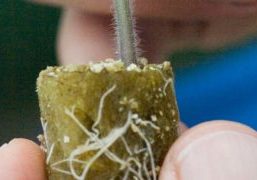
For more than ten years the application of Trichoderma fungi has been common practise in horticulture. They help cultivated crops grow better and become more resistance to diseases. How this symbiosis works is a complex area of research. Nevertheless the developments keep coming. This year a new strain is being launched on the market.
If you want to read this content you need a subscription, or log in when you already have a subscription.
Vertical farming is definitely the future, the only question is where and when
On 14 October 2016, InnovationQuarter organised a meeting at Koppert Biological Systems with the theme ‘Vertical Farming, in or out?’. More than 90 representatives from the sector listened to speakers such as Martien Penning (Hillenraad), Arnold van Liempt (Philips) and Jasper den Besten (HAS) talk about the opportunities, threats, benefits, costs, opportunities and challenges of vertical farming. Rien Panneman from Staay Food Group announced that a large construction for a vertical farm project in Dronten was all underway.
Martien Penning from Hillenraad gave a presentation on whether vertical farming (VF) can become horticulture’s ‘KODAK Moment’. His answer was yes. He substantiated this with an analysis of the most recent developments in the US and Asia, where dozens of VF initiatives have been rolled out. The big question was: When will VF perform as well as or better than conventional farming in greenhouses? Cost, quality, food safety and delivery speed are all key criteria here. His conclusion was not whether VF is feasible, but where and when.
Arnold Liempt from Philips Horticulture LED Solutions gave an overview of the many international vertical farming projects currently underway or being implemented. His presentation also made it clear that many there are many different models of vertical farming; from vegetable gardens under glass to cleanroom factories. An example was shown of an in-store farm with LED lighting at Metro Group in Berlin. VF in the Netherlands is still limited to research centres (Brightbox, Grow Wise Centre and PlantLab), and the propagation of seedlings, such as at lettuce grower Deliscious.
Feasibility
Jasper den Besten of HAS University of Applied Sciences talked about which technological developments vertical farming might accelerate. He proposed that conventional greenhouses would remain important for growing vertical crops such as tomatoes, cucumbers, peppers and aubergines, while greenhouses with intermediate LED light could be seen as ‘The New Cultivation’. Just like Martien Penning, Den Besten noted that many technologies such as LEDs, sensors and robots are rapidly decreasing in price, and that this will accelerate the financial viability of VF projects, even though the cost of lettuce and herbs from VF is still considerably higher (2 to 8 Euros per kg) than those from a conventional greenhouse. On the other hand, VF projects can be better controlled in terms of colour, flavour and substances in plants. For example, the brix category of strawberries can be improved.
Ruud Kaarsemaker from Groen Agro Control discussed how nutrients could be used to control substances in plants. He said that the maximum possible returns are defined by the objectives, which might be dry matter content, substances in the produce, potassium or nitrate content, absence of residues or shelf life. The variety selection, cropping system (e.g. NFT) and recording analyses of nutrients can be used to achieve the desired objectives.
Vertical Pharming
‘Alternative Thinker' Peter Jens sees VF as an opportunity to grow medicines, and therefore prefers the term ‘vertical pharming’. According to Peter Jens, we have to look at consumers differently in order to decide if VF is a beneficial cultivation system.
After the presentations, it was the turn of those working in the field, represented by Priva, Vitro Plus, Rijk Zwaan, Certhon, Plantlab and Staay Food Group. The expectation of a number of experts was that vertical farming will soon be offering plenty of opportunities for some crops and segments (the luxury segment and specialty shops and restaurants). Many flower crops and vertical crops such as tomatoes are unsuitable at the moment, but breeding and other growing techniques may eventually offer opportunities. VF definitely offers perspectives for special segments and niches in the market, but it is not yet able to compete with conventional cultivation.
Staay Food Group
To everyone's surprise, Rien Panneman from Staay Food Group announced that a large construction for a vertical farm project in Dronten for the cultivation of lettuces to supply large supermarket chains was underway. The project involves cooperation with various partners (Philips, Rijk Zwaan) and knowledge institutions (HAS, Wageningen UR). This farm will be up and running no later than June 2017, which means that VF will soon be a reality in the Netherlands. Growing in climate cells is seen as clean and food safe, something which consumers are willing to pay more for.
Anne-Claire van Altvorst from InnovationQuarter looks back on a successful day, “Many insights were presented from various quarters, as well as opportunities in many market segments. The openness we were able to create with each other was an essential element for ensuring the positive atmosphere. It was a fantastic day, and looks like it will be repeated. What is true, especially after the eye-opener from the Staay Food Group, is that vertical farming is 'in'."
Text/photos: Mario Bentvelsen.
Gerelateerd



Agrosol profits from high-tech year round production
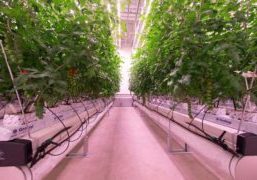
Spain is – perhaps wrongly – still often seen as a country with middle-tech greenhouse horticulture: that is crops grown in the open ground, only protected by plastic stretched over wooden poles and the sun, however positive, as the most important growth medium. However, that is changing. In southern Spain more and more growers are switching towards professional vegetable cultivation in high-tech greenhouses.
Agrosol Export, of Roquetas de Mar, Almería, is one of those Spanish growers which has invested heavily in climate control, water utilisation and is introducing organic production to ensure year round harvest of quality produce. Founded in 2008, the company is owned by three families and run by eight members of the second generation. Ambitious and knowledgeable in production and marketing, they decided that their future lays in large scale, high tech greenhouses.
“Our fathers were growers and our families have been involved in agriculture in the area since the 1960s. We realized that if we could provide our clients with the same quality all year round we would be more competitive than other local Spanish producers and our traditional competitors in Tunisia and Morocco. We made significant investments in 2008 in high tech greenhouses and then again in 2012 when we installed heating pipes and CO2. At the moment we are very satisfied although we do have plans to expand further,” says José Ángel Amat, one of the directors.
Change the assortment
They have 105 hectares, including 32 hectares of state-of-the-art greenhouses, equipped with double layered plastic between which air is blown, to give a very good thermal insulation.
Initially they grew cherry, beef and snack tomatoes but one of their advantages, says Amat, is that they can change the assortment to respond to the market and client demand. “For the first four to five years 60% of our production was cherry tomatoes but over the last two years that has decreased as many other growers now grow cherry tomatoes. That changed the market. We want to be as profitable as possible per square metre so we switched over to mostly sweet peppers and cucumbers.” At the moment 50% of the greenhouses produce bell peppers, 45% long cucumbers and only 5% (8 hectares) is tomatoes.
Year-round consistency
Another change was the installation of pipe rail heating on 15 hectares in 2012. Various types of heaters warm the air in a further ten hectares. You’d think that heating pipes would be superfluous in southern Spain but after a visit to Mexico Amat says he realised their potential. “You can’t imagine the level of high technology they have there. They have pipe rail heating and I was very impressed with the quality of the fruits they were able to produce. Here the minimum temperature in winter can be 6-7ºC and at that temperature the yield of bell peppers and cucumbers decreases. And we have high humidity in the morning which has a big impact on quality.”
Therefore, in 2012 Agrosol Export commissioned the Bom Group to install a methane-fired 12 MW boiler, a heat storage tank of 3,000 m3, pipe rail heating on 15 hectares and a CO2 system in the greenhouses and at a cost of 2.5 million euro.
Further expansion
“We run the boiler, which also provides CO2, from the end of October until the spring. This year that was until the beginning of May. This has enabled us to achieve consistently high yield of very high quality. We will harvest until the beginning of August and we expect to reach a yield of 20 kg peppers/m2; 70% red and 30 % green," says Amat. The cost price is around 0.80 to 0.90 euros per kilo, compared with 0.50 euros in the hot air heated greenhouses where the yield is somewhat lower at 7-8 kg/m2.
The benefit gained from the pipe rail heating means they are gradually installing more in the current greenhouses and next summer they plan to build a new 10 hectares high tech greenhouse. “If that goes well then in about three years we may build again,” adds Amat. “We believe that investing in technology is the only way to be better than our competitors.” The new house will also have a double plastic covering but they will aim to allow in more light and it will be higher, at 7 metres, to improve air circulation.
Direct marketing
Their success can also be attributed to their marketing and relationships with their clients. Most growers in the area sell through a cooperative whereas Agrosol knows its clients directly. Its main customers are UK retailers, although it does sell snack cherry tomatoes under the brand ‘Cherrytos and co' aimed at children. These are mainly sold through Faborit, a trendy outlet in Madrid, or via e-commerce. “We want to invest a little more in the snack tomato business because we think this is a good way to gain more profit,” says Amat.
Of course they have to fulfil individual audits for their clients such as Nurture for Tesco, and comply with codes of conducts such as GlobalGap and Leaf Marque but that is part of the commitment required for these partnerships.
Trend to organic
They are also increasing the volume of organic production. “Nearly 10% of crops are organic and we are planning to increase this in future to meet the growing trend.”
In the remaining houses they use an IPM program and biological pest control suggested by their supplier Koppert Biological Systems. They have been implementing this since they started Agrosol Export and their father’s used it before that.
This allows them to minimise most of the common diseases and keep well below the mandatory maximum residue levels. “We have a highly developed pest control system which allows us to avoid a lot of diseases,” says Amat. They currently include a range of natural predators including Amblyseius swirski, macrolophus, orius and Amblyseius californicus. “We do a control at the propagator and we make continual checks at all stages of the crop to check for disease and to ensure the natural predators are well established.”
Cocopeat substrate
Over the last few years they have been gradually switching to a cocopeat substrate. Now the majority of crops are grown in this, just some in rockwool. “We separate the cocopeat from the plastic bag and recycle them both: the cocopeat is composted and we are building a plant to convert the plastic bags into biodiesel for our own use.” It should be completed within six months.
“Our strategy now is to progressively convert all our greenhouses to high-tech, in a sustainable way. This is the only way to produce high quality fruits year round and be profitable per square metre,” the grower concludes. “It is a major investment but the results are good. Our clients are very happy with our service and our ability to offer quality products during the difficult winter times.”
Summary
Significant investment in high tech greenhouses, including pipe rail heating, by large Spanish grower, Agrosol Export, is allowing it to produce consistently high quality peppers and cucumbers year round. The majority are sold to UK retailers. It has the flexibility to switch crops to market demand and is gradually cultivating more and more organic produce.
Text: Helen Armstrong. Images: Agrosol Export
Integrated pest control goes mobile
Koppert Biological Systems successfully completed the test phase of a mobile app plus online dashboard that identifies and analyses problems in the field.
This iPM app developed by Koppert USA makes use of innovative technology and consists of two components: a scout app with an intuitive user interface, and an online dashboard. The scout app allows growers to enter data into the system directly, while the dashboard provides insights into pests and diseases that can subsequently be used to analyse, treat and manage the problem.
Three modules
The iPM app is composed of three modules: a mapping module with custom-designed maps and scouting templates for indoor and outdoor applications; a graphic module to gain insight into the development of pests and diseases and analyse the effectiveness of treatments, and a treatment module to apply chemical, biological or cultural treatments. Following the launch of the app on the US market, the app has now been successfully tested in a number of European countries.
All-in-one tool
Growers can use the app for centralized data storage that can be consulted from anywhere in the field. The raw data can be stored and edited for further analysis. The scout data are downloadable for offline use by the customer. Maps and templates are customized to suit various scouting techniques and crops. The app is an all-in-one tool designed to link scouting, analysis, treatment and management.
The scouting software helps cut costs by providing accurate insight into pesticide efficacy, while the improved timing of biological applications increases the efficacy of the control agents. This reduces the need for pesticides, thereby improving crop health and increasing yield.
The app is currently only supported by iOS platforms, but Koppert is working on the development of an Android version. iPM Dashboard is a personalised management system that is available by subscription.
More information: http://www.koppertipm.com/scout.html
Source/photo:Koppert Biological Systems.