
LED-lighting
‘LED is greatest horticultural innovation since the invention of the tractor’
The Flavourfresh Solfresh group has the unwavering mission to be the most innovative and flavoursome tomato grower in the UK and beyond. The company has been supplying to leading nationwide grocery retailers including Marks & Spencer and Asda for more than 25 years, as well as to manufacturers of prepared salads, ready-meals, pizzas and sandwiches.
Based in Southport in Lancashire, the company currently has nine different varieties of tomatoes in commercial production, spread across 14 individual greenhouses on 125,000 square metres, generating around 2.8 million kilos of tomatoes a year. In addition the company produces 60,000 square metres of strawberries in seven individual greenhouses. The workforce in all the greenhouses plus the packhouses totals around 350 employees.
In charge of growing the tomato crop including R&D and trial material is Production Manager Andy Roe, who was named ‘Best Production Manager 2017’ at this year’s Grower of the Year awards in London. He has been at this nursery since the very start and truly embodies the company’s motto: ‘Getting flavour into fresh produce’.
“I’m continually scouring the world to find the ‘holy grail’,” states Roe. “The flavour is king. My personal number-one priority is to produce the best flavours, but of course with an economic ‘business head’ on. I will travel, explore and trial anything to find the absolute, very best flavour for the more discerning customer on the British high street.”
Striking the balance
Hence, Flavourfresh works with almost all seed producers and many different varieties, including Piccolo (cherry vine), Delisher (baby plum on vine), Amoroso, Edioso and Nebula – which is one of Roe’s personal favourites. “We have exclusivity on Nebula in the UK and supply it to Marks & Spencer and Asda, although I think I’m one of the only fools crazy enough to try to grow it. It’s very strong. To get the flavour that I want, I have to dominate and restrict the growth of the plant until it obeys me; I almost beat it into submission. It’s like ‘Fifty Shades of Lycopene’. In fact, my nickname is the Christian Grey of tomato growing”, he laughs. “But when you win the battle, it produces superb flavour and quality – although there is a yield penalty to pay for that. It’s about striking the balance.”
Developments in LED light
Traditionally, the seeds for the tomato season are sown from mid-October onwards. The majority of the plants are raised in Yorkshire, before being delivered for planting at the start of December. They are then harvested from mid-February through until the third week of November. However, this approach left with a gap in production from December to late February and the company was keen to extend its activities to an all-year-round season.
Roe explains: “High pressure sodium lights has been the standard technique for growing through winter for the past decade or so. However, our greenhouse doesn’t have sufficient height for the plants to be able to cope with the hot, aggressive light produced by these lights. Several years ago, we heard about the early developments in LED light. We tried several different light units from various suppliers from around the world, and that evolved into a commercial trial 18 months later. We discovered that this light is cooler, softer and more generative, plus the energy consumption and running costs are much lower. The trials proved conclusively that we had to do it.”
Quite astonishing
“The Philips Lighting solution stood out as being the most advanced, plus there were extra benefits in terms of technical input, back-up, support and professionalism,” recalls Roe. He ran comparisons with other solutions but the yield was so much higher that he calls the ultimate decision a ‘no-brainer’. “It also generated flavour, which I was initially sceptical about,” he adds. “The spectrum of mainly red plus a few percent of blue light that Philips has designed is spot on for tomato production,” he comments. “The results are quite astonishing, especially bearing in mind that the winters can be pretty dark in the northwest of England.”
Therefore, in August 2016, a 100% LED solution with two lines of horticultural inter-lighting and top lighting was installed on a full 4,500-square-metre block of the greenhouse at the Lansdale site.
New greenhouse
“The effect on the plants was mind-blowing, astonishing; words almost can’t describe it,” exclaims Roe. “The flavour, quality, size, plant balance, generative growth, everything was absolutely optimum for tomato growth during those winter months. We now take delivery of 50-day old plants for LED production in mid-September. We can start harvesting in early December and it takes us right through until the last few days of August. Then we stop harvesting, remove the crop and replant it within seven days,” says the production manager. So the company is now able to produce tomatoes all year round, currently of the Delisher variety, which has increased yield of its tomato crop by around 30%.
The results have been so impressive that Flavourfresh is keen to expand its use of LEDs, and is also trialling Nebula and other varieties to understand what else will perform well as a lit crop for the winter. But first, the company needs to complete installation of an additional 8 MW of CHP engines. “The current LED solution is at the Lansdale site, where a CHP engine was installed 14 months ago, so that dovetailed in nicely,” explains Roe. “We reclaim the CO2 from the flue gas and reuse the heat produced in electricity generation. A 3 MW CHP will be installed at our Melrose site by November this year. Once that’s in, we can build a new 16,300-square-metre greenhouse there – planning permission is already in place – taking our LED activities to 20,000 square metres from September 2018 onwards.”
Grow whatever you want
Over the past few years, many UK grocery retailers have significantly expanded the top-tier range in their tomato category to capitalise on consumer willingness to pay more for a superior taste. Underlining this trend, Roe says: “My wife is prepared to pay almost any price for her favourite chocolate, and the same applies to tomatoes in my mind. And that’s what LED lighting brings to the tomato market, a much better and more distinctive flavour. Many tomatoes in the premium range are being grown under lights throughout winter, and that’s accelerating now as other retailers join in.” In view of these market forces, the company believes that LED-based all-year-round production will become standard in the next five years, and growers who fail to keep pace with this development will simply be left behind.
In fact, Roe calls LEDs the ‘greatest horticultural innovation since the invention of the tractor’. “Just look how far we’ve come in the relatively short time that I’ve been growing tomatoes. Combined with today’s computer technology and automation, LEDs enable you to grow whatever you want in a dark room all year round, with perfect consistency and quality, and pesticide-free – and you can even control everything remotely on your iPad at home. The next evolution beyond LED will be incredible – and I’m looking forward to it.”
Summary
The UK-based Flavourfresh Solfresh group has an outstanding reputation for innovation and flavour, and has been supplying world-class fresh produce to British grocery retailers for more than 25 years. In a move to extend its tomato season throughout the winter months and achieve all-year-round production, the company has recently installed a 100% horticultural LED solution. The results have surpassed all expectations.
Text: Lynn Radford. Images: Flavourfresh.
Related


Higher light level boosts yields, lost heat easy to make up for
Completely separately from one another, two Belgian rose growers with premises barely ten kilometres apart came to the conclusion that a combination of SON-T and LED top lighting is the best solution for their nurseries. This makes them the first rose growers to use hybrid top lighting. Since then, other growers from as far away as Russia have come to take a look.
Electricity is expensive in Belgium: it costs around € 35-40/MW more than in the Netherlands as a result of higher transmission and distribution prices. So it makes sense to generate as much as you can yourself and buy in as little as possible. This was a key factor in growers Rozen Scheers’ and Wimceco’s decisions to install combination lighting.
Both nurseries were looking to upgrade their partly outdated systems and were thinking about how to do so without having to start buying in a whole lot more electricity. At Scheers they were able to increase the light level from 100 to 150 µmol/m2/s using exactly the same amount of power. Wimceco went from 130 to 180 µmol/m2/s with a modest additional input of 150 kW.
Practical experience
Wim and Annelies Scheers’ nursery Rozen Scheers in Kontich in the province of Antwerp has 3.8 hectares of glass. They have 15 varieties in their product range: popular roses such as Avalanche and Red Naomi along with special varieties like Jumilia and Cupcake. Sales take place via Euroveiling in Brussels, but direct sales to consumers are also an important channel.
Wimceco in Boechout, also in Antwerp province, grows Avalanche and Sweet Avalanche on 1.75 hectares. They also grow a few lesser varieties to vary sales to consumers. Their roses are auctioned at Euroveiling in Brussels and FloraHolland. Co-owner Danny van Nuffelen: “Our lamps and reflectors needed replacing as their output was dropping. We wanted to increase the light level but we didn’t want to buy in too much electricity.”
That could be done by combining SON-T (HID) with LEDs, but no growers had ever tried this combination with cut roses before. “That’s why our suppliers Agrolux advised us to go and visit Leo van der Harg, a pot rose grower in Vierpolders in the Netherlands. He has been using a hybrid system since 2014. His experience went some way to removing the uncertainties – after all, he is also a rose grower. What’s more, our starting point was that a photon is a photon, no matter what kind of lamp it comes from,” he explains.
At around the same time, Wim Steeghs of Philips Horticulture LED Solutions suggested setting up a trial with hybrid lighting at Rozen Scheers. That was when Wim Scheers first heard that his colleague ten kilometres down the road had similar plans. He also went to visit Van der Harg.
Climate control
A complete switch to LEDs only was not on the cards. “That really is too new and would be much more expensive. Also, you would have to completely revisit your climate control because you wouldn’t have the extra heat from the HID lights,” Van Nuffelen says. “And anyway, LED light on its own is too red to work in. No research has been done yet into what effect that has on people. It looks very dark.” He and his brother Bart decided on a 50/50 split between HID and LED. The lights hang in the same line: three LED fixtures followed by one 1,000 W SON-T.
Fellow grower Scheers uses LEDs for 70% of the light and SON-T for 30%. “We have two CHP units of 1.6 and 1.2 MW. We wanted more light but without using any more electricity. That’s why we decided on this combination. We have two continuous lines of LEDs in each bay interspersed with one HID reflector every metre.” The system is fitted in a 1.5 ha greenhouse which makes up 40% of their total greenhouse area. It was installed by Dutch B-E De Lier. In both cases, the LED fixtures are Philips GreenPower LED top lighting.
Subsidy
The availability of a subsidy from the Flemish Agricultural Investment Fund (VLIF) made the decision on the high investment costs a little easier. Nominally, the VLIF contribution for LED systems is 30% of the investment costs, but it works out at less than that in practice on account of special conditions such as a cap on the investment amount per square metre. The ultimate support percentage is around 20-25%.
The systems were installed in November 2015, so the growers now have well over a year’s experience with hybrid lighting under their belts. They are reckoning on a payback time of 4-5 years.
Comparison
The HID and LED lights at both nurseries can be switched on and off separately. Van Nuffelen: “This has made us more flexible. The LEDs are left on until there is around 250 W of daylight; the HID lights are switched off earlier. So the LEDs were on for 890 hours longer than the HIDs last year.” Fellow grower Scheers used his LEDs for 1,100 hours more than the HID lamps.
When switching to LEDs, a big question is whether or not the radiated heat from the HID reflectors needs to be compensated for. That can have advantages and disadvantages. In theory, the grower needs to ventilate less to get rid of surplus heat. This is less of an issue in Belgium than in the Netherlands because light emissions don’t yet have to be controlled with blackout screens, so Belgian growers are spared the situation in which the temperature under the closed screen rapidly gets too hot. Because the nurseries kept no records of how long the vents were open, it is difficult to comment on this. Moreover, the light level was higher in the new situation in both cases, making it difficult anyway to draw a comparison with the previous situation.
Heating up
On the other hand, the radiated heat can be a welcome way of preventing the head from cooling down compared with the rest of the crop. “We can use top heating to compensate for the heat from the HID reflectors. In theory the crop should cool down quite a bit in the new situation, but our measurements show that the temperature didn’t drop as much as we had anticipated,” Scheers says.
Advisor Steeghs has an explanation for this. “LEDs also provide some indirect heating. They are 55ºC and transfer their heat to the aluminium profile. That transmits the energy to the light and water in the greenhouse via longwave radiation. The crop isn’t warmed up directly but indirectly.”
Research
A trial with 100% LED top lighting above Red Naomi has been running at the Delphy Improvement Centre in the Dutch town of Bleiswijk since April 2016. The light level is 200 µmol/m2/s and OPAC heat exchangers keep the temperature at the right level. Steeghs: “Before the trial the growers had said that they needed the radiated heat from SON-T and that 100% LEDs would not produce good results. But so far the plants have been growing very well.”
The results achieved in Bleiswijk in the summer and autumn were surprising: heavy roses with a long stem, a consequence of the lower bud temperature due to the reduction in radiated heat combined with the cooling properties of the OPAC heat exchangers. Outside the trial, growers were having trouble getting good stem lengths in the warm autumn. It remains to be seen what the results of the trial in the winter will be.
Production
A year on from the investments, both growers are happy with their decisions. Van Nuffelen: “The system has definitely lived up to our expectations. We have an older crop but it is in better condition this year than last year and has survived the summer better. A big advantage of this system is that it makes you more flexible: you can go on lighting for longer on a hot day with LEDs without pumping in heat from the HIDs.” At the time of writing he was unable to say how much more production he was getting with the higher light level.
At Rozen Scheers the figure was 20%, with 30% for some varieties. “That is much as we expected, but it could be even more. We are trying to grow as organically as possible but we had a lot of trouble with thrips last year and we had to cut out unsaleable product. Once we have that under control, production will be up,” he says.
Convinced by the results, in early November he had exactly the same combination installed in another 1 ha greenhouse, again with a 70/30 split between LEDs and HID reflectors. This time the lights were supplied by Agrolux. The way the system is connected up means that his large CHP unit can power the LEDs throughout the whole nursery and the other unit can be switched off when only the LEDs are on.
Interest
Scheers plans to replace another two older low greenhouses in the future. As there is a stream running right behind the greenhouses, the authorities have made it a condition that he makes a contribution to solving the flooding problems in the area. His fellow grower in Boechout will be changing the old crop first. A new greenhouse may be added in the future.
In the meantime, there is a lot of interest from other growers: sometimes entire coachloads drop by. Philips regularly gets enquiries from Russian rose growers who want to see the impact of hybrid lighting on the crop in practice.
Summary
Belgian nurseries Rozen Scheers and Wimceco are the first cut rose growers to install hybrid top lighting. Their decisions were influenced by the high cost of electricity, subsidies and the ageing of their previous systems. Initial experience is good: production is up as a result of the higher light levels and the heat produced by the HPS lamps can be easily compensated for. Scheers has just installed the same system in a second greenhouse.
Text: Tijs Kierkels. Images: Wilma Slegers.
Related
‘Interlighting boosts truss development and flowering speed’
Interest in artificial lighting with LEDs is on the rise. Recently tomato growers Verkade in ‘s-Gravenzande (Westland, the Netherlands) gained their first experience with a hybrid system consisting of SON-T HPS lights and LEDs in a greenhouse that is too low for intensive lighting using only SON-T lights. Growing manager Fred Schäpe is happy with the winter yields. Based on his first impressions, he believes this system could deliver even more. He is pleased with how things are going.
It’s the middle of summer. At Verkade the LED interlighting modules are often still on at 11 am, depending on the climatic conditions. They can be switched off after midday. In his first year with this lighting system the growing manager is already exploring how far he can take things. By taking a good look at how other growers are using artificial lighting, he is learning fast and making his own plan.
Low greenhouse
In the autumn of 2015, an artificial lighting system was installed at this ‘s-Gravenzande-based tomato grower’s 4.4 ha site with the support of the growers’ cooperative Van Nature, in order to meet rising customer demand for Dutch products of consistently high quality all year round.
The Venlo greenhouse has a bay width of 8 m and a post height of 4.85 m, which is too low for intensive lighting with SON-T lights because of the amount of heat they emit. “We could also have raised the height of the greenhouse, but a combination of SON-T lights and the cooler LEDs proved a better option in the end,” Fred Schäpe explains.
After much discussion, the two organisations decided to install a hybrid system. At the top they installed Hortilux 1,000 watt SON-T downlights delivering 135 µmol/m2/s. These lights are distributed in threes along the width of the trellis girder. The distance between the light and the tops of the plants is 1.2 m, reducing to around 1 m as spring arrives.
One strip of 55 µmol/m2/s LEDs was suspended between the plants in each row and can be moved as the plant grows taller. A total of 6,610 Philips GreenPower LED interlighting modules have been installed, bringing the system’s total output to 190 µmol/m2/s.
Start of growing
Verkade specialises in large cluster tomatoes. Fred Schäpe has always grown Merlice. In midsummer the plant load is spectacular – an image that is only enhanced by intensive leaf pruning which makes the trusses stand out even more.
The 64-day-old grafted and topped plants were planted at the end of October. At first the plant density was 2.3 per m2. A lateral stem was allowed to develop in week 46, increasing the density to 3.05 per m2. The last lateral stem was added in week 48, bringing the final density to 3.8 stems per m2. Production started in week 52.
Immediately after planting, the plants remained unlit for ten days, after which the light level was gradually increased. In the lighting season, which lasted until around 1 April, the SON-T lights were left on between midnight and 6 pm. They were switched off when the radiation reached 2,000 J/m2, so the number of lighting hours was lower in April.
Unlike the SON-T system, the LEDs are left on constantly from 4 am to 5 pm from 1 April onwards, except on very hot days when the system is switched off earlier.
Effect on truss development
At the start of cultivation the interlighting strips were hung as low as possible in the crop. Later on they were repositioned once, close to the developing trusses. The growing manager is already coming to the conclusion that he will have to move the modules several times over the course of the next crop to keep up with the trusses and to enable every set truss to get maximum benefit from the light. Schäpe: “We do this manually. We want the trusses to develop as well as possible with maximum plant load.”
By about week 50 the modules were in their highest position and were left there for the rest of the growing period. He soon noticed the positive impact of the LEDs on truss development and flowering speed. “Trusses seem to be developing a little better with LEDs than with only SON-T.”
In January last year, Schäpe was happy with the crop status. “It’s all going well,” he said at the time. “The crop has been steered generatively right from the start, and I can see that the plants are having no trouble putting their energy into the fruits.” He is happy with the winter production, and although it is only their first growing year, he looks ahead with optimism: “With the knowledge we gained last winter, I’m sure we will be able to do even better in the future.”
The crop manager has his own strategy for truss pruning and fruit load. Sometimes he prunes the Merlice to as many as six fruits if the truss is strong enough. By doing so he is looking for the ideal fruit load.
Heavy investment
Looking back at his first season, Schäpe is positive about the impact of the LEDs on production and quality. Although it’s a heavy investment for large cluster tomatoes, Schäpe sees even more potential in optimising the crop even further. Only time will tell. But for the time being he can look back over his first season of artificial lighting with a smile.
Summary
With support from the growers’ cooperative Van Nature, a hybrid lighting system was installed at one of tomato grower Verkade’s sites in Westland, the Netherlands, because the greenhouse is too low for intensive lighting using only SON-T lights. Crop manager Fred Schäpe is happy with truss development and flowering speed. Although this is only their first year of artificial lighting, the company is pushing the boundaries in order to optimise growing.
Text and image: Pieternel van Velden.
Related
Heavy lettuce with low nitrate level even without daylight
The restaurant at the High Tech Campus, Eindhoven, the Netherlands, serves various types of lettuce that have never previously seen the light of day. They are crispy and tasty and are a good match for any greenhouse lettuce. One hundred metres further up the road, researcher Stefan van de Voort is growing the lettuce and herbs in fully enclosed climate cells. They are produced under LED lighting at the new research facilities set up in this town that has become synonymous with lighting.
If you want to read this content you need a subscription, or log in when you already have a subscription.
Use of LEDs has potential to save energy and increase yield
Energy is a major expense for rose growers. At Arend Roses, in the Dutch Maasland, research is being carried out into the effect of a customised light spectrum, through means of LEDs, on yield and the possibilities of it saving energy. The findings are encouraging but the energy efficiency of LEDs needs to be improved further to make the purchase of a second lighting installation profitable.
Research at Arend Roses took place in the winter of 2014-2015 and was initiated by operations director, Richard van der Lans. “For several years we toyed with the idea of introducing hybrid lighting to become more energy efficient, and hopefully have positive effects on yield and quality,” he says. “When I spoke to LED manufacturer Valoya, I had the feeling they understood exactly what I wanted to achieve. Since then we have carried out small-scale trials using prototypes of new LED-lamps which last winter culminated in a larger project involving several partners.”
These partners are Plant Dynamics and Wageningen University & Research Greenhouse Horticulture, which leads the research project. Both have a lot of experience with complex crop measurements. Initially the rose grower wanted to manage the research himself but without the input from the Dutch knowledge centres he wouldn’t have received financial support from the Kas als Energiebron (Greenhouse as Energy Source) program. “With hindsight I am very glad we did have their input, quite apart from the financing,” says Van der Lans. “Thanks to their knowledge and expertise we carried out very thorough research with very accurate measurements. We wouldn’t have been able to achieve the same level of sophistication and quality ourselves. In addition their input and involvement led to interesting discussions which substantially deepened my knowledge on the subject.”
Less energy
Van der Lans had calculated that by adjusting the growth light he could over time use 25% less electricity during the cultivation cycle. He calculated this, his initial goal, based on the hypothesis that a specific, energy efficient LED-lamp that could supplement the PAR-spectrum of the SON-T-lights – in combination with daylight – would enable the plants to better use the available light for photosynthesis and growth. Even at a low light intensity this should lead to a modest increase in yield.
“The 25% saving using this type of lamp, which provides a much broader spectrum than normal LEDs, is currently a bridge too far,” he says. “The positive effects on early growth and crop production that we saw in our previous trials were confirmed here but they were less large than we hoped for. When more efficient LED-lamps become available – and that is only a question of time – more energy can be saved and an additional LED installation can be profitable. That is not the case yet.”
Higher light efficiency
What exactly did this research yield? Project leader Nieves García Victoria, of Wageningen University & Research explains: “We compared three different growth light concepts over three repetitions and measured the effects on production and quality, photosynthesis and morphological characteristics such as colour, leaf surface area and leaf position.”
The growth light variations were the currently used SON-T-installation of 191 μmol PAR/m2.s as the reference and hybrid setups of respectively 103 μmol SON-T + 57 μmol LED and 103 μmol SON-T + 103 μmol LED.
“The hypothesis that supplementary LED-light results in higher production was confirmed for both variations,” says Van der Lans. “Also, we harvested fewer A2-quality.” Sander Pot, of Plant Dynamics, adds: “Under 206 μmol of mixed light, the light utilisation efficiency of the crop, expressed in grams production per mol light received, was 9% higher compared with SON-T only. Even under 160 µmol mixed light the light utilisation efficiency was 7% higher than under SON-T. Therefore the plant is better able to convert the mixed light into growth.”
No good explanation
Van der Lans and the researchers say that the positive effect of the mixed light was visible in the crop development within just a few weeks. “We saw the effects and of course wanted to know exactly how it was caused,” says Pot. “However, despite all the measurements we saw no clear morphological differences. Also the photosynthetic activity was almost the same and that is strange; we measured higher production but couldn’t put our finger on exactly how and why.”
Break-even point not yet reached
Now that the positive effect of hybrid lighting using broad spectrum LEDs has been established and the trial has ended, Van der Lans says it is now a case of waiting for further development of a light that offers the desired level of efficiency (see box). “In order to earn back the cost of a second installation within a reasonable period of time it needs to be more efficient than the prototype that Valoya developed for this project,” he says.
The break-even point has not yet been reached but hopefully that will happen within a few years. “The requirements for light emissions are stricter and it would be good if we can use fewer or less heavy SON-T-lights under the screen and supplement that with LEDs. Then the heat surplus, that is difficult to get rid of under a closed screen, would be less. And the energy bill would of course be lower which was the reason for starting the project in the first place.”
‘Better crop development with broader LED-spectrum’
The trials used a new type of LED-light, the Valoya G1. These emit light in a wider range of the PAR-spectrum than the monochrome red and blue LEDs that have been in use for some time.
“The advantage of these, especially the monochrome red LEDs, is their highly efficient use of energy,” explains Gonçalo Moreira Neves, of light manufacturer Valoya. “However, such lights have a very narrow spectrum. The plant can use it but it is too one-sided. If the light balance is disturbed too many morphological abnormalities and other undesirable side effects can occur, as independent research has shown on several occasions.”
To reduce this danger and to enable more efficient hybrid lighting comprising a larger proportion of LED-light, the Finnish company developed LEDs that supply a broad spectrum to fully support crop development. The G1 is the resulting prototype.
Efficiency 60% improved
A limitation of the new type of light is the significantly lower energy efficiency compared with the monochrome red LEDs. Meanwhile the company’s technicians are working on a follow-up. Currently we are achieving 60% higher light output of 1.8 μmol PAR-light/watt, but it has to be and can be even better,” says the spokesperson. “In the course of next year we hope to be able to offer a marketable version that combines the desired qualitative properties with the desired efficiency.”
Summary
A trial using a new type of LED-light with a broader spectrum confirmed that when this is used in combination with SON-T, production of roses is higher than when using SON-T-lights only. The energy efficiency needs to be improved further to make an investment in such hybrid lighting cost-effective. This would be beneficial in terms of energy and cultivation because such installations under a closed screen generate a lower heat surplus than SON-T-installations with a similar light output.
Text and images: Jan van Staalduinen
‘Switch to LED-interlighting requires new way of growing’
Biesbrouck Greet bvba is the first Belgian tomato nursery with LED-interlighting. After eight months, owner Luc Coghe sees a big rise in yield, better quality and taste and more vigorous plants. But actually the first season has just been a year of learning. Things could be even better and that will be necessary to achieve the desired profitability.
Tomato production under glass is rare in Wallonia, the French speaking part of Belgium. Therefore Luc Coghe’s 7 ha greenhouse in Pecq (Henegouwen province, on the border with West-Vlaanderen) certainly catches the eye. Actually it’s just coincidence that he’s ended up here about 45 kilometres from his old nursery in Ardooie (the Roeselare horticultural region). “We’d been looking for expansion possibilities around Ardooie for several years. But there due to the fragmented plots available it was difficult to build a nursery of about 10 ha. Here in Pecq we came across a landowner who wanted to discontinue his own business. The dimensions of the plot appealed to me and the price also played a role. It is somewhat further from the REO auction, but much is sold directly so that’s not a problem.”
That was ten years ago. The business, which is in the name of his wife Greet Biesbrouck, now has two locations. Mrs Biesbrouck runs the old 2.3 ha site in Ardooie.
Regional brand
They grow three types of tomato in Pecq: loose (variety Kanavaro), cluster (Plaisance) and cluster cocktail (Brioso). They are members of the growers association Tomabel, which has additional specifications; a set of requirements that go beyond those of the umbrella brand Flandria. “These specifications cover varieties, presentation, sorting standards, nutrition, pruning strategy and planting distance. They put additional emphasis on quality which costs a small fee in return,” explains the grower.
He has a strong innovative attitude with an eye for opportunity. In this way he is starting to promote himself as a local producer. “This is interesting for our buyers. We now have a customer in Wallonia for whom we do the packing ourselves. We use the label ‘Agriculture of Wallonia’ although this mark still has to become established. It is not yet recognised as a regional brand such as Flandria, but it is starting.”
Five years ago, with advice from Frank Florus, he equipped 2.6 ha of his greenhouse with SON-T lighting. Florus supervises many growers who use lighting, also in the Netherlands. “The reason for doing it was both financial and for labour planning. There is definitely a market for lit tomatoes and it provides a more continuous flow of income. Also you keep your personnel in a job. The profit from a traditional crop is not very good but there are still opportunities for winter production of tomatoes,” he says.
Hybrid system
Therefore last year he made an additional step in lighting in order to expand the winter production. Together with the advisor he had figured out two options: An extra 2 ha of tomatoes lit with SON-T, or hang additional LED-interlighting in the current lit section. “I had been interested in using interlighting in a hybrid system (together with SON-T) for quite some time. LEDs are an innovation and that appealed to me; this is the future. I visited the Dutch pioneers Jami, of Bergschenhoek, and Wim Peters, of Someren. They are convinced about the advantages of interlighting. We made calculations based on performance data supplied by Philips and a certain price level for the tomatoes. This indicated that the investment was justified.”
Now he has 6,600 Philips Greenpower LED interlighting modules (55 µmol/m2/s) hanging between the plants, at the height of the fourth cluster. The SON-T top lighting (170 µmol/m2/s) is used until 1 April; the interlighting is used for a month longer. But the lighting regime doesn’t stop there: the interlighting regularly comes on at sunset until the light level reaches 250 watt.
Grow differently
Interlighting requires a new way of growing. All pioneers say that the first season is mostly a year of learning and that’s just the same for Biesbrouck. In addition, each grower has his own strategy: do you first start the old way and gradually learn from experience or immediately try everything new.
“At first we didn’t make many adjustments,” says Coghe. “In principle the climate settings remained the same, just like the planting distance. But because the plants receive so much more light energy you have to respond to that. Otherwise the plant becomes too heavy. Therefore we have to use the pipe rail heating more. Next season we want to change things but in a structured way so we are writing down many of the lessons learned.”
Retain more crop
Decisions regarding the final adjustments to planting distance, pruning policy, type of plant, number of leaves and temperature strategy still have to be made. This will require some brainstorming with the consultant.
“You should aim for more crop in the greenhouse to optimally utilise the extra light energy. But whether you allow extra shoots to remain or start with more plants is still the question. But I’m sure that it makes sense to use the LEDs earlier. We started to use them at the third or fourth cluster but you could start earlier to give a few hours of extra lighting. Then you could plant closer together,” he says. “We could also allow the modules to move with the crop. Now they remain at the same height for too long.”
First season positive
Many decisions regarding cultivation still need to be made and the plant’s response brings all kinds of questions. But the fact remains that the impression after the first season is very positive. “The quality of the fruits is impressive,” he says. “The tomatoes are much more uniform and the green parts (crown and stem) are heavier. It’s striking that the taste is much better; that goes for all three varieties. Furthermore the harvest over the weeks is more even. The plant is much stronger, greener, resistant to diseases and leaf edges and it grows faster. Due to the more robust plant leaf plucking has become more difficult.”
He estimates that the extra production as a result of interlighting is around 20%. That is in line with the forecast for the first year. But such a high level is necessary to make the investment really interesting, he says. “The yield has to be better and there we still have work to do. The plant is often too strong and steering it generatively requires a different approach. I don’t expect that even after another year we’ll have learnt everything. But I’m confident it will work.”
Summary
After eight months experience Belgian tomato grower Luc Coghe is positive about the results of interlighting with LEDs. The harvest is more even and the tomatoes are more uniform. The plants are heavier and more robust. Production is 20% higher. The first season is mostly a learning process. Improvements in the cultivation should lead to higher profitability.
Text: Tijs Kierkels. Images: Wilma Slegers
‘We can still learn a lot from vertical farming systems'
On 14 October, Jasper den Besten, Lecturer in New Cultivation Systems at HAS University of Applied Sciences, gave a presentation on triggers in horticultural technology, more specifically vertical farming. “Until now, a vast amount of technology has been developed in the sector. With the advent of vertical farming, that is going to change rapidly.”
Interest in vertical farming (VF) is growing worldwide, especially in America and Japan, but the standard greenhouse still has plenty of room for development, according to Jasper den Besten. "30 years ago, we grew 30 kg of tomatoes per square metre; these days, it is more likely to be 100 kg. As we manage to improve climate control, production may increase even further. So, you won’t hear me saying that cultivation of tomatoes and cucumbers in the greenhouse is going to stop any time soon, because there’s still plenty of room for improvement.”
Plant stress
However, conventional greenhouses do have a few stubborn disadvantages, continues Den Besten. "The climate can change very quickly. First the sun shines, then it clouds over, or it rains or the wind blows etc. Screens cannot handle this very well, lighting is not dynamic, and neither is the light colour. There are always ‘errors' in the climate, which causes plants to suffer stress and affects production. In a greenhouse without lighting or screens, the net time when there is enough photosynthesis for plant growth and maintenance is only 25 percent. Technology can be used to improve the distribution of light, one example being diffusion glass. Screens can also be used, and lighting during darker periods; these both reduce stress levels. However, it is never possible to completely eliminate stress, unless you work with a closed system."
Experimentation
In a VF system, production is as constant as possible. The same amount is sown and harvested, or, in the words of a film lover, ‘In a vertical farm, every day is a Groundhog Day'.
Another advantage: you can experiment endlessly in a VF system, something Den Besten and his students frequently do. "You can very quickly see the maximum potential of a crop or cultivation. You can learn a lot, and take away things which are useful for a normal crop." Such as? “At the HAS, we carry out research in all sorts of ways, such as the impact of LED lighting on the growth of plants. We discovered, for example, that one variety of lettuce does need reddened light, whereas another doesn’t. We’re also testing various full spectrum lamps. They in turn affect the substances in plants. In marijuana cultivation in America, which is legalised in some states, lots of these lamps are used. They are also used in breeding research. These lamps are not yet as efficient as LEDs, but they may become so in time."
Sustainability
In America, produce grown in a VF system may be sold as organic, but this is not the case in Europe. "In Europe, organic produce must be grown in soil, while in America organic produce can also be grown in water. You can even use up to 10% synthetic fertiliser. It is questionable whether VF growers actually want such an ecolabel at all, or if a new label would be more suitable for this production method, which in terms of sustainability is way ahead of other labels."
“In addition, we can also make part of the fertiliser ourselves, using natural methods. With a plasma generator, you can make nitrogen in a solution, as happens with lightning. There’s a company in America which sells this technology; we are working on it in the Netherlands. Nitrogen makes up half of all required nutrients. Conventional growers can also benefit from this technology."
Emotions
Vertical farming does raise many issues, something Den Besten wants to emphasise. For example, is quality more important than quantity? Are substances more important than mass? “The content of healthy substances in plants such as Italian kale or lettuce can be increased by cultivation under different lamps. It is obvious that more people have to eat healthy food. But should food be made healthier, or tastier? Or should it be made easier to buy or consume? I think the latter is much more useful than the former. Sometimes we go too far in the application of technology. Let's pick the low-hanging fruit first, and then make refinements."
Another interesting question: central or local cultivation? “Will people on the East Coast of America who now get their lettuce from the West Coast want lettuce from Mexico, or even further away? Or do they want lettuce grown in their own city? Local production also reflects the spirit of the times and a dose of emotion. Pricing is then less sensitive, and consumers are prepared to pay that bit more.”
Crossovers
VF technology is rapidly decreasing in price, such as sensor technology. Den Besten describes this as crossovers. "There are plenty of high-tech developers, such as the Holst Centre in the High Tech Campus in Eindhoven, who are working in this area and have a whole range of solutions. These include luminous films, patches which measure body functions, and chips that track medication consumption. There are also applications that our industry is unaware of. For example, all sorts of sensors that can measure NOx, ethylene, etc. etc. with great accuracy. They can also be used to make measurements in liquids, such as N and Ca levels. What we actually want to know is what the plant is doing. Should you give the same amount of fertiliser during the day and night? At the moment, we really don’t know, but we can find out very quickly with these sensors, which only cost 20 or 30 euros. The data is stored in the cloud, so you can continuously see what is happening. It is clear that this technology is catching up with technology companies in the horticultural sector."
Root growth
"We are also closely monitoring the roots of plants," continues Den Besten. Rhizotrons measure the effects of various parameters on root growth. "We've seen some weird things at times, such as when the soil cooling failed in a lettuce crop and soil temperatures became too high. Any lettuce grower will tell you that everything will then go wrong, but that was not the case with our VF system. We ended up with a more compact root system and more mass above the surface. It’s something easy to test here. We can learn a lot from vertical farming systems."
Is the Netherlands ready for vertical farming? Den Besten thinks so. HAS University of Applied Sciences is also participating in the Fresh Convenience Care Centre of Staay Food Group, which will open next year. It is the first major VF project in the Netherlands. "Staay Food Group is an example of a food processing company branching out into production. That's one way the sector could be overtaken. Once it has been proved that it can be successful, I believe others will follow rapidly."
Text/photos: Mario Bentvelsen
Medicinal cannabis grows well under LED lighting
Medicinal cannabis is excellent for growing in greenhouses with LED lighting. Some varieties of cannabis plants which receive LED light produce substantially more active medicinal substances than those receiving equally intense lighting from SON-T lamps. A study by Wageningen University and Research showed that medicinal cannabis is easy to grow under strong light.
The worldwide demand for medical cannabis is growing rapidly, so there is also an increasing demand for safe, reliable and efficient production methods. Greenhouse horticulture experts from Wageningen University and Research therefore carried out a study in the spring of 2016 to study the impact of growing conditions on the growth and yield of medicinal cannabis. This involved measuring the quantities of cannabidiol (CBD) and tetrahydrocannabinol (THC), among other aspects. Cannabidiol (CBD) is used in the Netherlands to treat various diseases, including Multiple Sclerosis. THC is used to treat disorders such as Gilles de la Tourette syndrome, therapy-resistant glaucoma and symptoms such as weight loss, nausea and vomiting.
The study was commissioned by Lemnis Oreon, developer and manufacturer of LED lighting concepts, and PB Techniek, a supplier to the international horticulture sector.
Source/Photo: Wageningen UR.
Nijssen presents energy saving, mobile climate chamber
Nijssen will present the mobile climate chamber MyGrowthRoom at the GreenTech. With MyGrowthRoom cultivators and researchers will be able to efficiently optimise growth recipes and test new LED solutions.
Cultivation tests play a crucial role for cultivation under LED-lighting. Optimum light schedules and climate recipes improve the product quality and guarantee a good balance between growth cycle and energy bill. Research also shows that, for example, flavour, colour and texture can be influenced with LED-lighting. With MyGrowthRoom multiple cultivation trials can be carried out simultaneously under uniform conditions. The settings of a cultivation trial are easily saved as a recipe. MyGrowthRoom has a growing area of 6 m3, with a flexible layout and can be used with any cultivation system.
Integrated cooling and drying
Two air coolers take care of the integrated cooling, heating and drying of the cultivation room. This reduces the required cooling capacity. A separate air dryer is no longer needed. The integrated regulation allows for better manageable climate conditions in a broad temperature and RH range. With that, MyGrowthRoom is universally employable for tests with a large number of crops in every growth stage. Further energy saving is realized by storing the radiant heat from the LED lighting into a heat storage tank during the day. During the nighttime period this heat is reused to keep the room at the right temperature without extra electric heating.Various refrigeration innovations save up to 30 per cent of the energy use for cooling.
High-tech research facility
Nijssen is renowned for realising advanced climate chambers for a large number of universities and seed improvement companies. “All of the know-how from these high-tech research projects is combined in MyGrowthRoom," explains Edwin Snabel, business unit manager climate technology for Nijssen. "With MyGrowthRoom we offer professional cultivators the opportunity to do their own product research under the best possible circumstances.”
Nijssen can be visited in hall 8 at stand 133 during the GreenTech trade fair.
Related

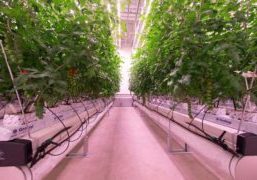


‘LED lighting has improved the quality of our lettuce and reduced plant loss’
Arjan Boer of the Boer & Den Hoedt lettuce farm in Ridderkerk has been using the latest generation Lemnis Oreon LED lighting for the past two years. As a result, he loses fewer plants and is able to deliver premium quality lettuce all year round, even in winter. ‘Our lettuce even tastes better than ever before.’
Almost six year ago today, Boer & Den Hoedt was one of the first lettuce farms in the Netherlands to start using LED lighting. Co-owner Arjan Boer currently has three generations of LED lighting in his four-hectare greenhouse, in addition to a big section that is still illuminated by SON-T lamps. These are, however, due for replacement. Investment costs for LED lighting are high - almost three times as high as for SON-T lamps - but Arjan Boer assures us that the benefits far outweigh the disadvantages. We ask him to explain this to us in greater detail.
Water cooling
One of the unique features of the Oreon Grow Light 2.1 - Lemnis Oreon’s latest generation LED lighting - is the water cooling system, which prevents any excess heat from being discharged into the greenhouse. As a result, crops can be illuminated longer than when SON-T lamps are used, and greenhouse windows can remain closed for longer periods of time. All of this produces positive effects on the quality and growth rate of the lettuce grown at Boer & Den Hoedt.
'When you use SON-T lamps, the temperature becomes too high, which you have to counter with extra ventilation and an ensuing loss of CO2.'
‘Quality is our highest priority,’ explains Arjan Boer. ‘We aim to grow a consistent quality of lettuce all year round. With these LEDs we can illuminate the crop from September through April. When you use SON-T lamps, the temperature becomes too high, which you have to counter with extra ventilation and an ensuing loss of CO2. With this LED lighting system, heat is discharged to a heat pump. We use the pump to upgrade the heat for use later on. We can use it to heat the greenhouse, or to raise the temperature of our irrigation water.’
Illumination level
According to Koen Brabander of PB Techniek, who initially installed the Lemnis Oreon LED lamps, there are even more advantages to the water cooling system. ‘It allows more LEDs to fit in a light fixture, and they give a lot more light. This means that you need fewer light fixtures, which in turn results in less unwanted shade.
Brabander explains that LEDs are also more efficient than SON-T lamps. ‘LEDs emit 2.6 micromoles per second per Watt, while SON-T lamps emit only 1.8, approximately. This translates into electricity savings of 30 - 40%. LEDs also have a longer useful life than SON-T lamps. We think that water-cooled LEDs will last 10 to 15 times longer.’
'At Boer & Den Hoedt we use 90% red and 10% blue light. This LED recipe is the product of many years of testing.'
Boer expects to earn back his investment in six to seven years, despite the high price of 60 cents per micromole. He has distributed the latest generation LED at a distance of one lamp for every 18 m2. According to Brabander, most lettuce growers started with 40 micromoles emitted by SON-T lamps, and the current standard is 80 to 100 micromoles using LED lighting. Some growers even use 150 micromoles of LED light on their lettuce crops.
Wavelengths
Apart form the illumination level, wavelength is also important, says Brabander. ‘At Boer & Den Hoedt we use 90% red and 10% blue light. This LED recipe is the product of many years of testing. Tomato growers often use 95% red and 5% blue light. There’s still a lot of research being done to identify optimum wavelengths. In two years, these studies could reveal that crops will perform better under more blue or green LED, for example, but we don’t know that yet.’
‘It saves energy, improves quality and increases production. Additionally, it has reduced plant loss by 10%.'
Boer confirms that his experiences with LED lighting have been very positive. ‘It saves energy, improves quality and increases production. Additionally, it has reduced plant loss by 10%. Our lettuce even tastes better than ever before. We keep abreast of all the latest developments, such as the LED tests currently being conducted in Bleiswijk. We plan to do some tests ourselves, with a different kind of LED light. The entire spectrum is represented in sunlight. Lettuce performs well when illuminated by blue and red LED lighting, but who knows? It could even get better! Of course, that’s the challenge. We want to get the most we can out of it.’
Mobile gutters
Boer & Den Hoedt grows its lettuce under diffuse glazing on mobile gutters, making it one of the most modern lettuce farms in all of Europe. The farm also uses robots that move the young plants to the cultivation area. Sustainability is also a key concern at Boer & Den Hoedt. The irrigation water is recirculated by 100% and the greenhouse features both a double screen and air handling units. Also, Boer & Den Hoedt started growing its lettuce according to Wageningen University Research Centre’s Next Generation Cultivation principle five years ago on account of the energy savings this would enable the growers to achieve.
Roughly twenty-five per cent of Boer & Den Hoedt’s harvest consists of root ball lettuce (lettuce trio) and the rest of several varieties of cut lettuce, including lollo rosso, lollo bionda, oak leaf and frisée. The products are sold directly to supermarkets in the Netherlands, Germany, Scandinavia and the Far East.
This article was published in collaboration with Boer & Den Hoedt, PB Techniek and Lemnis Oreon. Text and photos: Mario Bentvelsen. Video: BrokxMedia.