maintenance
Strap stacked pallets securely for stable transportation
At the end of the harvesting, sorting and packing process, the boxes or crates of products are stacked on pallets. It is important to ensure that the packages on the pallets are packed properly so that they are not damaged en route to the customer. A strapping machine can help. To keep the processing and delivery process running smoothly, it is essential to buy reliable equipment and maintain it properly to prevent malfunctions.
If you want to read this content you need a subscription, or log in when you already have a subscription.


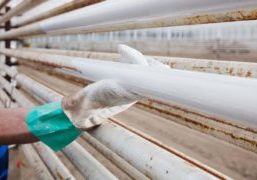
Include painting pipes in a proper maintenance schedule
Every hectare of greenhouse contains an average of 10-15 kilometres of heating pipes. High relative humidity, temperature fluctuations and wear and tear from mechanical loads such as pipe rail trolleys all affect these pipes. A rusty pipe is less efficient at conducting and radiating heat. A good base coat followed by proper maintenance saves money in several ways: the output from your heating system is maximised and the frequency of maintenance is kept as low as possible.
It all starts with the basics. When heating pipes arrive from the factory, they are dirty and greasy. All that grime has to be removed before a primer can be applied. It is important to store untreated pipes in a dry place so that they don’t start rusting. Once rust takes hold, you’ll fall behind straight away.
A primer improves adhesion between the surface and the topcoat and contains various raw materials such as zinc pigments which make it corrosion-resistant. Cleaning and priming should be done as soon as possible, ideally by a specialist company who will clean, degrease and spray the pipes using sustainable techniques. Many fitters can advise on this for both national and international projects.
Protection
The various components of a heating system need to be treated in different ways. A one-coat primer is fine for systems that are subject to mechanical loads and reflect virtually no light, such as a pipe rail.
By contrast, a top heating system has a higher decorative value and should intercept or absorb as little light as possible. This is often treated with primer and a top coat, or powder coated. Coat thickness equals life span: apply two coats to your top heating system to avoid having to carry out early maintenance at height.
There are various greenhouse paints available which protect against the wide range of influences in the greenhouse. “Greener”, water-based paints are beginning to appear but are not yet fully developed. Most conventional paints are still solvent-based. In the greenhouse, painting with a paint glove is preferable to spraying, as spraying generates mist that can also land on other components.
Maintenance
Good maintenance saves money. Once pipes have started to rust, your only option is to sand them – a job that is not for the faint-hearted. Make a good maintenance plan and include painting in it. Check the paintwork regularly to make sure it is sound, for example in the summer. Then you’ll be able to schedule in any painting you need to do in between crops.
How often pipes will need to be painted depends on the heating regime you use during production. If the pipes are heated all the time, the maintenance interval will be longer than in a greenhouse with large temperature fluctuations or in which the heating is switched off for a while. All being well, a heating pipe can last for 10 to 15 years before it needs maintenance or painting. But it may need it in as little as three to seven years if it is affected by moisture, for example if the greenhouse is heated less often.
DIY or outsource
Painting is a specialist job. So here are some tips for growers who want to do it themselves:
- Be aware of the amount of work involved and allow plenty of time to do it in.
- Seek advice on which paint to use. Paint consists of many components with different properties, and this will show in the quality of the result.
- Keep an eye on worker safety. Ensure any staff doing painting work wear gloves or grease their hands with linseed oil.
- Clean the pipes. Paint will only adhere to a clean surface.
- Make sure the temperature is above dewpoint when painting so that no moisture can form between the pipe and the paint.
- Use a paint glove. Make sure the work is done well. If necessary, seek advice from a specialist who will check the work and keep an eye on the end result.
- If in doubt, call in a specialist who will apply a sufficiently thick coat in the right quality so that your heating pipes will last for a good many years to come.
Text: Marleen Arkesteijn. Image: Spraying company R. van der Horst.
Related




Digital tool for servicing and maintenance in horticulture
Poor servicing and maintenance can shorten the life span of equipment. Royal Brinkman spotted an opportunity to innovate in this area and developed Service Engine, a digital servicing and maintenance tool.
The tool is easy to use, it’s available on desktop and smartphone, and it can be used for all brands and types of equipment.
More sustainable future
With this tool, growers can finally keep track of their servicing and maintenance needs. The intuitive software helps to map and manage the machinery and equipment at the nursery. Royal Brinkman believes the Service Engine tool is a step in the right direction towards a more sustainable future. Following its successful launch in the Netherlands, it aims to further develop and implement the Service Engine worldwide in the near future.
www.royalbrinkman.com
Stand number: 08.510


Maintenance starts with rinsing filters clean after every use
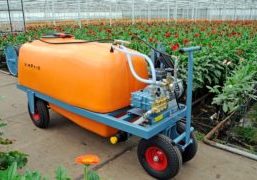
A sprayer is an indispensable part of many a grower’s kit, whether we’re talking spray robot or spray gun. When you’re buying a sprayer, it’s important to get the pump capacity right.
If you want to read this content you need a subscription, or log in when you already have a subscription.