Philips Lighting
Right light spectrum on bottom layer with half the energy
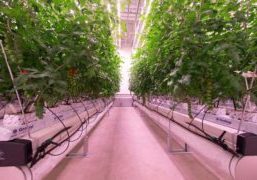
The LED lamps in the light fittings underneath the top growing layer shine brightly on the plants in the cultivation greenhouse at phalaenopsis growers De Vreede in Bleiswijk in the west of the Netherlands. The light may look white but actually it’s the right combination of colours. It’s one of the innovations that brothers Herman and John de Vreede are working on as part of their drive to supply large volumes of uniform quality orchids more sustainably. They did most of the preliminary research into the right light spectrum themselves.
The phalaenopsis nursery moved to Bleiswijk in 1995. The brothers soon bought the nursery next door and then another two sites 300 metres and 2 kilometres away, making a total of 12.5 hectares of growing space. Each of the sites is equipped for a specific purpose.
The cultivation greenhouse, where the plants spend their first 35 weeks, is heated to a temperature of 28ºC. Then they move to the spike induction site, where they stay until about week 55. Here the plants start off warm and after a few weeks the temperature is reduced to 19ºC to induce flowering. In this phase, the plants are spaced wider apart, staked and sorted by flower size, colour and number of buds. Finally, they are transferred to the finishing site for three to four weeks. Orders are packed and shipped from there.
Large volumes
De Vreede produces 12 million plants per year. Even Herman de Vreede finds it hard to get his head around those numbers. A massive 200,000 young tissue culture plants arrive from various locations every week and leave the nursery again as adult plants more than a year later.
De Vreede specialises in eight outstanding orchids – exclusive varieties with a long life span and offering great value for money. They come from two breeders, with most of their stock supplied by Anthura. “We test about 30 varieties a year, including from other breeders. We want to keep up with the latest innovations.”
The brothers work with large volumes. “We are equipped to fulfil orders of 500,000 units at a time. The biggest challenge for us is getting all the plants to the same stage at the right time. Much of what we do is automated now. Soon we plan to install industrial Fanuc robots which will enable us to respond even more efficiently to market demand.”
Sustainable lighting solution
Orders arrive in peaks. “We supply more than half of our annual production in the first five months of the year,” de Vreede says. “There are a lot of special occasions like Women’s Day and Mother’s Day at that time of year. To accommodate peak production we decided to install a second growing layer above part of the cultivation greenhouse. We now have four hectares of growing space there instead of three. That helps make the crop more sustainable to grow because we’re maximising our space.”
It wasn’t practical to install a second growing layer directly above the original one, either in terms of climate or air circulation. So the brothers decided to put in a second layer along the sides of the three cultivation areas. It is relatively low, just 1.5 metres above the bottom layer. Lighting is needed to make up for the lack of daylight. The standard lighting with SON-T lamps used elsewhere in the nursery can’t be used here.
“There are SON-T lights above this part, but with 600W output, slightly less than the 1000W from the other lamps we use,” Herman de Vreede says. “We went with LED grow lights for the bottom layer. Not only because they generate less heat, but also because they are a sustainable solution. They use less energy and you can choose a particular combination of light colours.”
Three years of tests
At the time there was no such thing as a standard solution. So before they started building in October 2016, they ran tests over a three-year period to see which light spectrum produced the best results. “We tested the effect of different light spectra on properties such as development rate, root development and the hardiness of the plant, both inside and outside the nursery. A lot of knowledge is needed for that, as you have to see what the best result is for each situation. The light spectrum that is most suitable for the vegetative phase of phalaenopsis is not necessarily the right one for the spike induction phase, for example.”
The tests in the nursery were overseen by Simone de Vreede, who had gained a lot of experience in this area and carried out research at her parents’ nursery while still at university. Once they had decided on the light spectrum they wanted, the next step was to find out where to source the lights from. Ultimately they chose Philips GreenPower LED top lighting, which fitted the bill nicely. The lights give out light that looks white. The advantage of this is that it makes it easier to visually inspect the plants being grown in the greenhouse.
More stable climate
“Installing a second growing layer blocked out the daylight from the bottom layer,” says Stefan Hendriks of Philips. “They couldn’t use SON-T because of the short distance between the crop and the lamps: they would generate too much heat. With LED you can create a controllable climate in which phalaenopsis can be grown very efficiently with relatively little light.”
Since the second growing layer was installed in October 2016, the plant specialist has been visiting the nursery every two weeks to carry out analyses and take crop measurements, including length, leaf splitting and dry matter concentrations. In addition, the climate is intensively monitored by means of PAR, temperature and humidity sensors. These observations are linked to the climate data from the computer. “Based on this data, we want to fine-tune the use of the lamps and optimise our cultivation even further. Experience and knowledge are essential when using LEDs. That’s why we carry out a lot of in-depth analyses here,” says Hendriks.
Future
The phalaenopsis grower is also considering buying in LED lights for the other sections when the time comes to replace the SON-T lamps there. Hendriks adds: “Besides being more energy-efficient, LEDs last longer. The life span of the models we use is given as L90. That means that after 25,000 hours of operation, the light output is still 90% of the original level. But the module will still go on working fine after that and will have many burning hours left in it.”
At De Vreede the lamps will probably wear out sooner than that, due to the number of hours they operate. With 14 hours of lighting a day, they are in use for 5,110 hours a year. But that also means that the LED lighting in the new no-daylight situation will pay for itself more quickly.
Summary
Dutch phalaenopsis growers De Vreede have 12.5 hectares divided into cultivation, spike induction and finishing sites. In order to have enough growing space available at peak times, they invested in a second growing layer above part of their cultivation area. To light the bottom layer, now in shade, they installed LED lighting with the right light spectrum for the vegetative phase, having first done their own in-situ research into which spectrum to use.
Text and images: Marleen Arkesteijn.
Related


CropObserver offers growers more insight into a plant’s growth process
Growers are, of course, keen to ensure that their crops grow as optimally and quickly as possible. An efficient – or more efficient – growing method will, of course, automatically produce a high – or higher – yield. To help growers gain greater insight into the growth process PhenoVation developed a device that makes photosynthesis visible.
The device that makes photosynthesis visible is called the CropObserver. The measuring device is suspended from the greenhouse ceiling and measures the values of the crops growing several metres beneath it.
Optimisation
PhenoVation’s device measures parameters that correlate with the maximum efficiency and effective efficiency of the crop. Based on this data, growers can gain insight into the effect of specific light and growth strategies on a crop’s growth processes, thus allowing them to determine the optimum growth conditions for their crops. Additionally, growers can optimise their Leaf Area Index (LAI) using the input provided by the CropObserver.
Test
Chrysanthemum grower and chairman of LTO Glaskracht’s National Chrysanthemum Committee David van Tuijl is currently testing the Crop Observer in the greenhouse in Brakel where he grows his flowers. Van Tuijl is the first grower to use energy-efficient LED lights throughout an entire greenhouse, making it a prime example of what a conventional greenhouse would look like in the future.
Initial assessment
Van Tuijl’s experiment receives assistance from various experts at Wageningen University & Research, Philips Lighting, the Delphy knowledge centre and the Glastuinbouwpact greenhouse horticulture association. The pilot project will last one year, in principle, but an initial assessment will be take place after six months. “This assessment will decide if another six months will be worthwhile”, says Van Tuijl. “We have only been operating for one cycle, so it is too early to draw any definite conclusions about the CropObserver.”
A grower request
A wish communicated by growers for a different way to measure photosynthesis prompted the development of the CropObserver. “Before the CropObserver, measurements were taken with a system that recoded the values of only one leaf”, says Vincent Jalink, who developed the device. “Besides, this system was not wireless, which was rather inconvenient for some growers. Growers indicated wanting to measure the values of multiple leaves via a wireless system.”
Compatible with climate system
“Depending on how high it is suspended, the CropObserver can measure 4 to 6 square metres of crops growing beneath it, fully wireless”, explains Jalink. “What’s more, it is compatible with LetsGrow and Hogendoorn climate systems, which allows us to link certain actions to specific values. One of our customers is already doing this. As soon as the CropObserver measures a specific value the climate computer will open the screens. This has enabled the grower to shorten his crop cycle, thus allowing him to fit more cycles into a single year.”
Plant-dependent
According to Jalink the CropObserver can be used to measure photosynthesis and growth in all crops. “Of course, not all plants lend themselves equally well to using the CropObserver for climate control purposes”, adds PhenoVation’s developer. “Tomatoes, for example, flourish when exposed a lot of light and heat and will therefore not respond as strongly to changes in light ingress and temperature in the greenhouse. Therefore having your climate computer controlled on the basis of photosynthesis makes less sense when growing plants like these. However, with crops like tomatoes the system can be used to measure production by gaining insight into the ETR (Electron Transport Rate), considering that the ETR value correlates very well with the amount of carbon dioxide absorbed into the crop.”
Perfecting the growth strategy
According to Jalink sun-sensitive crops and potted plants perform much better under those conditions where a CropObserver is linked to a climate computer. “These crops respond more strongly to a change in light ingress or temperature, which allows growers to perceive the effect of their actions within a day, or even within a few hours – and to perfect their growth strategy accordingly. Various tests have shown that this will increase production yield by at least five per cent for the same surface area.”
For rent
Because Jalink does not yet know which crops respond well to the CropObserver-climate computer combination, he is also making the measuring equipment available for rent. “This will help growers independently decide if the CropObserver is an interesting device for them, without having to purchase it immediately.” Growers who are interested in this system can contact Jalink through the contact details on the PhenoVation website.
Text: Leo Hoekstra. Photo: Marleen Arkesteijn.
Related


Trials show far-red light leads to large rise in tomato production
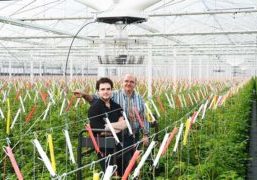
Far-red light enables a larger proportion of assimilates to reach the tomato. This is the conclusion of researchers at Wageningen University & Research who carried out trials in Bleiswijk, the Netherlands. “This is the first time that it has so clearly been shown that you can use light colour to steer tomatoes,” says Anja Dieleman.
That using far-red light could be favourable for tomato production was shown some time ago in a trial using high intensity far-red (140 µmol/m2/s). But the initial enthusiasm of the growers involved in the trial waned when later in the season the crop deteriorated. The early production was significantly higher but declined steeply in the spring as the crop developed short and small leaves.
Intensity important
It was time to take a more fundamental approach. “Small scale trials with different light colours were carried out by a PhD student within the research program Bio Solar Cells. These looked very promising,” explains Esther de Beer, of Philips Lighting.
Afterwards the treatments were adapted for practical trials carried out at Wageningen University & Research facilities in Bleiswijk. The goal was to determine if the addition of far red-light is attractive for commercial users. The research carried out previously had already shown that the intensity of the far-red light is important.
Three treatments were compared in Bleiswijk. The control was top lighting with red/blue LEDs (185 µmol/m2/s). This was supplemented with two treatments of far-red light of two intensities: 30 and 55 µmol/m2/s. The crop received less daylight than normal because the wall screens in the trial greenhouse were always closed to prevent radiation being emitted to neighbouring sections. Planting took place at the beginning of October and the variety used in the trial was Komeett.
Effect on photosynthesis
“Far-red light has a number of known effects,” says researcher Anja Dieleman. “It produces more elongation in the stems and leaf stalks so the crop structure is more open. This allows better light interception and thus greater crop photosynthesis. In addition, flowering is sooner, in extreme cases even leading to stress-induced flowering. Far-red also suppresses the apical dominance.”
The far-red light was on at the same time as the red/blue LEDs and remained on for 30 minutes longer. “Nothing at all happened at the beginning,” she says. “You would have expected more elongation but it was only in November that we started to notice differences arising. The difference in stem length between the treatments with or without far-red reached a maximum of 25 cm, so it was very little. Furthermore it was noticeable that the leaves under the far-red light were less green.”
The far-red light also has an effect on photosynthesis: Measurements show that photosynthesis was 12% higher when the far-red lamps were on. This is striking because far-red is not PAR-light (Photosynthetically Active Radiation). “Therefore the effect is not directly related to the plant using the extra light for photosynthesis but it is due to the alignment between photosystem I and II, which are protein complexes in the chlorophyll,” explains Dieleman.
Crop reacts quickly
The crop started to yield fruit in January and it was immediate bingo: The average fruit weight and total yield were significantly higher in the far-red treatments. The difference in fresh weight compared with the control (red/blue only) was 7% at 30 µmol and 17% at 55 µmol.
The researchers were, considering their experiences in previous research, very alert to the developments in leaf length. If the leaves should become too short the crop would intercept too little light and that would be at the expense of production. This happened at the beginning of March: The leaves in the far-red treatments were shorter than those without far-red.
“Therefore we stopped the far-red treatments on 25 March. After that the crop recovered again. Within three weeks the leaves were longer and the crop was darker again. This means that far- red light can be used to steer the crop and it responds quickly to it. Also the light intensities were well chosen: they produced relatively little vegetative effect but had a large generative effect. According to the experts we could easily have gone through the summer with this crop,” says Dieleman. However, the trial was stopped before the summer for financial reasons.
Distribution of assimilates
The question is: What caused the yield to increase? From weighing the leaves, stems and fruits it appears that more assimilates go towards the fruits and less towards the green parts. “That is remarkable,” says the researcher. “It is actually very difficult to change the distribution of assimilates in tomato. This is driven by hormones that set off a chain of reactions and much about this is still unknown.” Perhaps it has something to do with the PSS-value (phytochrome stationary state), which indicates the activity of the pigment phytochrome. “That begs the question as to whether you should keep the far-red lamps on all day or just at the end of the day. Perhaps that last half hour – when the other lights were already out – clinched it.”
But the far-red light costs extra electricity. “Therefore, could we increase the yield to the same magnitude if instead of using 30 or 55 µmol/m2/s far-red light we increased the intensity of the red/blue LED-light by the same values (so from 185 to 215 or 240 µmol/m2/s)? This appears to be so from our calculations,” says De Beer. “But we are not concerned about that here. The interesting part is the ability to steer the distribution of assimilates. You can achieve something different than when you just give more light.”
Summary
Far-red light, in addition to assimilation lighting, resulted in a large rise in tomato yield: 7% and 17% in two different research trial treatments. The green part of the crop remained in good condition for half a year but after that its ability to intercept light decreased. The crop recovered again after the far-red light was switched off.
Text: Tijs Kierkels. Photos: Wilma Slegers and Wageningen University & Research
Vertical farming is definitely the future, the only question is where and when
On 14 October 2016, InnovationQuarter organised a meeting at Koppert Biological Systems with the theme ‘Vertical Farming, in or out?’. More than 90 representatives from the sector listened to speakers such as Martien Penning (Hillenraad), Arnold van Liempt (Philips) and Jasper den Besten (HAS) talk about the opportunities, threats, benefits, costs, opportunities and challenges of vertical farming. Rien Panneman from Staay Food Group announced that a large construction for a vertical farm project in Dronten was all underway.
Martien Penning from Hillenraad gave a presentation on whether vertical farming (VF) can become horticulture’s ‘KODAK Moment’. His answer was yes. He substantiated this with an analysis of the most recent developments in the US and Asia, where dozens of VF initiatives have been rolled out. The big question was: When will VF perform as well as or better than conventional farming in greenhouses? Cost, quality, food safety and delivery speed are all key criteria here. His conclusion was not whether VF is feasible, but where and when.
Arnold Liempt from Philips Horticulture LED Solutions gave an overview of the many international vertical farming projects currently underway or being implemented. His presentation also made it clear that many there are many different models of vertical farming; from vegetable gardens under glass to cleanroom factories. An example was shown of an in-store farm with LED lighting at Metro Group in Berlin. VF in the Netherlands is still limited to research centres (Brightbox, Grow Wise Centre and PlantLab), and the propagation of seedlings, such as at lettuce grower Deliscious.
Feasibility
Jasper den Besten of HAS University of Applied Sciences talked about which technological developments vertical farming might accelerate. He proposed that conventional greenhouses would remain important for growing vertical crops such as tomatoes, cucumbers, peppers and aubergines, while greenhouses with intermediate LED light could be seen as ‘The New Cultivation’. Just like Martien Penning, Den Besten noted that many technologies such as LEDs, sensors and robots are rapidly decreasing in price, and that this will accelerate the financial viability of VF projects, even though the cost of lettuce and herbs from VF is still considerably higher (2 to 8 Euros per kg) than those from a conventional greenhouse. On the other hand, VF projects can be better controlled in terms of colour, flavour and substances in plants. For example, the brix category of strawberries can be improved.
Ruud Kaarsemaker from Groen Agro Control discussed how nutrients could be used to control substances in plants. He said that the maximum possible returns are defined by the objectives, which might be dry matter content, substances in the produce, potassium or nitrate content, absence of residues or shelf life. The variety selection, cropping system (e.g. NFT) and recording analyses of nutrients can be used to achieve the desired objectives.
Vertical Pharming
‘Alternative Thinker' Peter Jens sees VF as an opportunity to grow medicines, and therefore prefers the term ‘vertical pharming’. According to Peter Jens, we have to look at consumers differently in order to decide if VF is a beneficial cultivation system.
After the presentations, it was the turn of those working in the field, represented by Priva, Vitro Plus, Rijk Zwaan, Certhon, Plantlab and Staay Food Group. The expectation of a number of experts was that vertical farming will soon be offering plenty of opportunities for some crops and segments (the luxury segment and specialty shops and restaurants). Many flower crops and vertical crops such as tomatoes are unsuitable at the moment, but breeding and other growing techniques may eventually offer opportunities. VF definitely offers perspectives for special segments and niches in the market, but it is not yet able to compete with conventional cultivation.
Staay Food Group
To everyone's surprise, Rien Panneman from Staay Food Group announced that a large construction for a vertical farm project in Dronten for the cultivation of lettuces to supply large supermarket chains was underway. The project involves cooperation with various partners (Philips, Rijk Zwaan) and knowledge institutions (HAS, Wageningen UR). This farm will be up and running no later than June 2017, which means that VF will soon be a reality in the Netherlands. Growing in climate cells is seen as clean and food safe, something which consumers are willing to pay more for.
Anne-Claire van Altvorst from InnovationQuarter looks back on a successful day, “Many insights were presented from various quarters, as well as opportunities in many market segments. The openness we were able to create with each other was an essential element for ensuring the positive atmosphere. It was a fantastic day, and looks like it will be repeated. What is true, especially after the eye-opener from the Staay Food Group, is that vertical farming is 'in'."
Text/photos: Mario Bentvelsen.