
photosynthesis
CropObserver offers growers more insight into a plant’s growth process
Growers are, of course, keen to ensure that their crops grow as optimally and quickly as possible. An efficient – or more efficient – growing method will, of course, automatically produce a high – or higher – yield. To help growers gain greater insight into the growth process PhenoVation developed a device that makes photosynthesis visible.
The device that makes photosynthesis visible is called the CropObserver. The measuring device is suspended from the greenhouse ceiling and measures the values of the crops growing several metres beneath it.
Optimisation
PhenoVation’s device measures parameters that correlate with the maximum efficiency and effective efficiency of the crop. Based on this data, growers can gain insight into the effect of specific light and growth strategies on a crop’s growth processes, thus allowing them to determine the optimum growth conditions for their crops. Additionally, growers can optimise their Leaf Area Index (LAI) using the input provided by the CropObserver.
Test
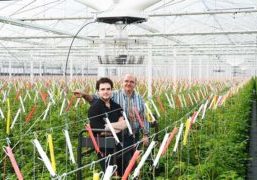
Chrysanthemum grower and chairman of LTO Glaskracht’s National Chrysanthemum Committee David van Tuijl is currently testing the Crop Observer in the greenhouse in Brakel where he grows his flowers. Van Tuijl is the first grower to use energy-efficient LED lights throughout an entire greenhouse, making it a prime example of what a conventional greenhouse would look like in the future.
Initial assessment
Van Tuijl’s experiment receives assistance from various experts at Wageningen University & Research, Philips Lighting, the Delphy knowledge centre and the Glastuinbouwpact greenhouse horticulture association. The pilot project will last one year, in principle, but an initial assessment will be take place after six months. “This assessment will decide if another six months will be worthwhile”, says Van Tuijl. “We have only been operating for one cycle, so it is too early to draw any definite conclusions about the CropObserver.”
A grower request
A wish communicated by growers for a different way to measure photosynthesis prompted the development of the CropObserver. “Before the CropObserver, measurements were taken with a system that recoded the values of only one leaf”, says Vincent Jalink, who developed the device. “Besides, this system was not wireless, which was rather inconvenient for some growers. Growers indicated wanting to measure the values of multiple leaves via a wireless system.”
Compatible with climate system
“Depending on how high it is suspended, the CropObserver can measure 4 to 6 square metres of crops growing beneath it, fully wireless”, explains Jalink. “What’s more, it is compatible with LetsGrow and Hogendoorn climate systems, which allows us to link certain actions to specific values. One of our customers is already doing this. As soon as the CropObserver measures a specific value the climate computer will open the screens. This has enabled the grower to shorten his crop cycle, thus allowing him to fit more cycles into a single year.”
Plant-dependent
According to Jalink the CropObserver can be used to measure photosynthesis and growth in all crops. “Of course, not all plants lend themselves equally well to using the CropObserver for climate control purposes”, adds PhenoVation’s developer. “Tomatoes, for example, flourish when exposed a lot of light and heat and will therefore not respond as strongly to changes in light ingress and temperature in the greenhouse. Therefore having your climate computer controlled on the basis of photosynthesis makes less sense when growing plants like these. However, with crops like tomatoes the system can be used to measure production by gaining insight into the ETR (Electron Transport Rate), considering that the ETR value correlates very well with the amount of carbon dioxide absorbed into the crop.”
Perfecting the growth strategy
According to Jalink sun-sensitive crops and potted plants perform much better under those conditions where a CropObserver is linked to a climate computer. “These crops respond more strongly to a change in light ingress or temperature, which allows growers to perceive the effect of their actions within a day, or even within a few hours – and to perfect their growth strategy accordingly. Various tests have shown that this will increase production yield by at least five per cent for the same surface area.”
For rent
Because Jalink does not yet know which crops respond well to the CropObserver-climate computer combination, he is also making the measuring equipment available for rent. “This will help growers independently decide if the CropObserver is an interesting device for them, without having to purchase it immediately.” Growers who are interested in this system can contact Jalink through the contact details on the PhenoVation website.
Text: Leo Hoekstra. Photo: Marleen Arkesteijn.
Related


WUR research demonstrates natural genetic variation photosynthesis
Researchers at Wageningen University & Research recently discovered a natural genetic variation for photosynthesis in plants, and have traced this all the way down to DNA level. With this knowledge, growers will be able to breed crops in the future that make better use of photosynthesis.
Crops that make more efficient use of photosynthesis can produce a higher yield and capture more carbon dioxide from the air in the soil. This is an important step towards solving the impending world food crisis and meeting the objectives set down in the Paris climate agreement.
Yellow Seedling 1 gene
A team of researchers has demonstrated that thale cress (Arabidopsis thaliana, a frequently used model organism for plant genomics), contains various genes that are involved in the process of adapting to changes in the amount of light to which plants are exposed. The researchers studied one gene, the Yellow Seedling 1 gene, in great detail. This gene is involved in the process used by chloroplasts in adjusting to changes in light. A variant of this gene caused some thale cress plants to better cope with increased exposure to light in comparison to other plants.
Genetic variation
This discovery demonstrates that it is possible to improve photosynthesis based on natural genetic variation. This was initially greeted with some scepticism. Considering that genes for photosynthesis appear in almost all plant varieties, the researchers expect that such a variation of the Yellow Seedling 1 gene also occurs in many types of crops.
Improved photosynthesis
By breeding plants on improved photosynthesis crops could, in the long term, produce a greater yield with the same amount of soil, water and nutrients. This will enable us to more rapidly approach the ideal of ‘achieving more (crop yield) with less (soil, water and nutrients)’.
Source/image: Wageningen University & Research.
Related


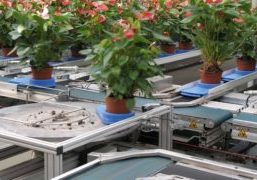
Sweet pepper growers can get by with less CO2 in winter
Sweet peppers can manage with 800 ppm CO2 in the winter months. Supplying more than that doesn’t boost photosynthesis: in fact, the sweet pepper plant simply gets used to a higher dose, resulting in ‘lazy’ leaves. Luckily, this is easy to reverse when spring arrives. The lazy leaves are back in action after six days.
These are the conclusions of Dutch research into sweet peppers carried out in 2014 and 2015 by Plant Lighting, Inno-Agro and Plant Dynamics. The research was conducted under the guidance of the Horticultural Technology Development growers association (TTO).
Greenhouse air quality
Many growers have a free supply of CO2 from their CHP units. But finding out what the ideal dose is doesn’t feature high on their list of priorities. “It may not help, but it can’t do any harm” is often the rule of thumb. Nevertheless, Stefan Persoon, innovation specialist at Inno-Agro, has noticed that this is changing.
“First of all, we are starting to use less fossil fuel as a sector. Of the 1,650 hectares of sweet peppers in the Netherlands, 300 hectares are grown using geothermal heat or another alternative energy source. Those growers pay for their CO2, for example via OCAP (CO2 from the port city of Rotterdam), and this encourages them to do more with less. A second reason for finding out the ideal dosage is the quality of the air in the greenhouse. On the face of it, this doesn’t seem to be a problem, but measurements taken inside greenhouses reveal that the air quality can easily come under pressure. Oddly enough, this mainly happens in spring when the vents are opened. Growers will then provide additional CO2 to compensate for the loss. This pollutes the air in the greenhouse, for example with NOx.”
Sander Hogewoning, a researcher at Plant Lighting, adds: “There is a third reason why growers should be taking a critical look at the dose. International research on arable crops indicates that prolonged exposure to higher CO2 levels can lead to ‘lazy’ leaves. When that happens, the key enzyme RuBisCO binds CO2 less effectively. Does this also happen in greenhouse horticulture? That’s precisely what this research was about.”
Airtight cabins
The trials took place at the Westland Demo Nursery (Demokwekerij Westland). They built six 1.4 m2 glass cabins in which CO2, RH and temperature can be precisely controlled. In the first phase, both sweet pepper and tomato plants were studied. The researchers put young plants from a breeder in cabins with 400, 700 and 1,000 ppm CO2. Using a photosynthesis meter, Sander Pot of Plant Dynamics recorded in detail how the leaves use the different concentrations for photosynthesis.
CO2 saturation in tomato plants was found to be 600 to 700 ppm, while in sweet peppers the figure was 700 to 800 ppm. “The step up from 400 to 600 ppm provides far more additional photosynthesis than the step from 600 to 800 ppm,” the researcher says. The amount a grower has to dose for that second step is also much more than for the first step, especially when the vents are open a crack. So the rule “the more, the better” doesn’t hold water. “And yet there can be downsides to high CO2 concentrations. Not all growers take that on board,” Hogewoning explains.
Lazy leaves in sweet pepper
The next important issue the study looked at was whether this high dose would yield “lazy” leaves. The answer? Not in the short term. Leaves that had formed in the breeder’s nursery did not turn lazy. But the same was not true of leaves that had developed entirely in the trial cabins. A CO2 dosage of 1,000 ppm did not produce lazy leaves in tomatoes, but the outcome was different in sweet peppers: photosynthesis was just as high in plants grown at 1,000 ppm and dosed with 900 ppm as it was in plants grown at 400 ppm and dosed at 600 ppm. This is clearly illustrated in Figure 1. In other words, plants that were “pampered” with 1,000 ppm needed a sustained high dose to keep their productivity up.
Hogewoning: “This is caused by the enzyme RuBisCO, which is the key to photosynthesis. The capacity of this enzyme drops. In this case the ‘laziness’ has nothing to do with the stomata, as some growers believe.”
Reactivating quickly
The follow-on research focused exclusively on sweet pepper plants and looked at whether the lazy leaves could be reactivated. “We call that ‘reversible’. We wanted to see whether and how quickly the leaves could get used to a lower CO2 dosage. That is actually what happens in practice. After a winter with a high dosage, the vents are opened a crack in spring. The question is how long the leaves stay less productive then,” Hogewoning explains.
To test that, in 2015 they carried out a trial with sweet pepper plants with doses of 400 and 1,000 ppm. Once the researchers had identified the lazy leaves, they switched two cabins of 1,000 ppm to a varying regime of between 500 and 1,000 ppm, similar to spring in the greenhouse. Using the photosynthesis meter, they determined CO2 uptake in the leaves after six and fourteen days.
Good news for sweet pepper growers: the laziness turned out to be reversible after just six days. Therefore, lower CO2 levels only cause the crop to be less productive for a very short time. “We were quite surprised by that. It means that it isn’t necessary to adjust the dosing strategy in winter. But what is important to remember is that growers who opt for a high concentration need to keep it up right through the winter. The plant gets used to it. And dosing above 800 ppm has very little added value,” Hogewoning concludes.
Eye opener
Whether or not sweet pepper growers can make use of the findings in practice depends on their situation. We ran this past Bart van der Valk of Zwingrow, who grows orange peppers on three sites in the Westland area of the Netherlands. He is positive about the outcome of the research. “We use geothermal heat and we pay quite a lot per square metre for the CO2 we source from OCAP. So we are keen to use it more efficiently.” For him it was an eye opener to discover that the level could be lower in winter.
“We are now dosing 600 to 700 ppm in winter. It’s just as effective as 1,000 ppm. I prefer to keep the CO2 for the spring. What the research also revealed is that lazy leaves can recover again quickly. That’s good to know. Of course, there are still some unanswered questions. For example, I would like to find out what time of day is best for dosing CO2. More research is needed in that area.” But a survey among growers using geothermal heat reveals that there isn’t enough money for practical research yet.
Summary
If sweet pepper plants receive a high dose of CO2 over a long period in the winter, they get used to the high level. That produces “lazy” leaves which use the CO2 less efficiently. But this is reversible: when the dose is reduced in spring, the plants adapt within just six days.
Text: Karin van Hoogstraten. Images: Studio G.J. Vlekke.
Related

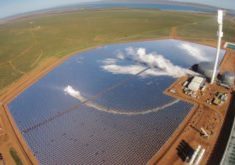
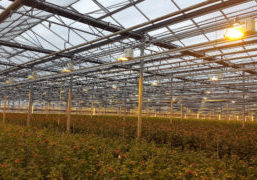


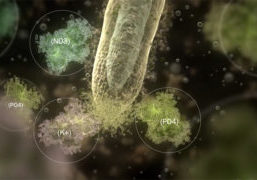
Potassium, the major organiser in numerous plant processes
No potassium no plant: A huge number of processes are dependent on this element. Luckily, hardly any problems occur because the plant is good at looking after itself in this respect.
If you want to read this content you need a subscription, or log in when you already have a subscription.
Related
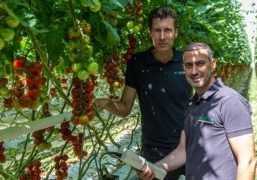
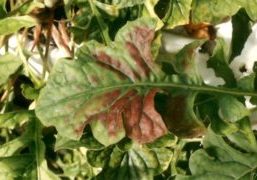


Light induction influences production of compounds and plant physiology
Light is more than just the big mechanism behind photosynthesis. Parts of the light spectrum, or simply more or less light, influence the development of plants: germination, flowering, cell division and cell elongation. Light induction also affects the formation of compounds that are useful to humans. It’s a new area with much to discover.
According to researcher Tom Dueck, of Wageningen UR Greenhouse Horticulture, the Netherlands, a plant ‘sees’ its environment via light. It’s not just the fact that light is present but the amount, direction, length (day length) and colour of the light spectrum that play an important role. Plants use light with a wavelength between 400 and 700 nm for photosynthesis. Growers can use UV, blue, red and far-red light to steer the plant. In particular, the ratio of red to far-red determines a number of physiological processes.
Red and far red
Plants absorb light of certain wavelengths via pigments, also known as photoreceptors. There are different types. UVR8 photoreceptors respond to UV-light and are involved in the stress response. Phototropins are involved in the way plants grow towards the light. Cryptochromes ‘notice’ the difference in day length. Phytochromes are sensitive to the ratio between red (circa 660 nm) and far-red (730 nm) light. They cause changes in the hormonal balance and stimulate the production of some compounds.
The researcher focuses mostly on the phytochromes. How these work exactly is complicated. According to Dueck the ratio of red to far red light affects the three dimensional shape and function of the pigments. This ratio is also called the ‘phytochrome stationary state’ (PSS). At a higher PSS there is more red light in the ratio than at a lower PSS. A higher PSS leads to, for example, cell elongation and it influences the flowering processes. A low PSS affects germination and sensitivity to day length.
The ratio red:far-red is very subtle. In the summer, sunlight with 0.7 has a low PSS (red:far-red ratio). The PSS of red LEDs, without sunlight, is 0.87. This is high, but the difference in ratio is just 0.17.
Flower bud induction of phalaenopsis
Dueck gives a few examples of steering plant processes. Normally phalaenopsis plants have to remain cool at 19ºC for six to nine weeks. The cooling breaks bud dormancy, stimulates growth of the stems and causes flower bud induction. According to Dueck a whole mechanism of plant hormones are behind this and are active during the various stages of development.
The cooling period activates phytochrome B. This phytochrome stimulates the production of cytokinin, inhibits auxin production and stimulates the formation of gibberellin. Cytokinin breaks the bud dormancy and stimulates bud development and branching. Auxin works against apical dominance and ensures that several stems develop at the same time. Gibberellin stimulates flower bud development.
The question is does lighting also work in this way on phalaenopsis. It appears likely, but if the light spectrum influences the hormone balance in the same way as cooling is not clear. During the research Dueck considered if flower bud production is also possible during this period by giving the plants on two occasions four weeks of light of a high PSS via artificial lighting with SON-T lamps that contain a relatively high amount of red. The aim is to activate the phytochrome B.
“A lot of red light, especially in the second phase of the induction, appears to do approximately the same as the cooling. Red induction light can partly replace cooling. We want to start a follow-up project to research this further,” says the researcher.
Chrysanthemum cuttings
A second example mentioned by Dueck is the research into the effects of far red light on the development of chrysanthemum cuttings. The cuttings arrive from Africa and rooting takes seven to ten days before the grower pots them on. During the trial, cuttings from the cultivars ‘Baltica’ and ‘Feeling Green Dark’ received different colours via LED-lighting: 40 µm red (660 nm); 40 µm red plus 8 µm far red (730 nm); 40 µm blue (450 nm) and 30 µm red plus10 µm blue and 8 µm far red.
“The roots increase in number and become longer with more far red light. This shows that with just a little light you can steer the plant so that it can be planted earlier. This is a gain for the grower.”
Effect on compounds
Induction light influences the formation of different secondary metabolites, which can be used for numerous applications, such as artificial colourings, medicine and cosmetics or in the food industry. Dueck gives a few examples.
Since 2010 colleague Silke Hemming has been working on the production of high quality ingredients from algae grown in Dutch greenhouses at Wageningen UR, Bleiswijk. Part of this involves stimulating the production of the red colouring astaxanthin in the algae, Haematococcus pluvialis, by using induction light. This red algae can be used as a food ingredient during salmon and shrimp production to influence their colour.
Greenhouse as pharmacy
A new projects aims to stimulate the production of the dark indigo colour by the ordinary plant, Polygonum (knotweed). Dueck: “We want to stimulate production through a combination of red induction light, more light, a longer day and more CO2.”
Research has also been carried out into the possibilites of stimulating plants to produce the protective substances anthocyanins. These could help plants to be more resistant to high radiation when they are grown in space. Light induction can stimulate the production of these protective anthocyanins.
Dueck sees good opportunities for using light induction to stimulate the production of expensive ingredients. In this respect Wageningen UR is running the project Kas als Apotheek (Greenhouse as Pharmacy). Its a new path along which there is much to discover.
Summary
It is possible to use light to steer certain plant processes or to encourage the production of substances. The ratio of red to far red light appears to influence plant physiological processes such as elongation, flowering and germination. Practical examples are the use of induction light to replace chilling of phalaenopsis to encourage bud formation and increasing the amount of far red light during the rooting of chrysanthemum cuttings for more and longer roots. By using induction light it is also possible to stimulate the production of certain substances, such as colourings, protective substances and products that can be used in medicines or cosmetics.
Text/photos: Marleen Arkesteijn
Understanding photosynthesis important for CO2 dosing and lighting
It used to be rare to come across plants that bind CO2 mainly at night: CAM plants. But it’s no longer an exception in the horticultural sector. Nowadays the best-selling pot plant in the Netherlands – phalaenopsis – belongs to this group. This then raises questions such as: When do CAM-plants behave according to the book and when don’t they? And when does it make sense to dose with CO2 and provide lighting?
If you want to read this content you need a subscription, or log in when you already have a subscription.