
plant compounds
Tomato spurs caterpillars to cannibalism
A tomato that has optimised its defence mechanism against insects will not only suffer less damage from caterpillars, but will also incite caterpillars to eat one another. This is a defence tactic that, until it was brought to light by a recent study conducted at the University & Wisconsin, has been hitherto unknown.
When tomato plants are attacked by insects, they produce antibodies in order to protect themselves. They actually start doing this as soon as other plants in their direct vicinity are attacked. This mechanism is activated when they detect volatile substances emitted by plants that are being eaten by predators. Researchers from the University of Wisconsin, led by John Orrock, sprayed tomatoes with volatile substances like these with a view to activating what is referred to as the jasmonic acid route. This defence route is activated to keep insects at bay.
Remarkable results
The American scientists wanted to investigate the details of this defence mechanism. They wanted to discover if the plants only ward off the insects (because they are unappetizing or toxic) or produce another detrimental effect on them (e.g. by inhibiting reproduction). The study was conducted with caterpillars of the small mottled willow moth (Spodoptera exigua). The results were remarkable: not only did the plants sprayed with these substances produce five times as much biomass, because they had barely been eaten by insects at all, but the caterpillars began to feed on one another As a result, their population shrunk notably.
Finding the right balance
It is known that caterpillars have a tendency towards cannibalism when faced with food scarcity. The researchers believe that the low nutrient value of plants in full combat mode triggered the increased instances of cannibalism. The effect of the altered composition of the plants has, until now, never been investigated. These findings have been published in Nature Ecology & Evolution. In an accompanying interview, John Orrock points out that the cost to the plant of activating its defences is very high: the plant has to invest heavily at the expense of its growth. He believes that plants will always strike a balance between maximum defence and accepting minor damage from predators.
Text: Tijs Kierkels.


Four plants selected as promising suppliers of natural cosmetics
The ‘Plants4Cosmetics’ study that Wageningen UR–Food & Biobased Research was engaged to conduct by the Centre of Expertise for Plant Compounds, Bio Base Westland and Topsector T&U confirms a promising future for natural cosmetics. Four plants have been selected for further research based on this study.
Sales figures for the natural cosmetics industry rise by over 10% every year. There is a particular demand for ingredients that can be used for skin care products, personal hygiene products and perfume, according to the Centre of Expertise for Plant Compounds. This means that there is a growing demand for plant-based extracts for specific applications, such as essential oils for fragrances, phenols with antimicrobial properties and colouring agents with a UV filter. Four plants were selected for further research based on the ‘Plants4Cosmetics’ study conducted by the Food & Biobased Research division of Wageningen University Research Centre.
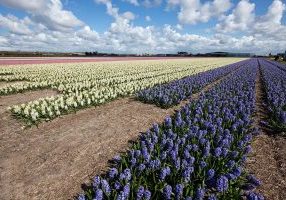
Hyacinth perfume
One of these plants is the hyacinth. The selective extraction of a high-quality essential oil for fragrances and the perfume industry is considered highly promising. Geraniums and chrysanthemums are also of substantial interest for the extraction of essential oils and flavonoids. The researchers also recommend that the value of the interesting plant-based substances that can be derived from orchids is further investigated.
Source: Centre of Expertise for Plant Compounds. Photo: Mario Bentvelsen.
Centre of Expertise for Plant Compounds launches Extracts Library
Mid-December saw the opening of the Extracts Library of the Plant Centre for Plant Compounds at the Keukenhof. This library contains over 2,200 extracts obtained from horticultural crops in the Netherlands.
Plants contain a wealth of beneficial substances. In fact, a single plant can contain anywhere from 15,000 to 30,000 different botanical compounds. Nevertheless, this rich resource is not tapped into nearly enough, which is probably due to a lack of information about plant compounds. The Centre of Expertise for Plant Compounds aims to change all that. A database has since been created that contains over 2,240 extracts derived from various plant materials (leaves, stalks, roots, tubers, bulbs, etc.) from 1,300 different species of plants found in the Dutch horticulture industry, as well as information about their edibility, bioactivity, toxicity, traditional use and applicable legislature.
Through this Extracts Library the knowledge centre has created a platform where a diversity of parties can further their knowledge of plant compounds and use this to develop innovative products. Screening and conducting research into plant extracts will enable botanical compounds to be discovered for new applications. The first successful application has been found: a compound was identified in a plant grown in the Dutch horticulture industry that can be used to combat Fusarium, a fungal disease to which tulips are susceptible.
Plant compounds
There are over 100,000 to 200,000 different plant compounds in the various crops grown in the Dutch horticulture industry. The structure and capacities of these substances are still largely unknown. Many of these plant compounds have ground-breaking potential in the pharmaceutical, agrochemical, cosmetics and dietary supplements industries, and additionally as animal feed supplements or colourants, fragrances and flavouring agents. The Library is already collaborating with France’s ‘Cosmetic Valley’ in the development of new cosmetic applications, such as fragrances, and collaborative ventures have also been initiated with the pharmaceutical and food industries.
Knowledge institutes will benefit from the Extracts Library by using the extracts for applied as well as basic research. This will result in new applications and innovations. The Centre of Expertise for Plant Compounds anticipates that the knowledge contributed by the Extracts Library will enable growers and breeders to develop into suppliers of high-quality substances.
The Extracts Library was opened officially by Adrie Bom-Lemstra, member of the Provincial Executive of the Province of Zuid-Holland for the CDA, on 14 December.
Source: Centre of Expertise for Plant Compounds. Photo: Mario Bentvelsen.