
startup
Inventive system extracts CO2 out of the air for greenhouse horticulture
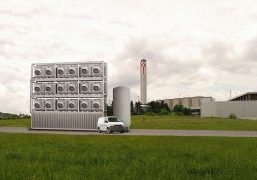
The Swiss start-up Climeworks is developing a system that extracts CO2 out of the air for greenhouse horticulture purposes. The system will be tested during a three-year pilot and should be able to capture some 2 to 3 tons of CO2 on a daily basis. This will be piped to a nearby greenhouse to boost the growth of lettuce, cucumbers and tomatoes, according to New Scientist magazine.
The system, called Direct Air Capture (DAC), captures air in closed spaces, such as submarines and space capsules. The captured ambient air is pushed through a fibrous sponge-like filter material that has been impregnated with chemicals derived from ammonia. Once the filter is saturated, the gas will be released by warming it with the heat which is in this case generated by a nearby municipal waste incineration plant. The CO2 thus released is then piped to a 4-hectare greenhouse.
High costs
According to calculations made by the American Physical Society the cost of capturing CO2 on this scale would be 600 dollars a ton, says Climeworks COO Dominique Kronenberg. The Swiss start-up also expects to equal that and eventually get costs down well below that. At that price, taking C02 out of the air is more expensive than removing it from the flue gases of industrial facilities and power plants, where the gas is up to 300 times more concentrated.
Location independent
Despite the high price, Kronenberg notes the many advantages to the DAC process. ‘The advantage of taking it out of the ambient air is that it can be done no matter where you are on the planet. We are not dependent on a source of CO2, so neither will we need to make high costs to transport the CO2 to the greenhouses.’ Climeworks will be using funding from the Swiss Federal Office of Energy to fine-tune the system. The objective of the three-year pilot period is to make the system run more cheaply and efficiently and, in doing so, enable the company to gain a solid foot on the market.
Source: Newscientist.com
F&A Next brings food & agri start-ups and investors together
F&A Next, the first European platform for start-ups in the Food & Agri sector, is bringing the biggest group of international Food & Agri investors ever together. The F&A Next Event will take place at the Wageningen University Campus on 25 and 26 May.
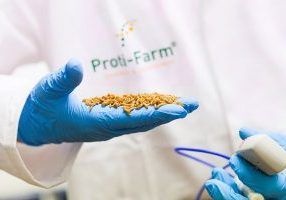
The event will feature pitch sessions and panel discussions in which start-ups such as Proti-Farm (insects), Mosa Meat (lab-grown meat) and Mazza Innovations (nutrient extracts) will be given an opportunity to present themselves to the investors. In addition to Anterra Capital - the biggest investment fund in this sector worldwide - over 25 international venture capital and corporate venture funds will be attending the event in search of new start-ups for their next investment. They will be joined by ‘angel investors’ and representatives of leading European Food & Agri companies on the look-out for new innovations in food and agricultural technology to contribute to the next revolution in the sector, green or otherwise.
Venture capital investments
Adam Anders, Managing Partner of Anterra Capital: ‘It is only through innovative breakthroughs that we will be able to double the availability of food without making concessions to the well-being of people and our planet. Venture capital investments are mushrooming and it is time that the Netherlands takes up its position as a leader in this sector. Not only from the perspective of leading corporations and research institutes, but also from that of the entrepreneur. Venture capital funds like ours are only too happy to respond to this trend.’
Berry Marttin, member of the Rabobank Supervisory Board: ‘We need entrepreneurs to transform innovations into practical propositions that are perfectly tailored to the demands of the market. Stimulating innovation and entrepreneurship in the worldwide Food & Agri sector is one of the Rabobank’s highest priorities. We support the innovative ecosystem of entrepreneurs through financing, our unique expertise in the area of Food & Agri and our ability to link our networks in global food chains, from farm to ready-to-eat food. This is why we take pride in being a partner of F&A Next and in linking ideas to investments.’
The driving forces behind F&A Next are Wageningen University Research Centre, the Rabobank, FoodValley NL and StartLife. The event is being made possible thanks to the Province of Gelderland and Anterra Capital. The launch event will take place at the Wageningen Campus on 25 and 26 May. Start-ups, investors and corporates can register at www.fanext.nl.
Source: Food Valley Update. Photo: Proti-Farm.
Related


Dutch startup Plant-e tests green electricity derived from grass
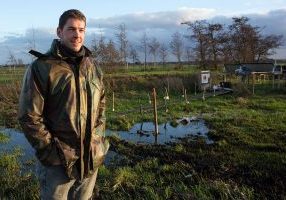
Plant-e was commissioned this autumn by the Province of Zuid-Holland and the Delfland Water Board to conduct a pilot in which green electricity is generated by plants growing on the wet grasslands near the N470 provincial motorway in the Netherlands. This is the first time the Dutch startup has tested this method of generating power outside of a laboratory.
Plant-e was acclaimed one the world’s most promising Technology Pioneers by the World Economic Forum last summer, which puts the company in the same league as Google, AirBnB and Twitter. Plant-e director Marjolein Helder: ‘We are very proud of the recognition we received from the World Economic Forum. Of course we already won the confidence of the Province of Zuid-Holland and the Water Board before receiving this international acclaim. The test set-up in Zuid-Holland was a big step for us to ensure that this system will become a full-fledged alternative for generating sustainable energy.’
Plant energy
The technology works as follows: pipes are laid on a plot of grassland, between the roots and the grass. Grass excretes organic material through its roots, which is broken down by micro-organisms in the soil. In this process, electrons are released as a waste product which are then captured in the pipes and harvested as electricity. Following the further development of this technology the energy can be used to power lights incorporated into crash barriers, or other traffic lighting. The pilot was developed to discover how much electricity plants can yield.
Startup
The startup has taken this technology to a higher level than anywhere else in the world. ‘I dare say that we are the only ones in the world to conduct practical tests at this level,’ says Pim de Jager of Plant-e. A big advantage to generating electricity from plant growth is that it all takes place underground and is therefore not visible. The pipes used in the test set-up protruded slightly above the ground, but this will soon no longer be necessary,’ explains De Jager. ‘You can keep using your land as you would normally. Nothing changes, except that it will be producing electricity.’
Currently, electricity derived from plants is not yet able to compete with other methods of sustainable energy generation. Plant-e intends to further develop this pipe system and hopes that the price per kilowatt hour will be comparable to that of solar and wind energy in the next few years to come - and ultimately with that of our current ‘grey’ electricity (electricity from non-renewable sources).
Source: NOS/Province of Zuid-Holland. Photo: Mario Bentvelsen.