
sustainable cultivation
Dutch agricultural industry smallest ecological footprint in the world
Thanks to high production levels, a reduction in the use of crop protection agents, the reuse of waste materials and a low percentage of food waste, the Dutch agricultural industry has the smallest ecological footprint in the world. So concludes ABN AMRO in its online publication Agrarisch: circulair van huis uit, loosely translated as ‘The agricultural industry: circular from its very roots’.
The ABN AMRO bank has compiled a list of the cleanest and most polluting countries in the fields of agriculture. Nevertheless, Jan de Ruyter, sector banker at the Dutch Central Bank, confirms that it is almost impossible to rank all crops. “A great deal of research has been done, but this is highly fragmented. It is only when you put all the studies together that you are able to draw a coherent conclusion.”
Little waste
ABN AMRO’s claim that the Netherlands has the least polluting agricultural industry is based – among other reasons – on the high labour productivity, the limited use of chemical protection agents and antibiotics. The decline in the number of chemical protection agents used and the use of antibiotics has its roots in the strict legislation imposed by the Dutch government. Dutch legislation has therefore produced the desired effect with regard to curbing pollution within the agricultural industry.
Smart farming
In addition to this, the industry has been making use of residual and waste flows for many years. As such, a very limited quantity of raw materials is lost. Waste is also combated by making frugal use of raw materials and efficient food production. This efficient cultivation method owes its success partially to the use of sensors and data analysis: also known as smart farming.
Renewable energy
What also contributes to the small ecological footprint is the fact that farmers and horticulturists in the Netherlands are involved in the production of at least 42% of the renewable energy in the Netherlands. Many greenhouse horticulturists also use sustainable energy sources such as residual heat and solar energy. A total of 4.9% of all the energy in the Netherlands is used by the agricultural industry.
Source: ABN AMRO.
Related

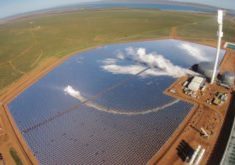
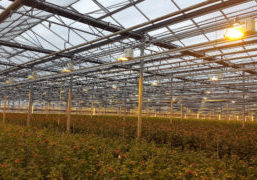


EU: ‘Substrate cultivation no longer organic’
Substrate cultivation no longer qualifies as organic. This is the outcome of numerous trialogue meetings between the European Council, the European Commission and the European Parliament. Starting in November 2015 the European Council, Commission and the Parliament met in 18 trialogue meetings to negotiate the new regulation for organic production.
Dutch State Secretary for Economic Affairs Van Dam called the outcome a “heavily argued compromise, to which I can and will agree because it upholds several points that are of crucial importance to the Netherlands.”
Crucial points
Examples of the crucial points to which Van Dam refers are the gradual phasing out of the existing derogations (permission from the EU for deviations from the adopted European standards), maintaining the possibility of parallel production and inspection based on risk analysis. Additionally, a differentiated distribution between delegated acts, implementing acts and rules contained in the Council Regulation is included in the new Regulation. It does not, however, contain a threshold value for residues.
Substrate cultivation
In principle, the definition of ‘organic plant production’ has remained unchanged: plants that derive their nutrients from the soil ecosystem. This means that crops grown on substrates may no longer be sold as ‘organic’. In the past, Denmark, Sweden and Finland were entitled to use alternative cultivation methods because climate conditions made it difficult to grow organic crops in the open field. Scandinavian growers, for example, grow their organic produce in soil kept in containers above ground level. This method will be phased out during a ten-year period as from the effective date of the Regulation.
Other rules in the USA
The wish expressed by Southern European countries for an exception to these rules was not granted, which means that they too will be expected to comply with the Regulation. In the report of the general meeting, Dutch politician De Groot from the party D66 referred to the innovative cultivation methods used in the Netherlands, where crops are grown on substrate or coir. On the US market for organic products, produce grown in this way is still classified as organic. This situation is related to an equivalent agreement between the EU and the USA. In this, both parties to the agreement recognise each other’s rules and strive for as much similarity as possible between them.
Point for discussion
In the USA, the question of whether produce grown on substrate can be sold as organic is also a point for discussion. Currently, this is not the case, but the National Organic Standards Board (NOSB) announced several proposals this year for disqualifying produce grown by means of vertical and substrate cultivation as organic. Ricardo Crisantes, a farmer of organic produce for Wholesum Harvest and on the Board of the Coalition for Sustainable Organics (CSO), recently expressed his concern for this proposal to the American Senate. He believes that the NOSB is considering proposals that will impede organic substrate cultivation, despite the possibility of this being a key solution for satisfying the growing consumer demand for organic products.
Source: Biojournaal.nl.
Related

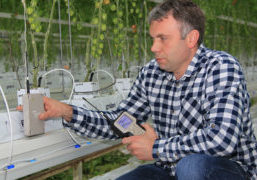
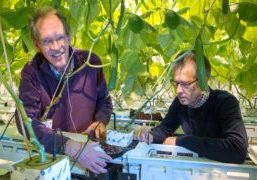


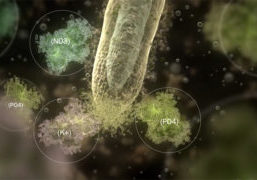
Hydroponically grown chrysanthemum trial successful for fourth time in a row
This is the fourth time in a row that trial station Proeftuin Zwaagdijk successfully concluded a trial investigating the hydroponic culture of chrysanthemums. No plants were lost during the trial, which was held from October to November 2015. The average branch weight - in the most favourable cases - was 82 grams for the ‘Bacardi’ variety and 96 grams for ‘Alero’ chrysanthemums.
The leaves as well as the roots were of an outstanding quality. This was also the case for plants grown for the fourth time in rows in which neither the nutrient solution was replenished nor disinfection had taken place. The plants suffered only minute pressure from thrips. Possible improvements could be achieved primarily in the area of crop uniformity.
Just as in the previous trials, the cuttings had been rooted in glued coco plugs and transferred to Botman Hydroponics floaters directly after, where they were kept floating on a 30 cm deep nutrient solution that was continually aerated and kept in circulation. The trial investigated the effects of water temperature and the addition of micro copper to the nutrient solution. ‘Bacardi’ and ‘Alero’ clearly reacted differently to the treatments provided.
Sustainable cultivation system
The underlying objective for these trials is the development of a sustainable cultivation system. The system, which is separated from the subsoil, will lead to considerable reductions in the emission of nutrients and chemical pesticides.
The following parties were involved in the trials: Fred van Paassen, Green Simplicity, Bovebo, Dekker Chrysanten, Fides by Dümmen Orange, Botman Hydroponics BV, KaRo BV, van Iperen and the Allsmeer Chamber of Commerce/Greenport Innovation Engine.
Source/photo: Proeftuin Zwaagdijk.
Increasing range of plant strengtheners available
Manufacturers and horticultural suppliers alike have been expressing increasing interest in the development and market for plant strengtheners. A whole series of products based on substances of a natural origin, from micro-bacteria to hormones and from fungal preparations to seaweed and from algae to fatty acids, are lauded for their resilience-boosting capacities. An overview, however temporary, is presented below.
Our planet’s flora and fauna offer a wide range of substances that are beneficial to crop protection. The members of Artemis develop agents and systems that increase plant resilience to such an extent that diseases and pests simply won’t stand a chance. Artemis is the industry organisation and interest group for biological crop protection. The organisation is composed of manufacturers and suppliers of natural enemies, pollinators and plant protection products of natural origin. The substances (i.e. products) impact a wide range of functions in plant physiology.
Defence proteins
According to Alwin Scholten, cultivation advisor and owner of PlantoSys, plant strengtheners can be used in multiple ways. PlantoSys incorporates the plant-based defence protein salicylic acid into its products. Every plant produces this naturally. If the concentration is high enough, the plant starts to produce defence proteins that can block the growth of bacteria, fungi and viruses. ‘Salicylic acid is, in itself, not an antibody. It spurs the plant to produce defence proteins,’ explains Scholten. ‘However, a sufficiently high concentration must be attained in the plant before this will work. This level can be increased by administering salicylic acid to the plant’s leaves (by spraying) or roots. Stimulating the plant’s own immune system through the application of salicylic acid has proved to be highly effective in combating fungus or bacteria-related problems.’ The product appears to be highly effective against biotrophic fungi, such as powdery and downy mildew, Fusarium, rust, fruit rot (Colletotrichum) and Alternaria. It also inhibits the development of spider mites, whiteflies and aphids. Scholten recommends weekly doses as long as problems are anticipated. His product, SalicylPuur, has been approved by the Ctgb as a fertiliser. Other products developed by PlantoSys, with combinations of micro-silver and micro-copper, are marketed likewise. Scholten has noticed a growing interest among horticulturists in plant-strengthening fertilisers. ‘Four years ago the majority of the response I received was predominantly sceptical, but the sector is becoming more open-minded, particularly in the past two years.’
‘Four years ago the majority of the response I received was predominantly sceptical, but the sector is becoming more open-minded, particularly in the past two years.’
Root system
Plant strengtheners are commonly applied to the soil (the substrate) or administered as a fertiliser when watering the plant. The interest expressed by professional growers for soil and crop stimulation agents is growing, but Aly Loes Vellema of ECOstyle bv in Appelscha still has the impression that as long as chemical alternatives are still widely available, the majority prefers to stick to these. Researchers at WUR are also of the opinion that plant strengtheners are not ready to replace crop protection agents, but are a good supplement. ECOstyle focuses on ecologically responsible fertilisers, soil improvers and crop protection agents. Vellema is the supplier of the bio-stimulating soil improver Exsol P, a composite of various types of bacteria. The Bacillus combination has the capacity to free organically bound phosphates and phosphates bound to minerals from the soil, which allows the root system to develop better and the plant to better absorb water and nutrients, thus boosting overall plant resilience. ECOstyle is currently engaged in the development of plant strengthening substances, about which Vellema is not yet ready to share the details.
Photosynthesis
There are also plant strengtheners on the market that work at photosynthesis level. Pentakeep is a liquid nitrogen fertiliser that is blended with 5-aminolevulinic acid. Administration of this fertiliser causes photosynthesis to be prolonged, and as a result, the production of sugars and dry matter. Cor den Hartog of Pentagrow, importer and distributor of this originally Japanese product, has had over fifteen years of experience with the application of this product in greenhouse horticulture. Tests and studies have demonstrated that Pentakeep enhances vigour and resilience in crops. ‘Research conducted in practice has shown that crops treated with Pentakeep are less susceptible to mildew,’ den Hartog explains. ‘When applied properly, you will have a success rate of 100%.’
5-aminolevulinic acid (5-ALA) occurs naturally in plants, but its production rate depends on the speed of the plant’s metabolism. This metabolism can be accelerated by giving the plant an extra dose of Pentakeep. Plants need 5-aminolevulinic acid to produce chlorophyll. In addition to this, 5-aminolevulinic acid will increase the production of sugars and accelerate the absorption of fertilisers. The result is improved overall growth, higher production rates and stronger plants. Den Hertog confirms that Pentakeep is an NPK fertiliser and regrets that it is not yet 100% biological. The firm aims to bring a biological variant of Pentakeep to the market in the near future.
Soil resilience
On the list of the most important disciplines, Koppert Biological Systems occupies the top position with ‘resilient cultivation with NatuGro’. The international market leader of biological crop protection products has placed its resilience activities with EBIC, an international platform for enterprises engaged in the promotion of the bio-stimulants industry in an endeavour to encourage sustainable agriculture and horticulture.
Koppert is convinced that soil resilience is the key to healthy and vigorous plants.
Koppert is convinced that soil resilience is the key to healthy and vigorous plants. With a system that is composed of a diversity of products, soil analyses and expert advice, Koppert offers an all-encompassing approach under the name NatuGro. The products that are included in the NatuGro system are not stand-alone, but form part of an integrated approach: a system that enhances the biodiversity of the cultivation medium and increases the plant’s resistance to disease. A healthy and well-balanced soil life is crucial to this. Pathogenic fungi and bacteria will be inhibited because they are challenged or attacked by various groups of useful organisms in the root environment. One of Koppert’s best-known products is Trianum, a biological plant strengthener containing Trichoderma harzianum T-22 spores. While having a strengthening effect, it also enhances plant resilience in general against a variety of soil fungi. Other products included in the NatuGro system are used in the propagation stage, to stimulate root development and enhance root quality, or to improve photosynthesis.
Other multinationals such as Syngenta, BASF, Bayer and Monsanto are also manifesting themselves on the market of resilience-boosting products. Syngenta is now marketing the biostimulant Hicure and BASF has taken over Becker Underwood, specialised in biological seed treatment. Bayer has submitted an application for the approval of its ‘green’ line of Serenade fungicides and Monsanto is developing various products through its subsidiary BioDirect.
Plant strengtheners
Biobest, established in Lier and a subsidiary of Biobest NV in Belgium, has also developed activities on the market for plant strengthening products. Biobest recently expanded its product range with several items that have a plant-strengthening effect. One of these is Greenstim, about which Biobest claims that it accelerates the transport of specific nutrients. According to this supplier of horticultural products, this has a positive effect on the quality of fruit and perishability. Prestop and PreFeRal are two products that have been introduced into the Biobest range of biological products. Prestop is a biofungicide that combats Botrytis in various crops. Bart Sosef, Director of Biobest Nederland, expects the company’s range of biological products to be expanded in the near future. In relation to this, he has mentioned the fungus Trichoderma, which has a destructive effect on roots.
Biobest is evolving from a manufacturer and supplier of exclusively microbial products into a company that is also active in ‘macrobials’: useful insects and pollinators. Microbials focus more on fungicides that have a direct effect on pests, and in relation to which Sosef has mentioned the biological insecticide PreFeRal. Biobest is seeking collaboration with various partners for the further development of these products, while the marketing emphasis will be placed on guidance and advice. ‘Biobest aims to bring only products to the market that can guarantee the effectiveness they claim,’ explains Sosef.
Text: Tuinbouwteksten.nl/Suzan Crooijmans. Photos: Fotostudio GJ Vlekke, GAPS Photography.
Download the complete dossier Plant Resilience (7 pages, pdf).
If you want to download this content you need a subscription, or log in when you already have a subscription.



Plant resilience is becoming the new standard
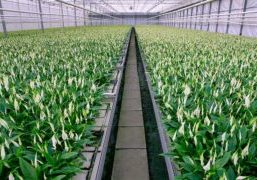
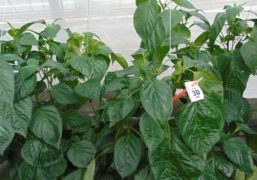
Resilient crops and robust cultivation systems are in the spotlight these days. We want plants that are tough enough to withstand disease from mere contact with a fungus, virus or bacterium. Researchers and the corporate community have joined forces in the quest for increased crop resilience.
Increasing consumer demand for environmentally-friendly grown and residue-free produce is putting the use of chemical crop protection agents under pressure. At the same time - or in connection with this - an increasing number of crop protection agents are no longer available. The horticulture industry is therefore hard at work searching for alternative ways to protect crops from pests and diseases.
What does resilient mean?
Resilience is a modern name for a natural way of being that has almost been forgotten. For many years, the necessity of crop resilience was relegated to the background with the advent of chemical agents, while the intensification of horticultural crop production was placing a more strenuous burden on crop health at the same time. Cultivation methods, the speed at which crops are produced, the larger number of plants being grown, the greenhouse climate, varietal selection and the use of chemical crop protection agents have all been instrumental in the extent to which plants are resilient and susceptible to disease and damage.
Now that sustainable cultivation has become a market criterion, plant resilience is quickly gaining in importance. Additionally, due to the increasingly narrower package of chemical agents available today, treating your crops with chemical agents no longer as self-evident as it was a few years ago. As a result, plant resilience is becoming an increasingly urgent point on the agenda. At the same time, there is a large group of growers who don’t find the problem to be as pressing: ‘We still have chemistry, don’t we? There must be some adjustments that can be made.’
The number of activities and studies currently focusing on ways to increase plant resilience - and therefore reducing plants’ susceptibility to pests and diseases - is astounding. The numerous studies are being regarded with great interest. They are receiving financial support from governmental institutions and applauded by environmental and social organisations. If we are successful in increasing plant resilience, our faith in healthy cultivation without any need for chemicals will surely increase.
Plant resilience is, however, very difficult to measure. Methods used for this include scouring for symptoms of disease, measuring spore impact or conducting tests for disease on flower and plant materials (bio-testing). A proposal was submitted at the ‘Topsector Tuinbouw en Uitgangsmaterialen’ summit for horticulture and plant materials held in September 2015 for in-depth research into the measurability of plant resistance.
Influence of light and substrate
Parameters are being sought on a diversity of fields to influence plant resilience. A connection has been discovered, for example, between plant resilience and light. Red light, far-red light and UV light all have an effect in the immune system. Studies into plant resilience in relation to light have been conducted at the initiative of Philips and Wageningen University and Research Centre (WUR). One of the conclusions is as follows: ‘We know from literature that light is not necessary for assimilation alone; those parts of a plant that are exposed to sufficient light are less susceptible to mildew, for example.’
Several studies are investigating the effect of substrates on plant resilience. A perfect example is injection with rhizobacteria. This natural enrichment of substrates, called Induced Systematic Resistance (IRS), has been noted as highly promising by the WUR research staff. Additionally, endophytes – micro-organisms – are also being investigated as an alternative for boosting resilience. Another factor to take into consideration involves plant strengtheners, such as seaweed, mineral oil, fatty acids, garlic and fungus spores.
The end of 2014 saw numerous proposals for fundamental research being submitted to the Netherlands Organisation for Scientific Research (NWO Green) within the framework of the ‘Topsector Tuinbouw en Uitgangsmaterialen’ summit. One of the studies given a green light was a project investigating plant resilience in chrysanthemum cultivation. The study focuses on how the inoculation of sterilized soil media with soil micro-organisms affected the sensitivity of above-ground pests. The research objective was to develop soil inoculants that could be used to promote resilience in cut flower varieties against diseases and pests in the soil as well as above the ground.
Soil life
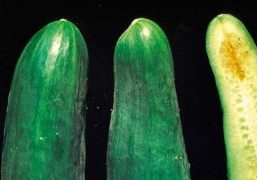
An in-depth research report recently published by a team of WUR researchers, ‘Resilient substrate’, discusses the prospects of resilient cultivation. According to this report, the viability of resilient cultivation is not only confirmed by facts derived from scientific literature, but also by the practical experiences of growers. Increasing plant resilience via the substrate is anticipated to become an increasingly important aspect to take into consideration in combating above-ground pests and diseases. Nutrients in the soil have a direct as well as indirect influence on the resilience of a crop against a diversity of pathogens. The quality and amount of organic substances are key factors in determining the composition of microbial soil life and, as such, crop resilience. Soil life is influenced by organic additives in the form of compost. The type of substrate also plays an important part in this. Coco is rich in bacteria, fungus and protozoans, for example, while rockwool contains mainly bacteria. It is highly probable that not all substrates have the same potential for resilience. Case studies have confirmed this. Cucumber plants grown on champost substrate mats (a residual product from the mushroom sector), for example, are less susceptible to Pythium and mildew. Crops grown on this substrate, which has a hight organic substance content and contains numerous active micro-organisms, will therefore be more resilient.
Researchers have noted that the number of studies demonstrating the impact of the substrate on above-ground pests and diseases is still limited. Apart from that, the effects are not yet conclusive enough to enable this method to serve as an alternative for chemical crop protection. ‘But that’s not what we are aiming for,’ says WUR researcher Jantineke Hofland. ‘We are more inclined to consider this a step towards the full-scale adjustment of the entire cultivation system. Not just one change, but multiple changes at the same time. The entire system needs to be thoroughly reviewed. Now that several studies have shown that plant resilience can be controlled, our research is ready for a next step: the integration of plant resilience into a comprehensive system.’
Two routes
Resilience in plants runs through two different routes: the jasmonic acid route and the salicylic acid route. These routes are named for the alarm substances produced in a plant following a predator attack. Jasmonic acid is produced when plants are exposed to phloem-sap sucking insects and fungi that kill plant tissue and live on dying plant materials, such as Botrytes and Phytophthora. Salicylic acid is formed following an attack by micro-organisms on living plant material. Examples are downy mildew, powdery mildew, rust and scabies
Plant strengtheners are agents that are used preventively and work much in the same way as does a vaccine. Just as pathogens, they stimulate plants to create proteins that increase resistance to disease. Plant strengtheners are not crop protection agents. They increase resistance, but cannot offer a guarantee that plants will not be damaged.
The plant strengtheners used in practice generally focus on boosting resistance via the salicylic route. The Greenhouse Horticulture division of WUR in Bleiswijk is currently researching plant strengtheners. A study conducted on cucumbers tested eight different plant strengtheners, which were administered preventively by spraying them onto the leaves or pouring them onto the roots. The crops were then injected with mildew. Despite the fact that all the plants were, in the end, damaged by the mildew, it took longer for them be infected.
Green crop protection agents
As soon as a product is developed that successfully combats pests or diseases in plants, an application must be submitted for its authorisation. All crop protection agents must be approved by the Board for the Authorisation of Plant Protection Products and Biocides (College voor de Toelating van Gewasbeschermingsmiddelen en Biociden, Ctgb) before they can be marketed. The procedure for ‘green’ crop protection agents is, however, difficult and slow. This is because European regulations for the authorisation of biological crop protection agents have not yet been described. To force an accelerated assessment procedure, the Netherlands has launched the Green Deal ‘Green Crop Protection Agents’ project. Green crop protection agents are substances of a natural origin such as plants micro-organisms and minerals. Plant strengtheners with a nutrient component can be granted authorisation as a fertiliser. The Nutrients Management Institute (Nutriënten Management Instituut, NMI) is the agency that determines this. In practice it makes no difference whether a product has been approved as a fertiliser or a crop protection agent.
Device
In early 2015 a grant application was submitted to the Netherlands Enterprise Agency (Rijksdienst voor Ondernemend Nederland, RVO) for a device that would boost plant resilience in greenhouse horticulture. The device is intended to ‘increase the resilience of greenhouse-grown plants against diseases in a biological manner and in which no chemical substances or metals are applied and the use of crop protection agents is reduced’. The device is ‘a system for increasing plant resilience, excluding water storage facilities and irrigation systems’.
Text: Tuinbouwteksten.nl/Suzan Crooijmans. Photos: Fotostudio GJ Vlekke, GAPS Photography.
Download the complete dossier Plant Resilience (7 pages, pdf).
If you want to download this content you need a subscription, or log in when you already have a subscription.