
tunnels
Strengthening the Lebanese horticulture sector
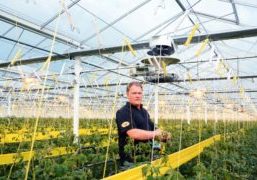
We are working with Lebanese researchers to build mono tunnels that will improve vegetable production and simultaneously reduce water consumption.
Yields of tomatoes and cucumbers in traditional tunnels are limited by a lack of ventilation and, consequently, too high temperatures. By using a calculation model to analyse the local climate, we can calculate which modifications to the tunnel will boost production most effectively. We are also looking at rainwater collection. Along the coast, where a lot of Lebanon’s horticulture takes place, there is up to 600 mm of rainfall (800 mm in the Netherlands), most of which goes unused. Growers tend to use river water, which is of much poorer quality, and sometimes groundwater.
The use of rainwater also opens up opportunities for simple substrate cultivation, allowing much more efficient water usage and avoiding soil-borne diseases. At present, it looks as if it will be possible to increase production by 30%. The tunnels will be built in autumn 2017 and the first trials get under way in early spring 2018.
Related



From open fields to tunnels
I am writing my second column having just returned to South Africa after two weeks in the Netherlands. It’s always good to keep in touch with my motherland and catch up with family, friends and colleagues. But it always feels like coming home when we are back in South Africa. This is where our mission lies: to be there for the children of Africa, to improve food production and to create jobs. Last time I promised to tell you more about what we are doing to boost food production and quality here.
First of all, the shift from open field to protected cultivation is an important step. Here in South Africa we have various regions where crops are grown in tunnels. The size of the nurseries is usually anything from 2-3 hectares upwards, with one or two major players operating 10-12 hectares. These nurseries usually grow tomatoes, cucumbers and sweet peppers, but also lettuce and herbs. These are the crops I specialise in. We grow on the ground in coconut and cucumbers are often still grown in wood chippings. But a lot of tomatoes and sweet peppers are still grown outdoors. When you see this product in store you can tell that the weather hasn’t done the fruit’s appearance any favours. So it’s high time to tackle quality – although having said that, the quality of tomatoes in stores has improved enormously since 2014. Colour and presentation are also starting to become important here, as is segmentation: for example, you’ll see cherry tomatoes, snack tomatoes and tomatoes in other colours apart from red – like yellow and orange – in neat little packs on the shelves.
In the other African countries I work in, such as Kenya, Tanzania and Uganda, almost all vegetables are still grown in open fields. The growers I visit have small, 300 m2 tunnels. So a grower with six of these tunnels next to each other is a big one. The crops are grown in the soil, which means that pests like nematodes and soil diseases are a big problem. Of course we’re all familiar with the big cut flower nurseries in these countries, so it's only a matter of time before vegetables are grown in large-scale tunnels too.
I will tell you about the kinds of diseases that occur and how we treat them another time.
Herbert Stolker
Senior Consultant Africa