
Vertical farming
Electronics manufacturers express growing interest in commercial farming
Electronics manufacturers in Japan launched a number of Vertical Farming projects starting in 2008, initially with the aim of producing good LEDs and electronics for control equipment. A few years later they started growing fruit and vegetables commercially as well. Exceptions to this rule are Mirai and Spread, which have evolved into large-scale farms that also supply complete cultivation systems.
Fujitsu claims to have the only vertical farm that offers full-scale protection against all contamination from outside. The company is growing its produce in a vacant computer chip production hall, and where not even a single speck of dust is allowed to float through the air. As Fujitsu grows its lettuce with a low potassium content, it is not bitter to the taste and can also be extremely well tolerated by persons suffering from renal diseases: a growing group of patients in Japan. The company produces 3,000 heads of lettuce a day on 2,000 m2. The product is very popular among consumers and sold at a price of $3.00 apiece, while lettuce normally sells for $1.00 a head.
Toshiba also grows vegetables in a former computer chip factory. The company claims that its cultivation concept produces lettuce that is rich in phenols.
Fujitsu grows its lettuce with a low potassium content, it is not bitter to the taste.
Sharp initiated a study into the feasibility of growing strawberries in a multi-tier configuration in 2013. The company plans to start on the concrete execution of this concept in 2016 with a Vertical Farm in the United Arab Emirates. It aims to expand this with solar panels in the future. The example provided by Sharp is followed by a consortium of three companies in the chemical, wholesale and technology industries. This consortium aims to launch a demonstration company for Vertical Farming in the UAE towards the end of 2016, in which it will be focusing on the cultivation of leafy vegetables. This should lead to the establishment of various Vertical Farms equalling an investment of 47 million dollars over the course of three years.
Panasonic is planning to start a 1,154 m2 farming factory in 2017 to produce 81 tons of leafy vegetables a year. The company currently produces 6 tons of vegetables a year on a surface area of 248 m2.
Japan
In Japan, most Vertical Farming projects are in the hands of electronics companies. Exceptions to this rule are Mirai and Spread: large-scale farms that also supply complete cultivation systems. And - contrary to their Western counterparts - they communicate openly about the costs involved. Spread is planning to open a Vertical Farm in Kyoto in 2017 that will be fully automated, from sowing to harvesting. This ‘Vegetable Factory’ will comprise 4,800 m2 of cultivation space and produce 30,000 heads of lettuce a day: that’s almost 10 million a year. The construction alone required an investment of 14.5 million dollars. The turnover is estimated at 8.1 million dollars. Spread aims to render the vegetable cultivation profitable through this technology, which can be applied no matter where in the world.
Spread aims to render the vegetable cultivation profitable through this technology, which can be applied no matter where in the world.
In comparison to Spread’s Vegetable Factory in Kameoke near Kyoto, which produces 21,000 heads of lettuce a day, the far-reaching automation of this project will reduce labour costs by 50%, energy costs by 30% and construction costs by 25%. To prevent contamination, all staff wear lab clothing and must pass through an air shower before entering the cultivation area. In the automated factory, this will no longer be necessary and any danger of contamination is reduced even farther. The cost price of the new factory is also lower on account of improved technology, such as more efficient LEDs, air treatment and the reuse of water. Spread offers various partnership options to interested entrepreneurs.
The Antarctic
Over the course of several years, Mirai has proven that Vertical Farming is not only possible, but also profitable. After the tsunami in 2011, Shigeharu Shimamura took on the challenge of transforming an empty Sony factory into the biggest Vertical Farm in the world. He harvests 10,000 heads of lettuce every day on a surface area of 7,500 m2 of vertical cultivation space; this is 100 times more than he would be able to produce in the traditional manner. He developed the ultimate LED illumination for his crop in collaboration with General Electric. His business has since expanded to include 14 Vertical Farms.
Mirai has two smaller farms in Mongolia, whose inhabitants would otherwise have to forego all leafy vegetables for several months a year. Shigeharu Shimamura also built a 3 m2 miniature system for the cultivation of fresh vegetables on the South Pole. Consulting goes online.
Mirai has proven that Vertical Farming is not only possible, but also profitable.
Mirai provides a net impact calculation for lettuce production on 1,300 m2, with a harvest of 10,080 heads a day, on fieldrobotics.org. Based in an invested capital of 7.4 million dollars and a lifespan of 7 years for the production system (51% of the investment), 15 years for other facilities (19%) and 20 years for the building (20%), the investment would earn itself back in just 6 years. The annual operating costs are 3.4 million dollars, of which 26% would be spent on wages, 6% on materials, 26% on energy water and suchlike, 2% on transport and 18% on miscellaneous expenses (information, maintenance) and 22% on depreciation. The most crucial aspect for the successful operation of the farm is having the right people with sufficient training and expertise.
Other people take on a more relaxed attitude, such as Ray Kurzweil, director of engineering at Google. ‘The efficient use of resources and space leads to highly profitable year-round production. Customised light recipes and climate regulation create optimum growth conditions. The twenties of this century will be the decade that marks the Vertical Farming revolution.’Mirai: ‘Indoor cultivation will never be the same as industrial production. A non-linear approach is needed to understand the biology involved.’
Fresh, healthy and locally grown
Vertical Farming products don’t make a lot of food miles, because they’re generally grown near or even in the city. They are fresh, healthy, and available all year round. Additionally, they are free of diseases and pesticides and, because their growth is not in any way affected by seasons or weather conditions, their production is constant. The same quantities are sown and harvested every day or - as a film buff would say - ‘in Vertical Farming every day is Groundhog Day!’ This cultivation method uses very little water: 0.11 litres of water per head, according to Spread, which is 95% less than when grown in the open field. Aside from this, Vertical Farming requires much less space in terms of surface area. Plantlab even suggests that ‘only 25% of the entire surface area of the Netherlands would provide ample space to grow enough fruit and vegetables to feed the entire world population.’
'In Vertical Farming every day is Groundhog Day.'
Five years ago, Plantlab also concluded ago that applying pest control to Vertical Farming is entirely unnecessary, because insects are naturally repelled by the blue and red lights of LED lamps under which plants thrive. Nevertheless, Vertical Farmers in Japan refuse to take risks: they use a light filtering system and every staff member must wear a mouth mask. Before entering the cultivation area they take an air shower and a water shower. This stands in shrill contrast to most of the other ‘plant’ factories (120 approximately), where the staff wear normal clothing to work.
Micro-cultivation
Mirai designed an item for furniture for conventional households for micro-growers (consumers). This item was outclassed in terms of design in 2016 by the Foop, a sort of large bread box in which consumers can grow their own vegetables fully automatically, from seed to harvest. The seeds are sown in a growing medium in cups, which are suspended in a layer of nutrients. After a month, the vegetables can be harvested. You can watch them them growing through a plexiglass window. And if you forget your crop? No problem: the Foop will tell you when it’s time to harvest via an app on your smartphone. The Foop costs $360. So, who knows? Perhaps everyone will be growing their own vegetables in the future, making an end to Vertical Farming.
Text: Tuinbouwteksten.nl/Theo Brakeboer. Photo: Panasonic/Japan Times.
Download the complete Vertical Farming files, the pros and cons of vertical farming included (16 pages, pdf).
If you want to download this content you need a subscription, or log in when you already have a subscription.
Related

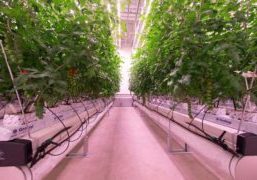


Vertical Farming is growing worldwide, especially outside the Netherlands
The cultivation of crops in the city, or Urban Farming, is beginning to arouse increasing interest worldwide. This often involves Vertical Farming, in which multiple cultivation layers are grown in closed-off spaces under LED lighting. In addition, vegetables are grown on top of buildings, sometimes in greenhouses or simply in the open air.
Many people are convinced that the cultivation of vegetables on stacked layers, or Vertical Farming, is the future. Tall buildings will increasingly be used for growing crops rather than for industrial manufacturing. Those crops do not grow in the sun, but under LED lights; and not in the soil, but in a thin layer of water or mist. Shielded from the influence of the changing seasons, the year-round cultivation of these crops grown under constant conditions is possible.
North America and Japan
New developments always take place outside the traditional areas. The same applies to Vertical Farming. You will not come across it in the Netherlands with its high-tech greenhouse horticulture, but mostly in Japan and America, where mainly young entrepreneurs are attracted to Vertical Farming. There is one exception in the Netherlands: lettuce farmer Deliscious in Beesel is starts its crops in a seven-layer system under LEDs. Later on, they are transplanted and transferred to a greenhouse for further growth in mobile gutters.
Vertical Farming has long outgrown the stage of amateurism. In the USA, one Vertical Farming company is opening after another, and always in the vicinity of a big city. The farms are able to achieve a significant output on a small surface area. The industry already has its own magazine, Urban Ag News, and there is an Association for Vertical Farming, AVF.
The AVF expects that within there will be a Vertical Farm in every city within the next decade. ‘It is not without reason that multinationals such as Philips, Metro, Osram, Toshiba, Microsoft, Panasonic, Fujitsu and GE are showing interest.’ Lemnis Oreon does not exclude the possibility of developing LEDs especially for Vertical Farming, ‘but we believe in top lighting in greenhouses’. A world map on the AVF website shows where Vertical Farming is being carried out. There are only a few dots in Europe, while Japan and North America, in particular, are covered with them.
GreenTech
Vertical Farming is attracting worldwide attention. Leafy vegetables and herbs can easily be grown in cities or on their outskirts all year round, without the influence of seasons. The weather can not throw a spanner in the works as with outdoor farming. To quote poet and writer Brian Brett: ‘Farming is a profession of hope’. However, this no longer applies thanks to Vertical Farming.
It is not surprising that the AVF will be manning a stand on GreenTech in Amsterdam on 14, 15 and 16 June. They will also be organising a meeting with several speakers, such as the big man behind the Vertical Farming developments Dickson Despommier (Columbia University/AVF) and Jasper den Besten (HAS Den Bosch), Marc Oshima (AeroFarms), Fabio Ziemssen (Metro Group), Paul Hardej (Illumitex), Steven Beckers (Lateral Thinking Factory & Building Integrated Greenhouses), Oscar Rodriguez (Architecture and food), Vincent Fesquet (New’rban view) and from the AVF: Christine Zimmerman, Max Loessl, Henry Gordon Smith, Howard Brin and Zjef Van Acker on the day before the GreenTech exhibition.
Sophisticated cultivation strategy
In North America Illumitex has doubled its LED lamp production every year in the last few years. ‘The future is growing indoors’, says Illumitex. The company claims to have a specific light recipe for each crop with just the right spectrum, intensity and frequency a plant needs for photosynthesis and the most energy-efficient way to do this. However, there are several other companies that provide the same know-how with the delivery of their cultivation system.
The company PlantLab says it distinguishes itself by entering into a partnership. ‘We guarantee output. That is quite different as ”we have a system”.’ according to PlantLab, not the technology but the plant is the guiding factor. The organisation determines for each situation how the plant can deliver the optimal results; for example in yield, substances or quality. ‘This is not just dependent on light, but on the total production process, including materials handling and labour productivity.’
Concepts
Several companies are bringing their own Vertical Farming concept to market, such as AeroFarms (USA), Urban Produce (USA), Urban Crops (Belgium), Mirai (Japan), PlantLab (Netherlands), InFarm (USA), VydroFarm (UK) and Truleaf (Canada). The bottom line is that they are all trying to reinvent the wheel.
AeroFarms is the largest of these companies. It has the ambition to grow rapidly and is hoping to expand into locations on four continents. But there are more organisations wishing to do the same, like Metropolis Farms, who claim that you can realise a revenue of $250,000 to $5,000,000 per year on 140 to 930 m2 , depending on what you are growing and what can be sold locally. ‘A Vertical Farm can be built within a week and after 60 days you are ready to harvest.’
The company Edenworks, on the other hand, aims to reduce labour costs by more than 50% in a yet to be opened second Vertical Farm by automating the sowing, harvesting, washing, drying, packaging and labelling processes, because otherwise viable exploitation is not possible. AeroFarms suggests that there is a great need for safe nutritious food ‘and we are quickly scaling up to change horticulture worldwide’. According to the Wall Street Journal AeroFarms is not yet making any profit, but it states that all its companies will have a positive cash flow this year.
FarmedHere in Chicago aims to prove that Vertical Farming can also be done organically. In an abandoned of 1,500 m2 factory they combined crop cultivation with aquaculture, which provides the nutrients for growing. However, after six months they had to close down. With $13 million raised money the company is trying again. This time without fish, but with vegetable-based nutrients, which reduces costs by 30%.
Data science
AeroFarms cultivates crops from sowing to harvest on cloth made from recycled plastic. Under the cloth, an atomiser provides the plants with water and fertiliser. In Newark they are growing crops in a former paintball hall on 6.500 m2 and in a former steel plant with a surface area of 510 m2. The company grows crops in 12 layers, 20 crops per year, reaching a production of 900 tons. Through the years the company has been collecting crop data, enabling it to now cultivate the desired taste, or ‘data science meets horticulture’. The company can, for example, grow spicier watercress or sweeter lettuce.
Urban Crops in Waregem (Belgium) opened an automated factory plant in early 2016, the largest of its kind in Europe. The system works with cultivation in crates in a layer of water. The crates enter the cultivation space on a conveyer belt. Thanks to RFID technology in the crates a robot recognizes where they should be placed. The technology for fertilisation and the purification of process water (UV) is provided by Hortimax. The cultivation area has eight production layers in 4 rows measuring 10 metres each. With 448 crates and 10 plants per crate 442 crops can be harvested every day. The system can be built up to 25 layers. With 30 rows, the daily production will be 126,000 crops.
Urban Crops performs feasibility studies on request for cultivation in large buildings. They provide insight into the expenses and calculate cost price based on the possibilities. Urban Crops also provides two cultivation systems in containers; Farm Flex and Farm Pro. Farm Pro is fully automated and costs approximately €55,000. Depending on the weight of the harvest, the annual production is 29,000 crops. When cultivating herbs, production will easily be double that amount.
Vertical crops
Certhon developed the PlantyFood growth cell, in which both Vertical Farming and cultivation of vertical crops is possible. The company will be demonstrating this at GreenTech 2016 with the cultivation of cucumber, from sowing to harvest. By doing this it intends to launch a debate on what is possible. But vertical crops such as cucumber or tomato are not really suitable for Vertical Farming, says Toyoki Kozai of Japan’s Chiba University: ‘Tomatoes require about 1,200 kWh of electricity per kilogram of dry matter. That is as much as the annual consumption of the average refrigerator in America.’
Priva also developed a large container for VF cultivation, which combines its know-how on climate control in buildings with its knowledge on growing plants. Marketing is done by ‘Here There And Everywhere’ by GertJan Meeuws, former director of PlantLab. Priva: ‘This box allows the grower to take a considerable step in professionalization.’
Research
While PlantLab is concentrating on patents, another Dutch company - BrightBox - focuses on open innovations. In a low-threshold manner, this company wants to research the best way of growing crops under LEDs. Its customers come from all over the world, from North America to Japan. They also get requests from the retail industry, to research shelf life and to determine which crops and varieties are suitable for Vertical Farming, for example. Grodan has shown rock wool to be an excellent growing medium. BrightBox is continuously working with the latest LEDs from its partner Philips Lighting. The approachability of BrightBox is partly reflected in its weekly open sessions, which take place every Thursday at 3 pm.
Philips also performs some research independently in its own climate cells. In the GrowWise Centre in Eindhoven, the company is developing light recipes for urban farming. The facility consists of eight cells with four growing layers each and a private climate regulation by Priva. LEDs in various colours (white, blue, red and far-red) are suspended above the containers.
Proeftuin Zwaagdijk (Zwaagdijk experimental garden) conducts research for seed companies in a three-layer cultivation system on how to let various crops flower and seed as quickly as possible. This is done under nine colours of LEDs with adjustable brightness. The system also has moveable ceilings with four-colour LEDs under which vertical crops can be grown. The LED lighting rises with the growth of the crop.
Text: Tuinbouwteksten.nl/Theo Brakeboer. Photo: BrightBox.
Download the complete Vertical Farming files, the pros and cons of vertical farming inluded (16 pages, pdf).
If you want to download this content you need a subscription, or log in when you already have a subscription.
Related
Wageningen UR for Greenhouse Horticulture’s Veggie Palace wins design award
Wageningen UR Greenhouse Horticulture and its partners won a design award for its Vegetable Palace in West Flanders: an ambitious building for research and demonstrations in the field of vegetable cultivation. ‘This constitutes an unprecedented development in urban rooftop gardening,’ says Jan Willem de Vries van Wageningen UR. ‘It will be the biggest in Europe, for which we will be happy to make available all our expertise.’
A team of designers from the Greenhouse Horticulture division of Wageningen University Research Centre, Van Bergen Kolpa Architecten, Meta, Smiemans and Tractebel Engineers jointly produced the innovative designs for the Vegetable Palace: a genuine landmark for ‘The Green Hub’ on the Roeselare ring road. The building will be built on the roof of REO Veiling, Belgian’s fruit and vegetable auction and the food logistics heart of West Flanders. The Vegetable Palace is constructed from glass and steel, an airy greenhouse frame that rests on the concrete pillar of the auction building. The project, with its innovative design, is to be an example for urban food production, the intensive use of space, circular energy and water consumption and sustainability in greenhouse horticulture.
Landmark
The 9,500 m2 building will house high-tech research facilities for the cultivation of fruit and green leafy vegetables, surrounded by an educational routing for the general public. The cultivation of tomatoes and lettuce, as well as pepper and strawberries can be experienced hands-on in four different climate zones. The entrance, with an imposing staircase, leads to the Urban Farming Square with visitor facilities at the heart of the building. The ‘Façade Greenhouse’ at the ring road will feature a special greenhouse that will focus on innovation in vertical farming and that will be twice as high as conventional greenhouses. Rainwater will be collected at the foot of this ‘Façade Greenhouse’ with a reed filter for the purification of waste water.
Construction of the greenhouse is scheduled to start in early 2017, and it is expected to open its doors to growers, researchers and the general public at the beginning of 2018.
Source: Wageningen UR Glastuinbouw. Photo: Van Bergen Kolpa Architecten.
UF De Schilde urban farm approaches completion
A lot of hard work is currently being done in The Hague on the topmost storey of a former Philips factory building, where a modern urban farm covering 1,900 m2 is being built. A greenhouse is being constructed here, as well as an indoor fish farm. With investments totalling 2.6 million euros, UF De Schilde is everything but a hobby project.
The Swiss Urban Farmers, a spin-off that has its origins in the ZHAW University in Zurich, was launched in 2013 with the development of De Schilde, in collaboration with the Municipality of The Hague and various horticulture specialists including Priva, Koppert and Rijk Zwaan. As from 20 May, private individuals, retailers and restaurants will be able to buy ‘exclusively grown’ vegetables from this urban farm, such as tomatoes, lettuce and herbs, as well as tilapia fish. If it were up to the Municipality, the rest of the building - which is largely vacant - will house even more initiatives that will put The Hague on the world map as a centre of urban farming.
Fast start
Mark Durno, the director of Urban Farmers Benelux, is pleased with the fast start. ‘We are working on a similar project in Switzerland, but the Swiss authorities require you to submit your plans to a vast number of different agencies. This translates into having to file fourteen different versions of 250 pages each, all of which are examined individually. In The Hague a preliminary version was sufficient, and it took only one meeting to discuss the construction and environmental permits with the authorities.’
It’s now up to Durno to staff the farm with people who not only understand how to grow vegetables, but also how to farm fish. ‘They have to be open to new technologies and be creative. This is not a traditional farm.’ He has received a remarkable number of responses from people yearning for a career switch. ‘We’ve received letters from accountants who wants to become urban farmers, for example. Of course we think that’s fabulous, but let’s not forget that we are running a commercial farm here!’
Visit the Urban Farmers website for more information.
Source: Financieel Dagblad. Photo: Urban Farmers.
Holland America Line to grow ‘live’ cresses on its new cruise ship
Holland America Line is entering into collaboration with the acclaimed Dutch grower Koppert Cress. The horticulture specialist aims to start growing micro-vegetables aboard HAL’s new cruise ship, the MS Koningsdam. The cresses will be grown in the ‘Cressomatic’, where the passengers can watch them grow during their cruise.
Cresses are the shoots of individual plants, each with a surprising impact on the senses. The micro-vegetables will be grown at the Culinary Arts Center aboard the MS Koningsdam, a new ocean liner with a capacity of 2,650 passengers. The cress grown in Koppert Cress’ vegetable garden will be added to the dishes ‘a la minute’ by the ship’s chefs, who will be preparing their unique meals in the open-plan kitchen. The cuisine is based on simple techniques based on traditional craftsmanship, allowing the guests to enjoy meals made with freshly grown ingredients during special dinners in ‘farm-to-table’ style.
Cressomatic
The Cressomatic for Holland America Line (HAL) will comprise three climate chambers with three cultivation tiers each. This will provide enough space for 441 containers that are filled by Koppert cress with seeds and cultivation medium. The crop will then finish growing practically on its own. The Cressomatic features an advanced climate control system, which regulates the temperature, humidity, light intensity (LED lighting) and irrigation fully automatically. The control systems and settings are based on Koppert Cress’ high-tech production greenhouse in Monster. The Cressomatic was developed in collaboration with PB Techniek. The system satisfies the stringent demands placed on hygiene and food safety applied by the cruise ship sector. Once sown, the little plants can be harvested in just about a fortnight. The various cresses have unique flavours, such as garlic, mustard and liquorice, for a special and outspoken culinary sensation.
Click here for a virtual tour of the Culinary Arts Center of MS Koningsdam.
Bron/foto: Koppert Cress.
‘Urban farming will not solve the problem of world hunger’
Urban farming is currently a hot item, capturing the interest of people all over the world. The roof of a former Philips building in The Hague is currently the scene of a large-scale 1,500 m2 urban farming project developed by UrbanFarmers and Priva for the cultivation of exclusive vegetables in combination with fish farming. Will urban farming, with cultivation on rooftops or indoors assisted by LED lighting, help shape the future of horticulture?
‘Urban farming is a hype. I get questions about this every week, and sometimes even every day! Many people believe that this is the solution we have been waiting for to alleviate world hunger. I do not share this conviction; simply because it is too expensive for bulk production.
I do believe that marketing concepts in big cities, with rooftop cultivation or cellar cultivation by restaurants, for example, are feasible. Consumers who find this appealing would be prepared to pay twice as much. You could also produce crops with a higher vitamin and nutrient content, which could be achieved through better crop control by using LED lighting, for instance. Consumers might very well be prepared to pay a higher price for this.
‘Rooftop cultivation at standard prices? I doubt that this is possible. Greenhouse cultivation on 10 hectares of land with only one crop type for efficient production is no longer unusual, but you can’t compare this to rooftop cultivation on a very limited surface area. Even if it is easier to control all the cultivation factors, it still has to be economically feasible. This is only possible if added value is offered that the consumer is willing to pay for.
‘I once saw a television commercial in Japan for vegetables, grown using LED lighting by employees wearing full laboratory clothing. The concept of growing healthy vegetables is entirely different in Japan. I wonder how the average European consumer would respond to this? Would he consider it to be rather artificial? And I’m not even taking the economic feasibility of this option into consideration.
‘There are many urban myths about the possibilities offered by urban farming. There will, without a doubt, be a market for this - one where products are sold that contribute some form of added value. This would certainly be possible in metropolises such as New York and Shanghai, also in terms of consumer experience. However, you can grow food in greenhouses located on the outskirts of such cities very effectively, all over the world.
‘We are investigating the cultivation of plants using only artificial light. We have access to all the knowledge we need to do this, and this approach to cultivation approach may indeed be feasible. However, we are still faced with the social aspect and the economic feasibility. Aside from that, I believe it could be possible to carry out specific phases in the cultivation process in climate chambers; phases that have a higher probability of something going wrong in the greenhouse and where the volume of plants is not so big. This would be particularly useful in the early stages of cultivation.’
There are consumers who cherish romantic ideals with regard to open-field farming.
‘Those people forget that greenhouse horticulture offers distinct advantages with regard to the consumption of water. In the Netherlands, the availability of water is generally not an issue. There have, however, been instances where hosepipe bans were imposed on growers of open-field crops on sandy soil in Limburg and Brabant in dry summers. The collection of rain water in greenhouse horticulture is not always sufficient, and in those cases the alternatives available to growers are not always adequate.
‘The availability of water on a global scale is a much bigger problem. The cultivation of one kilo of tomatoes in Israel or Spain requires 60 litres of water. When grown in a greenhouse, 30 litres will be sufficient. In the Netherlands, this is only 15 litres. Cultivation in a closed greenhouse requires even less water, because you can cool down the air temperature and collect the condensed water.’
Leo F.M. Marcelis (Elst Gld, 1963) studied horticulture at Wageningen University, where he obtained his PhD in 1994. He was a professor by special appointment of Crop Production in Low-Energy Greenhouses at Wageningen University until 2013 and team leader at Wageningen UR Greenhouse Horticulture. On 1 December 2013 Prof. Dr Leo Marcelis was appointed Professor of Horticulture and Product Physiology at Wageningen University.
Download the complete interview with prof. dr. ir. Leo Marcelis about diffuse glass, LED-lighting, urban farming, de-leafing and the effects on plants, energy consumption and cultivation strategy (login required).
Source/photo: Tuinbouwteksten.nl/Theo Brakeboer.