Wageningen UR
Thinking about light in new project
Plants, insects, fungi and people perceive light colour and intensity via different organs and pigments.
The human eye is particularly sensitive to green light, while plants have various pigments that absorb light and control different processes. Insects are sensitive to light in a different way again. The advent of LED technology, with a wide range of light colours to choose from, opens up new opportunities for use in greenhouse horticulture.
But which combination of light colours is needed for optimum plant growth and development, and what effect does adding LED to the sunlight and high-pressure sodium spectrum have? Does using LED lighting on its own produce other reactions in the crop? And what does this mean in terms of plant cultivation cells in urban farming? Does growing plants using only LED lighting enable you to produce vegetables and flowers without using gas (i.e. fully electric)? These are just some of the questions that arise when considering the ways in which LED lighting could be used. The Denkkader Licht (Thinking about Light) project looks at these opportunities and uses.
Related


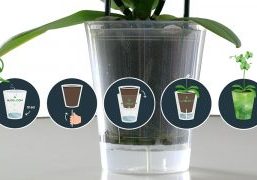
What plants are best for purifying indoor air?
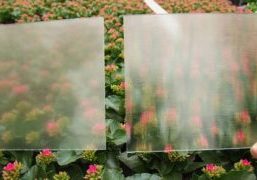
With the second crop in the Winterlight greenhouse at the Energy Innovation and Demo Centre (IDC) in Bleiswijk (NL) coming to an end, it’s time to draw some initial conclusions. The predominant feature of the greenhouse is its extremely high light transmittance.
Growers don’t only stand to gain from this in the winter but in the dark autumn months too: the 10%-plus light gain the designers were aiming for has turned out to be a reality. This not only means that all the partners involved in the project did a fantastic job, but also that the models used in the design process, such as RAYPRO, have proved their worth.
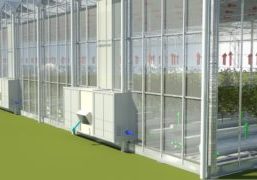
On the crop side, the two high-power crops we grew also yielded good results, despite the thrips problems we had in the first crop. With a few growing weeks to go, the tally is currently 268 cucumbers with an average fruit weight of 407 grams, bringing the total yield to more than 109 kg/m2. We are pleased with the outcome on the energy front, too. In this greenhouse, which is single glazed and has two high-transparency screens and a dehumidifier with heat recovery, we used less than 20 m3/m2 gas between the end of December and mid-November. But this did mean that we had to buy in around 13 kg of CO2.
Related
Winterlight greenhouse on track
With the second crop in the Winterlight greenhouse at the Energy Innovation and Demo Centre (IDC) in Bleiswijk (NL) coming to an end, it’s time to draw some initial conclusions. The predominant feature of the greenhouse is its extremely high light transmittance.
Growers don’t only stand to gain from this in the winter but in the dark autumn months too: the 10%-plus light gain the designers were aiming for has turned out to be a reality. This not only means that all the partners involved in the project did a fantastic job, but also that the models used in the design process, such as RAYPRO, have proved their worth.
Results
On the crop side, the two high-power crops we grew also yielded good results, despite the thrips problems we had in the first crop. With a few growing weeks to go, the tally is currently 268 cucumbers with an average fruit weight of 407 grams, bringing the total yield to more than 109 kg/m2. We are pleased with the outcome on the energy front, too. In this greenhouse, which is single glazed and has two high-transparency screens and a dehumidifier with heat recovery, we used less than 20 m3/m2 gas between the end of December and mid-November. But this did mean that we had to buy in around 13 kg of CO2.
Related


“Sharing crop data helps build knowledge on diffuse roof”
Diffuse glass is becoming routine in new build greenhouses – and much more quickly than anticipated. But it is still difficult for growers to estimate precisely what added value it has for their crops. So researchers Silke Hemming and Tom Dueck are calling for growers to share much more of their experiences. Here they look at some of the issues faced by growers in practice.
Voor het bekijken van deze content heeft u een lidmaatschap nodig, of log in als u al een lidmaatschap heeft.
Related


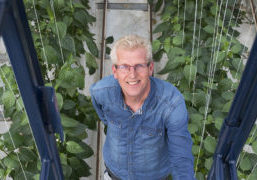
CropObserver offers growers more insight into a plant’s growth process
Growers are, of course, keen to ensure that their crops grow as optimally and quickly as possible. An efficient – or more efficient – growing method will, of course, automatically produce a high – or higher – yield. To help growers gain greater insight into the growth process PhenoVation developed a device that makes photosynthesis visible.
The device that makes photosynthesis visible is called the CropObserver. The measuring device is suspended from the greenhouse ceiling and measures the values of the crops growing several metres beneath it.
Optimisation
PhenoVation’s device measures parameters that correlate with the maximum efficiency and effective efficiency of the crop. Based on this data, growers can gain insight into the effect of specific light and growth strategies on a crop’s growth processes, thus allowing them to determine the optimum growth conditions for their crops. Additionally, growers can optimise their Leaf Area Index (LAI) using the input provided by the CropObserver.
Test
Chrysanthemum grower and chairman of LTO Glaskracht’s National Chrysanthemum Committee David van Tuijl is currently testing the Crop Observer in the greenhouse in Brakel where he grows his flowers. Van Tuijl is the first grower to use energy-efficient LED lights throughout an entire greenhouse, making it a prime example of what a conventional greenhouse would look like in the future.
Initial assessment
Van Tuijl’s experiment receives assistance from various experts at Wageningen University & Research, Philips Lighting, the Delphy knowledge centre and the Glastuinbouwpact greenhouse horticulture association. The pilot project will last one year, in principle, but an initial assessment will be take place after six months. “This assessment will decide if another six months will be worthwhile”, says Van Tuijl. “We have only been operating for one cycle, so it is too early to draw any definite conclusions about the CropObserver.”
A grower request
A wish communicated by growers for a different way to measure photosynthesis prompted the development of the CropObserver. “Before the CropObserver, measurements were taken with a system that recoded the values of only one leaf”, says Vincent Jalink, who developed the device. “Besides, this system was not wireless, which was rather inconvenient for some growers. Growers indicated wanting to measure the values of multiple leaves via a wireless system.”
Compatible with climate system
“Depending on how high it is suspended, the CropObserver can measure 4 to 6 square metres of crops growing beneath it, fully wireless”, explains Jalink. “What’s more, it is compatible with LetsGrow and Hogendoorn climate systems, which allows us to link certain actions to specific values. One of our customers is already doing this. As soon as the CropObserver measures a specific value the climate computer will open the screens. This has enabled the grower to shorten his crop cycle, thus allowing him to fit more cycles into a single year.”
Plant-dependent
According to Jalink the CropObserver can be used to measure photosynthesis and growth in all crops. “Of course, not all plants lend themselves equally well to using the CropObserver for climate control purposes”, adds PhenoVation’s developer. “Tomatoes, for example, flourish when exposed a lot of light and heat and will therefore not respond as strongly to changes in light ingress and temperature in the greenhouse. Therefore having your climate computer controlled on the basis of photosynthesis makes less sense when growing plants like these. However, with crops like tomatoes the system can be used to measure production by gaining insight into the ETR (Electron Transport Rate), considering that the ETR value correlates very well with the amount of carbon dioxide absorbed into the crop.”
Perfecting the growth strategy
According to Jalink sun-sensitive crops and potted plants perform much better under those conditions where a CropObserver is linked to a climate computer. “These crops respond more strongly to a change in light ingress or temperature, which allows growers to perceive the effect of their actions within a day, or even within a few hours – and to perfect their growth strategy accordingly. Various tests have shown that this will increase production yield by at least five per cent for the same surface area.”
For rent
Because Jalink does not yet know which crops respond well to the CropObserver-climate computer combination, he is also making the measuring equipment available for rent. “This will help growers independently decide if the CropObserver is an interesting device for them, without having to purchase it immediately.” Growers who are interested in this system can contact Jalink through the contact details on the PhenoVation website.
Text: Leo Hoekstra. Photo: Marleen Arkesteijn.
Related


Wageningen UR identifies ideal horticulture site on Mars
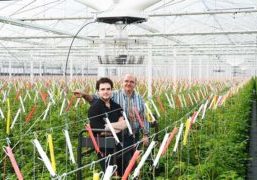
Research scientist Wieger Wamelink and student Line Schug of Wageningen University & Research have been conducting research into finding suitable locations to grow vegetables on Mars. Using data from a series of maps of Mars, they drew up a 3-D map showing the best sites for growing vegetables on this faraway planet. Information about suitable cultivation sites is crucial for the possible colonisation of Mars, because growing food crops will be one of the key tasks for the first astronauts.
To obtain the necessary data, the research team made use of several maps of Mars that were made freely available by NASA, Arizona State University and JPL. “This research was made possible by the abundance of data about Mars that is now available,” explains Wieger Wamelink.
Key figures from outer space
The maps used by Wamelink and Schug provided insight into such information as the mineral composition of the soil and the presence of heavy metals. In addition to this, they also provided information about the calcium content of the soil, the climate and temperature, the terrain elevation and the radiation levels on the planet.
No open field cultivation
According to the data gathered by Wamelink and Schug, they were able to calculate the suitability for growing crops for each location individually. Food will, however, be grown indoors on Mars because the outdoor circumstances on the planet make growing crops in the open field impossible. “There is almost no atmosphere, the outdoor temperature is 50 to 60 degrees below zero on average and cosmic radiation is intense,” explains Schug. Growing vegetables will therefore probably be easiest underground.
Positive cultivation factors
Despite the fact that crops cannot be grown on Mars in the open field, the terrain conditions and the temperature will nevertheless have an impact on choosing the best possible site for plant growth. “High levels of heavy metals in the soil and strong radiation make a location unsuitable for growing vegetables,” says Schug. “Relatively high temperatures or calcium content and a relatively flat terrain are positive environmental factors with a view to establishment and growing vegetables.”
Landing site
An inventory made by Wageningen UR reveals that a number of favourable sites for vegetable cultivation overlap sites where landings have been made, or are planned. This is good news for projects whose objective is the colonisation of Mars. If the planet were to be colonised, it is crucial that vegetables are grown near the landing site. The 3-D map created by Wamelink and Schug shows that the Mars Pathfinder and Viking 1 both landed on sites that are suitable for growing crops.
Food for Mars and Moon
Charting out suitable locations for growing food on Mars is part of an overarching research project called ‘Food for Mars and Moon’, and for which Wageningen UR is investigating possibilities for growing vegetables on Martian and lunar soil. Up until today, the University succeeded in growing ten different types of vegetables on Martian and lunar soil simulants.
Source: Wageningen UR. Photos: SAIC.
Related
WUR innovative horticultural greenhouse increases water efficiency in Lebanon
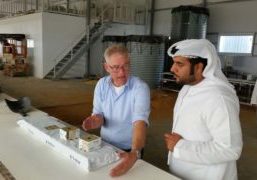
Wageningen University & Research (WUR) embarked on a project in Lebanon last spring to improve water efficiency in horticulture and increase production. The greenhouse horticulture experts at WUR built a special demonstration greenhouse at the Lebanese Agricultural Research Institute research site in the Bekaa Valley.
The project carried out by WUR contributes to sustainable food provision in an area that suffers from substantial droughts in summer. An additional advantage is that the project offers employment opportunities for Syrian refugees in Lebanon.
Improved ventilation
In the past few months, the project team at WUR developed a greenhouse whose design is based on local weather conditions and which is affordable for local entrepreneurs. The greenhouse creates optimum cultivation conditions while taking into account the local climate. The sides of the adaptive greenhouse designed by WUR can be opened in their entirety, resulting in ventilation possibilities that far exceed those provided by the traditional foil tunnel.
Three steps of cultivation
The insect mesh inside the custom-designed WUR greenhouse reduces the possibility of damage from insects. As a result, fewer crop protection agents are needed. A passive heating system that works according to the same principle as a hot water bottle ensures that the temperature in the greenhouse does not drop too far in early spring. By growing crops in the open field in the traditional manner as well as on a substrate, WUR is showing local growers how to make the switch from growing crops on soil in the traditional manner to growing crops on substrate in a well-ventilated greenhouse in three innovative steps.
Extra employment possibilities
The results produced by the innovations applied by WUR in the special greenhouse are not limited to lower water consumption, improved pest control and higher yields. Thanks to a higher yield, there is a greater demand for workers to assist in the labour-intensive cultivation work in the greenhouse. This increases employment opportunities for Syrian refugees in Lebanon.
Initial results
Robinson, a greenhouse builder in Lebanon, hopes to deliver the project with favourable weather conditions this winter. The initial results can be shared this winter with local farmers. The project is executed in Lebanon in conjunction with the Greenhouse Horticulture business unit of Wageningen University & Research and the Dutch Ministry of Foreign Affairs.
Source: Wageningen University & Research.
Related

Above- and below-ground growth response test
The range of plant invigorators and water treatments on offer has increased significantly in recent years. Some look set to deliver growth effects in practice.
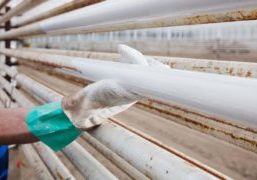
This has sparked interest in growth tests that highlight differences in plant growth in standard conditions. There are many different growth tests available, ranging from lab tests in Petri dishes to growth tests on a semi-practical scale. We have adapted one of these – the BioTest Phytotoxkit test – into a quick, relatively cheap and broad growth response test.
The test consists of a three-day germination test with three different crops, usually mustard, cress and sorghum. The test can detect minor differences with a high degree of certainty. Other benefits are the reports on both above- and below-ground growth, and the fact that effects due to differences in nutrients, pH and EC are excluded.
The test is too short in duration to test growth effects caused by microorganisms in the root environment, but it is suitable for determining growth inhibition caused by substrate and drain water. Separate growth tests are available for measuring the growth effects of microorganisms in the root environment.
Related
Plantalyzer works as automatic counting system for tomatoes in greenhouses
HortiKey is contracting Wageningen University and Research Centre and Berg Hortimotive for the realisation of the Plantalyzer. The Plantalyzer automatically measures the tomatoes in the greenhouse while they have not yet been harvested, and so are still hanging on the plant. The Plantalyzer as a counting system for tomatoes gives the grower objectively determined information about the quantity and ripeness of fruit. HortiKey uses this data to expand the system to an accurate crop estimate.
In 2016, HortiKey introduced the CHIMP concept, the Crop Health & Information Monitoring Platform. ‘The CHIMP clearly demonstrated that HortiKey is taking us towards data collection in the greenhouse’, says Andreas Hofland, general manager of HortiKey. ‘The Plantalyzer is the first product to be realised based on this concept. The Plantalyzer is used to record the tomato stocks in the greenhouse automatically. It not only counts the numbers, but the colour stages are also measured.’ In combination with the figures for the realised harvest, HortiKey is continuing developments in order eventually to support the grower in an accurate crop estimate.
Image processing by Wageningen UR
Wageningen University and Research Centre has been selected because they have ample knowledge and experience with measuring tall crops in the greenhouse. Among other things, Wageningen UR has in the past gained experience in the EU-financed projects SpySee, Crops and Gezonde Kas, using camera systems for image capture of high-upright growing crops in the greenhouse and the associated image processing. ‘By choosing Wageningen UR, we are not starting from scratch, but we can use public knowledge and experiences that has already been developed’, according to Hofland. Moreover, in this way we can incorporate the new technologies in the Plantalyzer, which is essential for being able to realise the goal of giving crop estimates. This is about the commitment of high-grade technology and knowledge.
New AGV technology
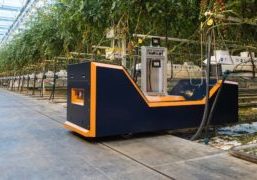
Berg Hortimotive has been selected because of its new Automated Guided Vehicle (AGV) technology. ‘Of course, the fact that HortiKey is a start-up within the Berg group also plays a part, but still HortiKey makes its own choice in the correct technology’, explains Hofland. ‘Berg Hortimotive was chosen because they have developed a new AGV platform, whereby the trolley's location is always known’. ‘That is crucial if one needs to make automatic recordings. Moreover, the AGV can move around autonomously from path to path, so that the grower has nothing to worry about.'
Plantalyzer and AGV as onse system
When asked how the different systems will be combined into one working product, Hofland says: ‘Berg Hortimotive can manufacture the Plantalyzer as a complete system, so with the cameras and software integrated. They can also take it into service worldwide via its extensive dealer network.’
First series are for sale
The first series of four are now being sold to growers. ‘The first group of users will provide us with experience on how often, where and when measurements need to be made for obtaining reliable data. Based on this practical data, and combined with the harvest figures, we will develop an algorithm for the crop estimates’, according to Hofland. The planning assumes that the first four Plantalyzers will start taking measurements in customer greenhouses in 2018.
Source & photo: Berg Hortimotive.



Laser branding of fruit and vegetables on the rise
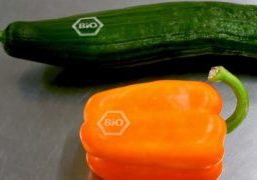
Organic wholesaler Eosta in Waddinxveen is labelling more and more fruits and vegetables using a laser. Others are also discovering this sustainable labelling method. Not only will this save tons of waste, there are more advantages to laser branding.
Eosta from Waddinxveen was the first to start using this technology, called natural branding. Michaël Wilde of Eosta: “We have been delivering ‘natural branded’ products to various supermarkets in Sweden, Belgium, Germany, Austria and the Netherlands (Hoogvliet and Albert Heijn) for six months now. These products include courgettes, squash, sweet potatoes, avocados, ginger, mangoes and cucumbers.”
Less waste
He continues: “For one customer – ICA in Sweden – we calculated how much plastic we are saving. This is 750,000 items of packaging a year! That’s enough foil to wrap around the entire globe – twice!” The Hoogvliet supermarket also calculated how much plastic they will be saving by applying natural branding to 85,000 organic avocados and 20,000 pieces of organic ginger. “That’s more than 100,000 a year. As an innovative company, we consider this to be very important. An innovative invention that will allow us to achieve considerable savings on packaging”, says Ed van Venrooij of Hoogvliet. Nevertheless, plastic also has its advantages. They recently conducted a test at Hoogvliet supermarkets: sweet peppers packaged in plastic remained in good condition for four to five days longer than unwrapped sweet peppers. “We had to discard 17% fewer sweet peppers. That is also worth something”, says Van Venrooij.
Higher inventory turnover
According to Michaël Wilde of Eosta, not using plastic foil has another advantage: “Various studies – including one conducted by Wageningen Research University – revealed that consumers are more inclined to buy organic produce if it is unpackaged. This means a higher turnover rate, and therefore eliminates the problem of perishability. Additionally, 70 to 80% of all organic products are packaged. This is not so much to extend their shelf life, but to make the distinction between organic and non-organic products. Only a few products are packaged in plastic with a view to extending shelf life or to keep small fruits together, like blueberries, cherry tomatoes and grapes.”
Technology
The technology works as follows: using the low-energetic carbon dioxide laser, the outer layer of the peel or skin is heated locally. This causes the pigment to evaporate. According to Eosta this process is extremely superficial and has no impact on the flavour, aroma or perishability. Laser-branded peel or skin is perfectly edible. The method is suitable for all sorts of fruit and vegetables, but not for oranges, mandarin oranges, lemons and pomegranates due to the self-restorative property of the peel. After a few days, the markings would therefore no longer be visible on these fruits.
Other businesses
Besides Eosta, wholesalers in the UK and Spain have also started laser branding. In the Netherlands, the Cool Port Packing Rotterdam (CPPR) packaging company plans to start using this technology in the last quarter of 2017. Laser branding devices can be used to burn a logo, text or message into the peel of the relevant fruit or vegetable. The thickness of the peel is of no consequence. Up until now, the laser has been tested on ginger, avocado, citrus fruits, melons and pumpkins. According to CPPR the method is environmentally-friendly, safe and EU-approved.
Source: NOS/Eosta/CPPR. Photo and video: Eosta.