
waste water
System extracts sodium from drain water
Sodium is a tremendous problem for growers practising the principle of circulation. A disproportionally high concentration of sodium results in limited crop growth and therefore a smaller yield.
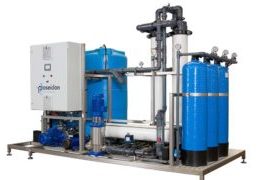
The current method of discharging waste water puts a considerable strain on the environment and causes growers to waste useful elements such as nutrients, plant protection products and water. The Poseidon offers a solution for this problem: a system that intelligently extracts sodium from drain water with maximum retention of nutrients and water.
downstream reverse osmosis system
The water that is discharged contains sodium, no plant protection products and approximately 50% nutrients. This results in considerable financial savings and does not pollute the environment. The new system from the Van der Ende Group is equipped with a downstream reverse osmosis system to concentrate the water to be discharged and, in doing so, reduces it to 80%. The clean reverse osmosis water is then redirected to the drain silo.
www.vanderendegroep.nl
Stand number: 12.506
Related



New technology purifies residual water from greenhouse horticulture
A technology never applied before is being tested in Friesland to purify residual water derived from crop protection agents. The technology is based on a new variant of the Fenton Reaction, in which crop protection agents are broken down under the influence of hydrogen peroxide and iron particles in water.
The Dutch government has imposed an obligation to purify waste water on the horticultural industry starting in 2016. This means that growers are required to remove 95% of all crop protection agents from their residual water. The technology traditionally used for this, however, requires a substantial investment from individual growers.
Test phase
The ‘Purifying Greenhouse Horticulture Drainage Water in Berlikum’ project aims to reduce the costs associated with the removal of crop protection agents from waste water by 50%. In mid-2016 a trial system will be installed on one of the greenhouse horticulture enterprises in Berlikum. If the system functions as hoped, the technology currently under development by Water Waves will be put into production and marketed. The project is collaborative effort by LTO Glaskracht Nederland, LTO Noord, the Municipality of Menameradiel, Wetterskip Fryslan, Easymeasure BV, Water Waves BV, the Van Hall Larenstein University of Applied Sciences and CEW. The project receives funding by the Province of Friesland and the Centre of Expertise for Water Technology (CEW) in Leeuwarden will be conducting the tests in conjunction with Easymeasure and Water Waves.
Source/photo: Watercampus.nl.