
water management
Knowing where and how water contamination can occur is key
Dutch greenhouse growers manage their water flows and emissions into the environment very well compared to those in some other countries. But they could be using their water flows even more efficiently. Everything revolves around the questions “What type of water am I dealing with?” and “How can I best use it?”.
If you want to read this content you need a subscription, or log in when you already have a subscription.
Related





Greenhouse growers across the world must focus on water
Water. It’s essential for everything that grows and blooms anywhere in the world. And of course greenhouse horticulture is no exception. But with the advent of new, improved cultivation techniques and innovations, our sector is perfectly placed to use the good quality water we have at our disposal sparingly and carefully.
Columnist Herbert Stoker in South Africa has already written about the water problems in the Cape Town area in the south-west of the country, which are forcing growers to revisit the way they use water. As a result, drip irrigation is very much on the up. And even though there is plenty of rain in other parts of southern Africa, filling farmers’ reservoirs and gardeners’ water butts, attention needs to be focused on water there too. The burning issues are: How do you handle water flows to which nutrients have been added and which contain crop protection residues? And how will this impact on the soil, flora and fauna, and human health?
Here in the Netherlands, water treatment is one of the key issues facing greenhouse growers. As of 1 January this year, all Dutch growers are required to treat their water before discharging it into surface water. They can do so using their own fixed water treatment unit or a mobile unit, or they can use shared facilities. The third option is a closed system in which the water is reused and not discharged at all. This government measure currently only relates to crop protection products, but fertilisers are due to be added over the next few years.
In the European Union, environmental commitments such as these are still not harmonised but every member state will have its own targets and regulations in this area. Some countries have gone quite a bit further than the Netherlands and others are set to follow soon. Although the 1 January 2018 deadline was known about for some years, many growers only took action at the last minute. Researchers, advisers and suppliers delivered a masterpiece which growers on various continents can benefit from. After all, as Bob Dylan once said, “The Times They Are a-Changing”.
text: Roger Abbenhuis.
Related
System extracts sodium from drain water
Sodium is a tremendous problem for growers practising the principle of circulation. A disproportionally high concentration of sodium results in limited crop growth and therefore a smaller yield.
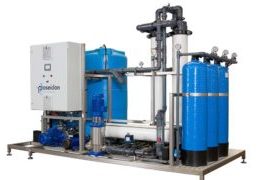
The current method of discharging waste water puts a considerable strain on the environment and causes growers to waste useful elements such as nutrients, plant protection products and water. The Poseidon offers a solution for this problem: a system that intelligently extracts sodium from drain water with maximum retention of nutrients and water.
downstream reverse osmosis system
The water that is discharged contains sodium, no plant protection products and approximately 50% nutrients. This results in considerable financial savings and does not pollute the environment. The new system from the Van der Ende Group is equipped with a downstream reverse osmosis system to concentrate the water to be discharged and, in doing so, reduces it to 80%. The clean reverse osmosis water is then redirected to the drain silo.
www.vanderendegroep.nl
Stand number: 12.506
Related

Strengthening the Lebanese horticulture sector
We are working with Lebanese researchers to build mono tunnels that will improve vegetable production and simultaneously reduce water consumption.
Yields of tomatoes and cucumbers in traditional tunnels are limited by a lack of ventilation and, consequently, too high temperatures. By using a calculation model to analyse the local climate, we can calculate which modifications to the tunnel will boost production most effectively. We are also looking at rainwater collection. Along the coast, where a lot of Lebanon’s horticulture takes place, there is up to 600 mm of rainfall (800 mm in the Netherlands), most of which goes unused. Growers tend to use river water, which is of much poorer quality, and sometimes groundwater.
The use of rainwater also opens up opportunities for simple substrate cultivation, allowing much more efficient water usage and avoiding soil-borne diseases. At present, it looks as if it will be possible to increase production by 30%. The tunnels will be built in autumn 2017 and the first trials get under way in early spring 2018.
Related


Houweling's smart solutions to save energy and water
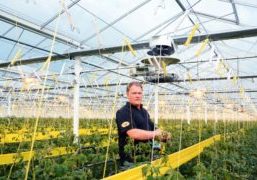
Houweling's Tomatoes in Camarillo, California has been showered with awards for its sustainable approach. Many of the techniques for saving water and energy are new to the American horticulture industry and a source of inspiration for fellow companies.
"Going green" can be a successful economic strategy that leads to sustainable growth, the jury said at the presentation of one of those awards. That accurately sums up the vision of Casey Houweling, owner of Houweling's Tomatoes. "What sustainability is to us is a combination of caring for our planet - which we will leave to our children - and commercially viable solutions for growing healthy, delicious tomatoes," says the grower.
In this family, the innovative entrepreneurial spirit is passed from generation to generation. His father, a Dutch immigrant, built a horticultural company in British Columbia with years of hard work. Son Casey continued where his father left off and now has locations in Canada and the USA. While the company may now be significantly larger, one thing has not changed: the ambition to be in the vanguard of sustainability and produce top quality tomatoes.
Semi-closed Ultra Clima greenhouse
The location in Camarillo has 125 acres of greenhouses, with around 40 acres' worth of the semi-closed type that have few windows that open and instead have air handling units to regulate the greenhouse climate. "This type of system makes use of many fans which requires considerable additional electricity," says Richard Vanderburg, energy and water conservation manager. "That is why we installed five acres of solar panels over the water basins in 2008. This was attractive because the State of California provides a 50% subsidy."
"What sustainability is to us is a combination of caring for our planet - which we will leave to our children - and commercially viable solutions for growing healthy, delicious tomatoes."
Until then, the heat required for the greenhouses had been provided by gas boilers, but that is not the most efficient use of energy. "With a combined heat and power (CHP) system, because it simultaneously produces heat, electricity and CO2, you can utilize practically 100% of the energy. There is no longer any waste. We have Casey Houweling's enthusiasm to thank for the fact that we now have three 4.4 MW CHP units."
The cogeneration technique is still not all that common in the USA. The technique has been used for the combustion of gas extracted from garbage dumps and waste-water treatment, but it is virtually unheard of in horticulture.
Selling back to the grid
Purchasing the CHP system was the easy part. "Much harder were the negotiations to sell the generated electricity back to the grid. The regulatory environment was difficult. It took us three years to win that battle," says Vanderburg.
Another challenge was the interplay of boiler, combined heat and power units, solar panels, heat storage and assimilation lighting. "At certain times, exporting to the grid has a strong commercial position - in the summer the peak rate period is between noon and six in the evening - so we run the CHPs at their maximum and we can make good use of the produced CO2 at that time. Export is therefore given priority over our own use, for lighting as an example. The heat is stored in the buffer. The buffer charging must be done in such a way that the CHPs can run at full capacity during the lucrative hours. If, on the other hand, the heat demand cannot be met entirely with the CHPs, the boiler has to kick in," he says.
"We harvest rainwater from the roof, and we collect the condensation water from the CHPs. We don't waste a drop here."
Designing a system to control all this is very complicated, and therefore Houweling's called in world-class specialist Priva. The choice was made for a very user-friendly solution. Everything is presented graphically on the computer screen; this insulates the operator from most of the complex process coordination taking place in the background. "There is very little that has to be done manually," the manager realizes. "And the system stores all the data, which is useful because we not only need it for our own analyses but also for the energy subsidy. Working with Priva has been a pleasure. Project engineer Richard Zeeuw found smart solutions to meet all of our needs and made it very easy to operate." To integrate all the new technologies, John van der Wilk of Priva Business Solutions was closely involved in discussions with the local power company and the contractor.
Water scarcity
Houweling's is not only very progressive in its approach to energy but also in how it handles water. "Water scarcity is a major and ever-growing problem in California. We do have our own well, but we are only allowed to extract a limited amount of groundwater," says the manager. "Therefore we capture as much water as possible. We harvest rainwater from the roof, and we collect the condensation water from the CHPs. We don't waste a drop here."
The plants get the water they need: with the Priva computer we can dose the water based on the measured evaporation, enabling us to provide the exact amount of water needed. The evaporation is measured through continuous monitoring of the weight of the substrate mats. The drain water is recirculated to the extent possible, and potential contamination issues are ruled out by disinfecting the return water before reuse.
This efficient use of water has also played a role in the sustainability awards the company has received. "We do everything possible in the current situation," tells Vanderburg. "But we are already pursuing a new initiative: obtaining purple water from the treatment plant three miles away. That water is currently being discharged to the ocean after treatment, but we could put it to good use. With reverse osmosis we can make it suitable for cultivation. In time, this could completely offset the water we currently extract from the well."
Source/photo: Priva.
Priva introduces affordable UV disinfectant
The introduction of Priva’s Vialux M-Line has put water disinfection using UV light within the affordable reach of every horticulturist. UV disinfection will enable major improvements to be achieved in the field of disease control, efficient water consumption and compliance with increasingly stringent food hygiene regulations.
The Priva Vialux M-Line decomposes all organisms that are alive in the irrigation water used in the horticulture industry, such as fungi, bacteria and viruses. This applies equally to fresh irrigation water and recirculated drain water. UV disinfection makes it possible to safely reuse water for longer periods of time. Furthermore, this will ensure a more efficient use of costly fertilising agents, as these will no longer be discharged into the drain.
Scaleability
The Priva ViaLux M-Line is based on medium-pressure UV technology, which is new to the horticulture industry. The system is made up of multiple disinfection chambers, whose number depends on the size of the farm or company. In this way, every grower will be able to order a custom solution and the system can cost-efficiently grow in proportion to the business.
As the UV lamp, quartz tube and UV sensor can be replaced by the growers themselves, there is no need to call in a technician for simple repairs. Maintenance is easy, too: rinsing with acid is enough to remove any deposit from the quartz tube. The Priva ViaLux M-Line can be used as a stand-alone system or linked to process computers from various manufacturers.
Safety
Every time the system is started up, the UV sensor determines the water’s UV transmittance and adjusts the disinfection process accordingly. This enables all hazardous organisms to be decomposed, while no energy is lost due to a capacity surplus. The system is protected against lamp failure, overheating, running dry and peaks and troughs in the electricity mains. According to Priva, the Vialux M-Line will allow growers to easily comply with all existing and future statutory regulations in the field of water and food safety, and at the lowest possible cost per cubic metre of water.
Source/photo: Priva.