
webshop
Van der Waay launches new website with web shop for parts
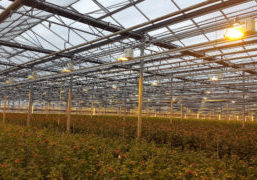
Van der Waay launched a new, multilingual website with a web shop. Customers can visit the web shop to easily and quickly buy parts for their machines. Van der Waay delivers the machines - to clean, chalk and repair greenhouses, and to perform maintenance - and its parts to horticultural entrepreneurs and contracting workers all over the world.
All AquaJet parts will be available at the launch of the new website. The AquaJet is the indoor greenhouse roof cleaner. Parts of, among others, the Top Cleaner and Top Cleaner Poly will also be available soon. Customers create an account in the customer portal when they want to order parts. That enables them to place online orders. Contacts can also download several documents from the customer portal, such as the user manuals of the machines.
Attention for safety
With the new website, Van der Waay can offer its current and future customers better help. Besides a clear and expanded overview of all solutions and products Van der Waay offers, the website also pays a lot of attention to safe working on and around greenhouses. More and more countries set high safety requirements for working on the greenhouse. Besides that, greenhouses are getting higher. Van der Waay's machines comply with all safety requirements - also the local ones - and the website explains all safety devices. It also includes an expanded list with safety tips for horticultural companies' staff.
Expanded product descriptions
The website contains an expanded description of all solutions Van der Waay delivers. The most important products are the Top Cleaner, the Top Cleaner Poly, the AquaJet, the Top Sprayer, the Safety Cart and the Repair Shuttle. Several solutions are possible with the Repair Shuttle, the Service Platform and the Safety Cart to make sure staff can perform activities on the greenhouse without putting themselves in danger.
Source/photo: Van der Waay.
Related






HortiNext launches subscriptions for premium content
HortiNext, the platform for horticulture innovations and cultivation practices now offers subscriptions to its premium content, starting from 1 July 2017. A number of technical improvements have also been implemented to make the website faster and more secure.
HortiNext is a dual-language platform for parties offering content related to horticulture, including Vakblad Onder Glas, In Greenhouses magazine, Exportmagazine, Certis Europe, HAS University of Applied Science and HortiLeads, the initiator of HortiNext. The editorial focus is on horticulture innovations and cultivation practices directed at growers, entrepreneurs and horticulture professionals, such as suppliers and researchers. HortiNext aims to communicate all valuable information about innovations and practices in the field of horticulture on a single platform.
Annual, weekly or monthly subscriptions
A large portion of the content published on HortiNext is provided at no charge, but a subscription is required to access premium articles. A full-year subscription costs € 60 (excl. VAT), but monthly or even weekly variants are also available. Subscriptions can be ordered conveniently online at the HortiNext webshop.
'Mobile first' platform
In addition to the above subscription options, a few technical improvements have been implemented. The entire website has been provided with an SSL connection to facilitate secure shopping. Download and upload times have been optimised, particularly for mobile devices, as well as legibility. HortiNext aims to be the most user-friendly and mobile platform for the horticulture industry.
Go to our shop to order your subscription today.
Related




Food safety and quality critical success factors in online sales
Key points for attention in the online sale of fruit and vegetables are quality and food safety. Another factor to take into consideration is packaging. Can standardised packaging guarantee the desired product quality, food safety and customer experience standards?
Although no specific rules apply to online sales - as opposed to traditional sales methods - online sales channels will need to observe the same quality and food safety regulations as other food suppliers. ‘Food safety is a priority issue,’ says Nicolette Quaedvlieg, policy officer for Quality & Food Safety at het GroentenFruit Huis.
'People are less disappointed when they pick up a product at the supermarket with a quality defect than if they had bought the same product with the same quality issues online.'
She also believes that the quality of online products should be better than what is offered by supermarkets. ‘You have to take it one step further. People are less disappointed when they pick up a product at the supermarket with a quality defect than if they had bought the same product with the same quality issues online. That’s simply not acceptable to them.’ Additionally, Quaedvlieg points out that consumers purchasing produce online need information about the product’s country of origin. Online sales platforms are also required - just as shops and restaurants - to provide information about allergens, both on their websites and upon delivery to the customer.
Best quality
Martijn van Andel of JEM-id is also convinced that consumers should get the best possible quality when they order something online. ‘And that’s possible, because you leave out several links in the distribution chain. Going grocery shopping three times a week is actually ridiculous, since 90% of the products you buy are identical. Neither is grocery shopping a particularly interesting experience. There are few people who genuinely enjoy shopping for groceries.’
'Consistency in quality and freshness is only possible through short lines and foolproof chain cooperation with preferably local suppliers.'
Harrij Schmeitz of the Fresh Informationmanagement Center emphasises that the quality of online groceries not only needs to be good; it must also be consistent. ‘The consumer must not be disappointed. If consumers fail to find the quality they seek online, you will lose them and they will purchase their products elsewhere.’ Consistency in quality and freshness is, according to Machiel Reinders, senior researcher at LEI Wageningen University Research Centre, only possible through short lines and foolproof chain cooperation with preferably local suppliers. ‘Good customer service is also of paramount importance.’
Packaging
The range of packaging currently available can only partially guarantee the desired standard of quality and consumer experience, says Reinders. He indicates that there is a demand for better packaging, particularly for more delicate products. ‘Special packaging is also needed for the cooled transport of products. PostNL has conducted several experiments with Vershuys.com, for example, in which they explored the possibility of using special coolers for the shipment of fresh food products.’
'The range of packaging currently available can only partially guarantee the desired standard of quality and consumer experience.'
The researcher also points out that packaging can also enhance consumer experience through the addition of supplementary information, or visual materials, for example. ‘On the other hand, one of the trends in modern society is to desire to curb the amount of packaging waste. To put it briefly, there are still plenty of opportunities for innovation in the field of packaging fir the online market. This is one of the issues on which the Fresh ONLINE Pack project will be focusing in the next few years to come.’
Text: Tuinbouwteksten.nl/Ank van Lier. Photo: HelloFresh.com
Would you like to know the key conclusions and read about appealing examples in e-commerce? Download the complete dossier New Retail (8 pages, pdf).
If you want to download this content you need a subscription, or log in when you already have a subscription.
Related




‘Taking part in this development is not voluntary, but mandatory.’
Entrepreneurs have to jump on the online bandwagon, says Harrij Schmeitz, the director of Fresh Informationmanagement Center (FIC). The objective of FIC is to make the fresh produce sector stronger, more efficient and safer, and to successfully launch innovative developments on the market.
Schmeitz calls the online world an entirely new world. ‘I am comparing it to the emergence of the convenience market. This market was created by a group of pioneers who started chopping and packaging vegetables in a shed. In the course of time, this niche grew into a full-fledged market. The online market will be undergoing a similar development.’
‘I am comparing it to the emergence of the convenience market. This market was created by a group of pioneers who started chopping and packaging vegetables in a shed.'
According to Schmeitz, this is the reason why FIC launched the Fresh ONLINE Pack project. This project is exploring ways to promote the online market for fresh fruit and vegetables. The results are shared with the corporate world through ‘Innovation Circle Meetings’.
Quality and perception
According to Schmeitz, young people’s increasing tendency to opt for convenience offers plenty of opportunities for boosting the online sale of fresh consumer products. ‘However, this development could lead to negative results if we are unable to offer good quality products and adequately contribute to customer perception. Additionally, this niche is faced with a great deal of international competition. Acceptance with regard to the online sale of fresh consumer products will be faster in one country than in another. Just consider the Asian market in this respect!’
'The question is whether the enterprises currently operating in this sector will continue to survive at all. New parties are tapping into this market, also from outside.'
The Director of FIC believes that taking part in this development is not voluntary, but mandatory. ‘As a sector, we need to develop a strategy to cope with the changing market. The question is whether the enterprises currently operating in this sector will continue to survive at all. New parties are tapping into this market, also from outside. A new market is emerging, with new players and existing players that are undergoing a transformation. You have to hop on the bandwagon or you’ll miss the boat!’
Need more information? Download the complete dossier New Retail (login required).
Text: Tuinbouwteksten.nl/Ank van Lier. Photo: FIC.
Huisman Scherming opens webshop for screening products
Developer, supplier and installer of screening systems for the horticultural industry Huisman Scherming recently opened a webshop for screening products.
The webshop offers a wide range of screening products, in such categories as Horizontal Screening, Screening Fabric and Huisman and Roll Façades. As quotations can be requested online, customers can be assured of a competitively-priced offer to which they can expect a response within 24 hours on business days. Once a product has been ordered Huisman Scherming guarantees its speedy delivery.
Purchase history
According to Huisman, convenient ordering is essential to a streamlined purchasing process. ‘Orders can be placed 24 hours a day, 7 days a week. This is particularly convenient for our international customers,’ continues Huisman. ‘It goes without saying that the experts at Huisman screening are available for consultation by telephone and online for personalised advice in the field of screening, black-out products and insect mesh.’
All articles ordered are recorded in a personal account. As a result, customers will have full access to their purchase history at all times.
The webshop can be consulted on desktops, tablets and smartphones via this url.
Source/photo Huisman Scherming.
‘The ornamental plant niche has grown very quickly.’
JEM-id is based in Honselersdijk and develops websites and software. Ninety-five per cent of its clients are active in the fresh produce and ornamental plants sectors. Account manager Martijn van Andel has experienced the rapid growth in online sales achieved in the past few years by the ornamental plants sector, while according to him the the fresh produce sector lagged notably behind.
Van Andel explains that the diversity of the products in the ornamental plants sector is much greater than that of the fresh produce sector. Apart from this, consumers want to see fresh food products before buying them. ‘Even if you’re speaking about the same product, there are notable differences. No two moth orchids (Phalaenopsis) are alike. The number of branches will be different, as well as the quality, the packaging, and many other aspects. You really buy a specific article. This is why people are looking for ways to clearly and efficiently present the diversity of their products. Good photographs, taken at the growers’ place of business, are very important in this.’
This is different in the fresh produce sector, and the differences are less obvious. ‘If you order a five-kilogram box of red sweet peppers, diversity will be very limited. Everyone knows what you mean and nobody actually needs to look at the products before buying them. In this respect, ordering fresh produce is easier than ordering ornamental plants.’
FloraXchange
JEM-id developed the FloraXchange online communication platform especially for the potted plant sector. This platform provides support to growers in advertising their offering of potted plants. There are currently 1,059 growers affiliated with FloraXchange who present their products on the website. JEM-id makes this information available to more than 300 buyers, who in turn forward this information to their own customers. ‘It is quite revolutionary in the market. I venture to claim that this initiative has given the entire sector a boost. It provides in a demand; we have obtained a lot of positive response.’
According to the ICT specialist, trade companies really wanting to boost their sales have to make sure that their internal automation and logistics processes are in order. This means that a lot of their old systems will need to be replaced. Of course, not everyone is equally enthusiastic about this. ‘If you are a leading exporter of fresh produce or ornamental plants and you have to replace your internet systems, this will cost you a lot of money. This will, of course, have a huge impact, while the success ratio can be called quite exciting in terms of feasibility. There are many companies who keep putting this off. However, you have to embrace change rather than avoid it; at this point you have no other choice. You have to change with the times. This is the only way to survive in a world where the only constant is change.’
Purchase moment
According to Van Andel, there are still plenty of opportunities in the consumer market, both in the ornamental plants sector and the fresh produce sector. Logistics plays an important part in that respect. ‘Although there are special boxes available these days for shipping plants, shipping shoes is still a lot easier. Besides this, plants are impulse products. You don’t decide to buy a plant when you’re sitting on the couch in the evening with your laptop; you decide to buy one when you’re at the garden centre or the supermarket.’
However, the ICT specialist is surprised that the trend of buying groceries online is lagging so far behind. At the same time, he offers some plausible explanations for this. ‘Ordering a packet of macaroni, a jar of pasta sauce or a carton of yoghurt online is easy. But it’s different when you’re buying fruit or vegetables. If you regularly buy produce at a supermarket, you know that the freshest mushrooms aren’t the ones stalled out in front, and that the quality of green beans is variable from day to day. This is preventing a lot of consumers from buying these products online.’
One of the aspects that should be taken into consideration is customer perceptions at the moment of sale. ‘Buying a computer online is a lot more fun than buying one at a shop. Mediamarkt may have the lowest prices, but when you buy a computer there you will be helped by an eighteen-year-old in an ill-fitting jacket. On the other hand, when you buy a computer via Coolblue, you are not being pestered by anybody trying to sell you a more expensive product, you can consult hundreds of user reviews and your computer will be delivered to your home the next morning. It’s clear who will be winning this race.’
Text: Tuinbouwteksten.nl/Ank van Lier. Photo: JEM-id.
Would you like to know the key conclusions and read about appealing examples in e-commerce? Download the complete dossier New Retail (8 pages, pdf).
If you want to download this content you need a subscription, or log in when you already have a subscription.
Related
Online sale of fresh produce promising and challenging
The online market for fresh produce and ornamental plants is growing. However, while the ornamental plant sector is making giant steps forward in this respect, the food market is lagging distinctly behind, particularly with regard to fresh produce. How can this be explained, and what are some of the opportunities and threats facing the online sale of horticulture products? Four parties engaged in this field present their vision on the developments, each based on their own expertise.
The number of consumers preferring to make their purchases online is constantly growing. Not only do they buy their clothes and shoes online; they also buy their food on the internet. The percentage of fresh produce sold online, however, lags far behind that of other product groups.
This can in part be explained partly by the high supermarket density in the Netherlands and partly by a lack of consumer confidence in the quality of fresh fruit and vegetables offered online: they prefer to see - and even touch - these products before buying them. Additionally, they are reluctant to pay additional shipping and delivery costs. On top of that, many suppliers of fresh produce lack a successful business model, particularly due to the logistic complexity associated with online sales. There are still many challenges ahead!
Online groceries
Nevertheless, various people engaged in the online sale of food products believe this to be a highly promising market. A study conducted by LEI Wageningen University Research Centre at the beginning of 2015 showed that approximately 12% of all Dutch consumers order their groceries on the internet from time to time. Another study, conducted by Deloitte in 2015, revealed that 8% of all consumers have, at one time or another, made use of an online ordering service. This service is used once or twice a month and the average amount per online order is approximately 69 euros.
Groceries ordered by respondents (or that they would like to order) online are mainly products with a longer shelf life, dairy products and frozen food. There is, however, also a notable rise in the number of fresh products ordered online. The emergence of meal boxes, of which more and more are being offered by supermarkets and other retailers, plays an important role in this development. This relatively new concept is benefiting from the popularity of regional products, healthy nutrition, organic ingredients and several intensive marketing campaigns launched by leading international players.
Meal box increasing in popularity
The meal box is becoming increasingly popular among Dutch households: A recent survey by Multiscope showed that, as it stands today, 11% have tried out a meal box and one third of them will continue to order them. Two out of ten people in the Netherlands are interested in the concept, but have never ordered a meal box. These are generally households composed on one or two persons. What appeals to them in particular is the convenience, the variety in meals and the inspiration to try new recipes.
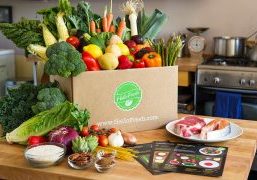
HelloFresh is the best-known meal box. Eight out of ten people in the Netherlands has heard of this brand. Users are most satisfied about the originality and good quality of HelloFresh box. However, the price and freedom of choice in the various varieties received a lower score. HelloFresh does not deliver its meal boxes on Monday, which is the preferred delivery date. Allerhande Box, however, delivers on Monday and is second to HelloFresh when it comes to name recognition (49%).
Text: Tuinbouwteksten.nl/Ank van Lier. Photo: Fresh Informationmanagement Center.
Would you like to know the key conclusions and read about appealing examples in e-commerce? Download the complete dossier New Retail (8 pages, pdf).
If you want to download this content you need a subscription, or log in when you already have a subscription.